At a glance
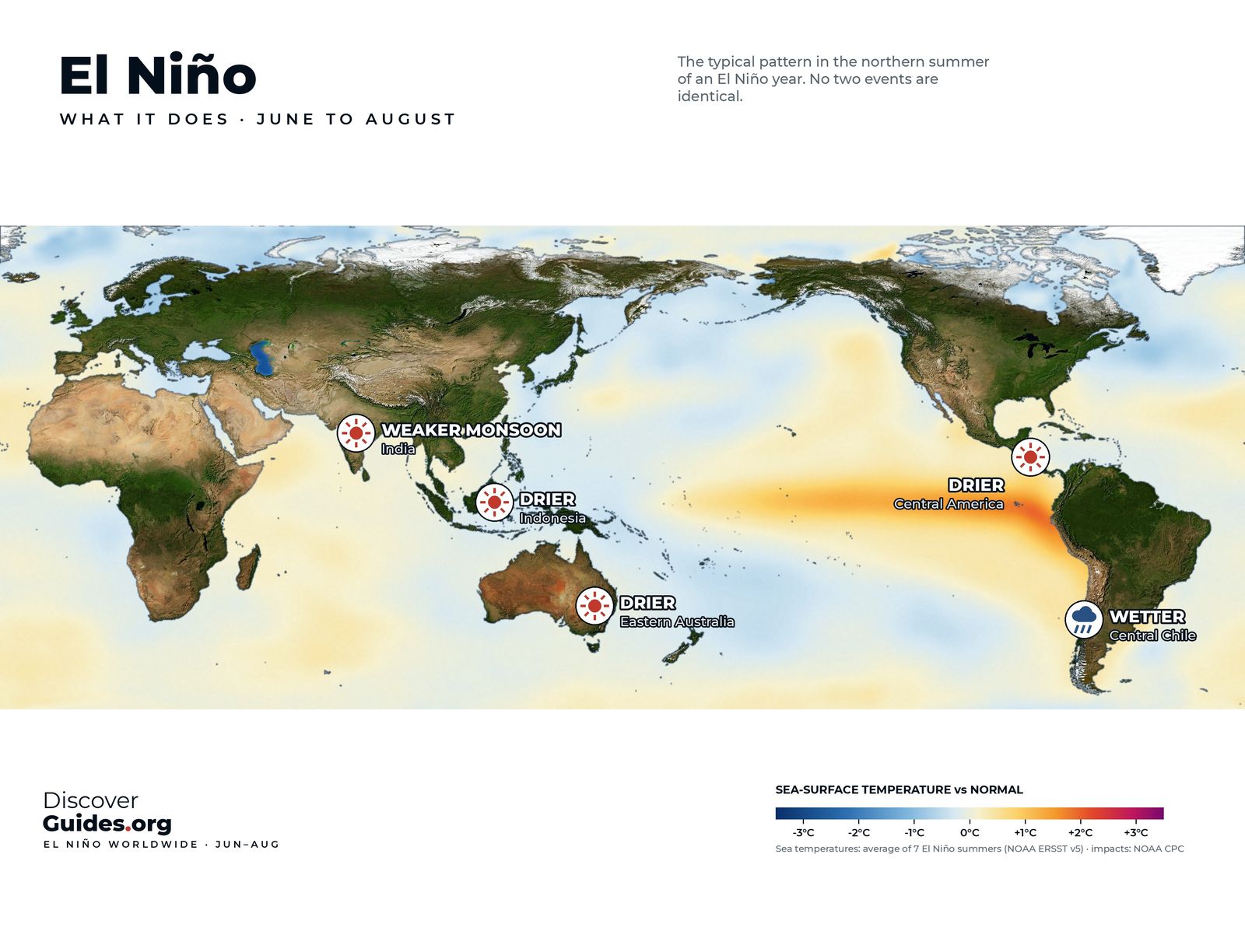
In the northern summer the jet streams weaken and retreat poleward, and NOAA notes that there are no consistent El Niño impacts on North America in those months. The tropics and the Southern Hemisphere, then in winter, feel the event far more. The map at the top of this page shows NOAA's Climate Prediction Center's typical June-August pattern.
The typical June-August pattern
| Region | Typical El Niño tendency, June-August |
|---|---|
| Eastern Australia | Drier |
| Indonesia | Drier |
| India and South Asia | Weaker monsoon more likely |
| Central Chile | Wetter |
| Intermountain United States | Wetter |
| West coast of South America | Warmer |
| South-eastern Brazil | Warmer |
Australia's dry winters
The Bureau of Meteorology reports that winter-spring rainfall is usually reduced during El Niño, especially across the eastern and northern parts of the continent. Nine of the ten driest winter-spring periods on record for eastern Australia occurred in El Niño years, and across all El Niño events since 1900, winter-spring rainfall in the Murray-Darling Basin has averaged 28 per cent below normal. More is in El Niño and Drought in Australia.
It is not automatic. In 2015, during one of the strongest events on record, inland eastern Australia still had an average or even wetter winter, because a very warm Indian Ocean fed moisture in from the west.
The Asian monsoon
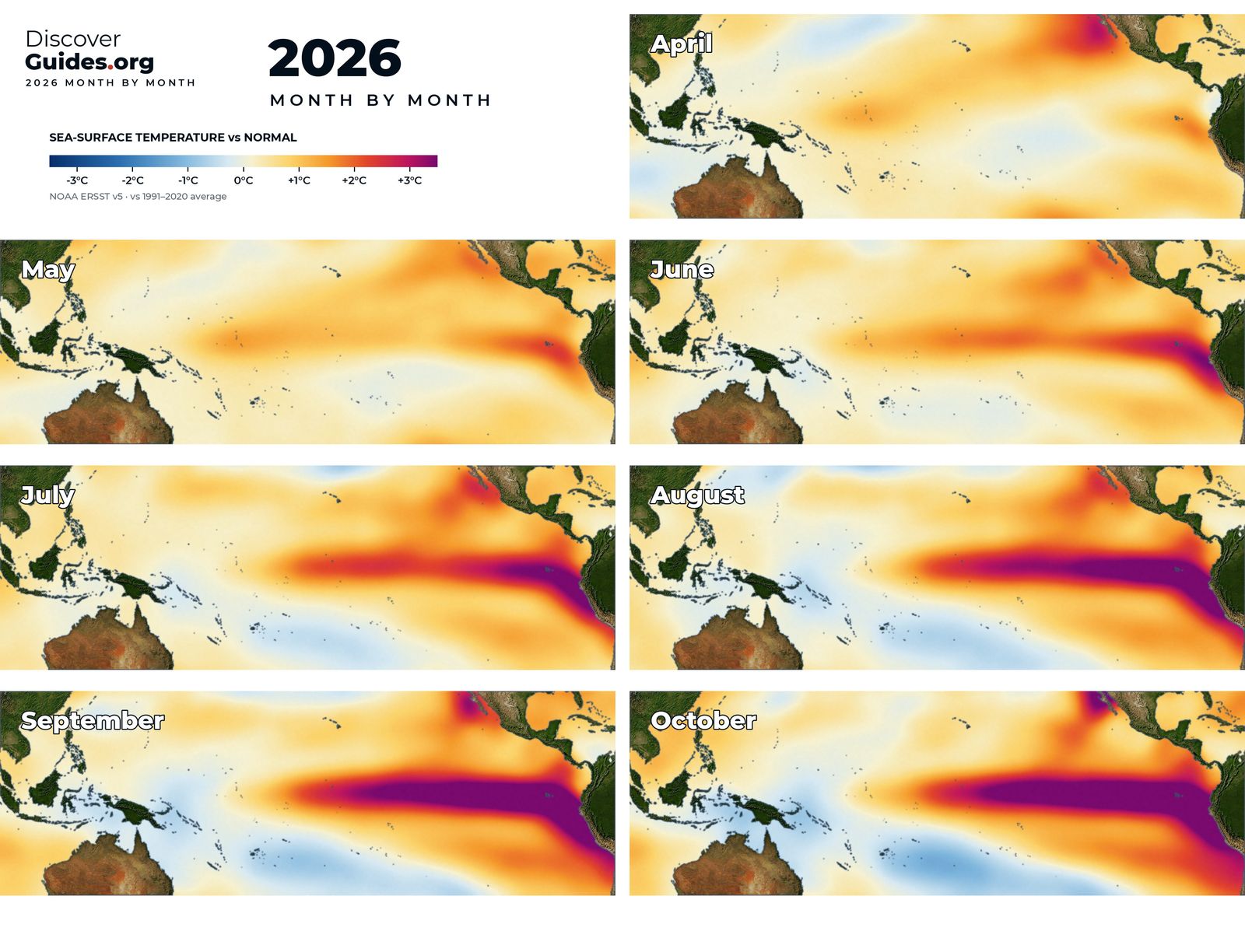
The Asian summer monsoon is sensitive to El Niño, though the Indian Ocean can amplify or cancel the effect. The 2026 monsoon shows the pattern: a weak El Niño formed in June and was strong by the end of the season, and the India Meteorological Department recorded 759.4 mm of rain between June and September, 87 per cent of the long-period average. Indonesia, too, tends to dry out as the rain moves east (see El Niño and the Indian Monsoon).

Chile and South America
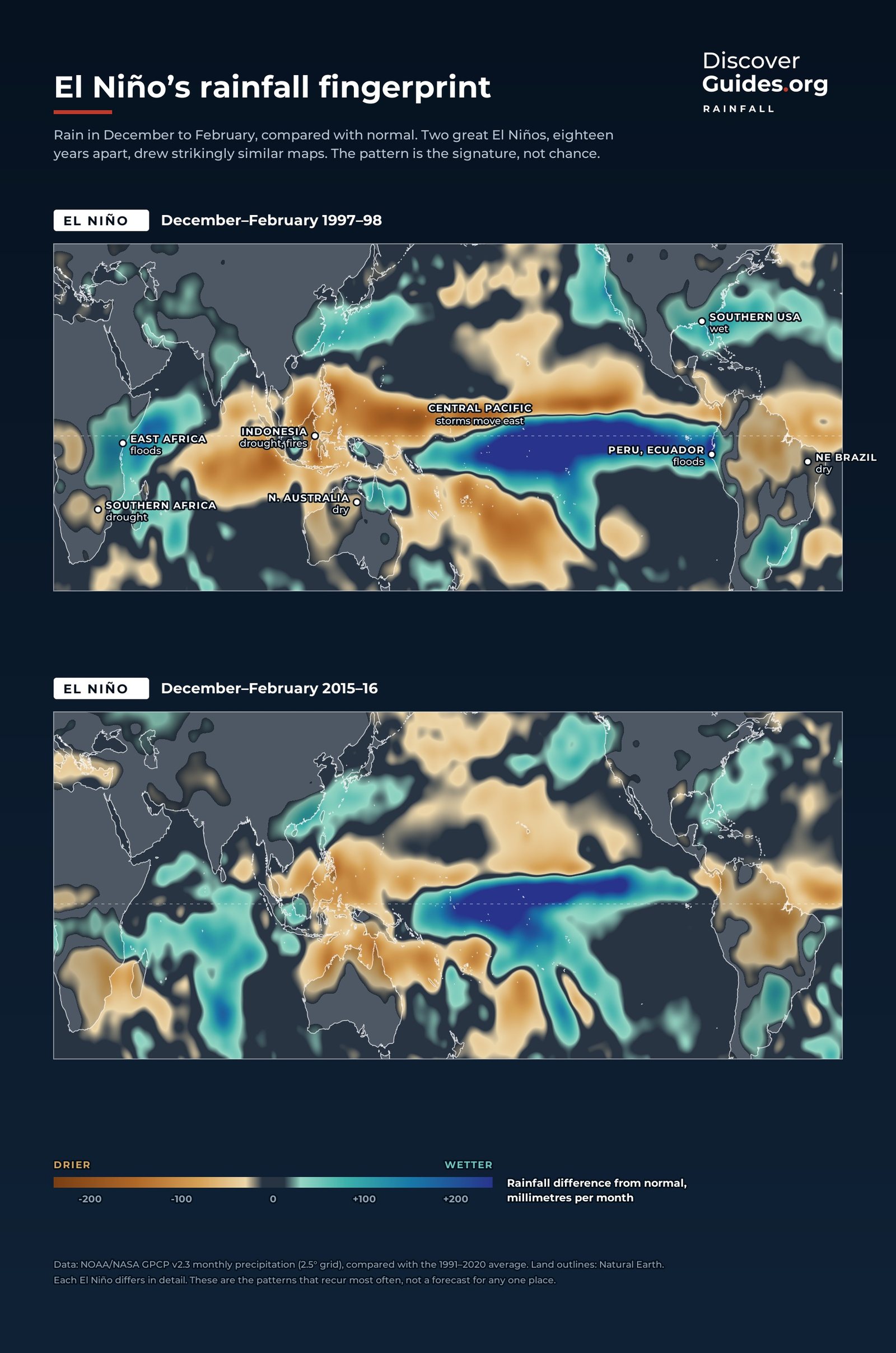
In central Chile, June to August is the rainy season, and El Niño tends to make it wetter. Along the west coast of South America and in south-eastern Brazil it tends to bring warmth. By contrast, the classic floods of coastal Ecuador and northern Peru come later, in the southern summer, when the warm sea fuels thunderstorms right on the coast (see Coastal El Niño).
Hurricane season
June to August is also when hurricane seasons get going in the Northern Hemisphere. El Niño tends to strengthen the wind shear over the Caribbean and tropical Atlantic and relax it over the central and eastern Pacific, so NOAA sums up the result as more eastern and central Pacific hurricanes and fewer Atlantic ones. In 2026, as of early November, the Atlantic season had produced only one hurricane (see El Niño, Hurricanes and Typhoons).
Local tipTendencies, not certainties. NOAA notes that the typical impacts of El Niño show up in roughly 40 to 80 per cent of episodes depending on the region. For your own plans, use your national weather service's seasonal outlook.
Questions
Does El Niño affect summer weather?
Yes, mainly in the tropics and the Southern Hemisphere. In June-August El Niño tends to bring drier conditions to eastern Australia and Indonesia, a weaker Indian monsoon, and wetter weather in central Chile.
Does El Niño affect summer in North America?
NOAA notes there are no consistent El Niño impacts on North America in June-August. Its strongest effects there come in winter.
Does El Niño cause a weak Indian monsoon?
It raises the odds. Every severe Indian drought in 132 years of records came with an El Niño, but many El Niños brought no severe drought.
Does El Niño mean fewer Atlantic hurricanes?
Usually. It strengthens the wind shear over the Atlantic, though in 2023 record-warm Atlantic water still produced 20 named storms.