At a glance
Fishermen in northern Peru noticed long ago that a warm current appeared off the coast around Christmas in some years. They called it El Niño, after the Christ child. Scientists later borrowed the name for the whole Pacific-wide pattern, explained in what El Niño is. On the Peruvian coast the local meaning never went away.
A desert beside a cold sea
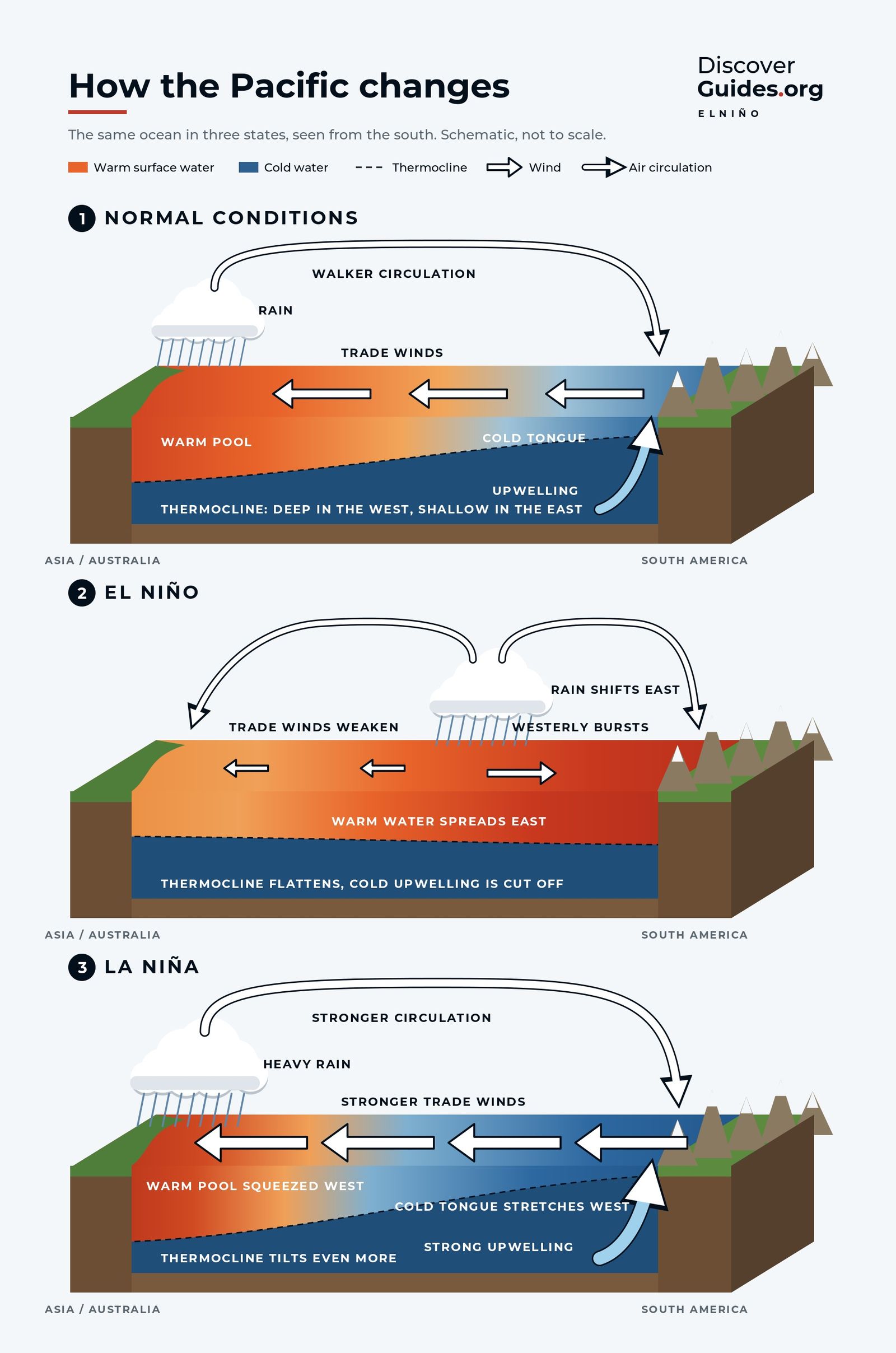
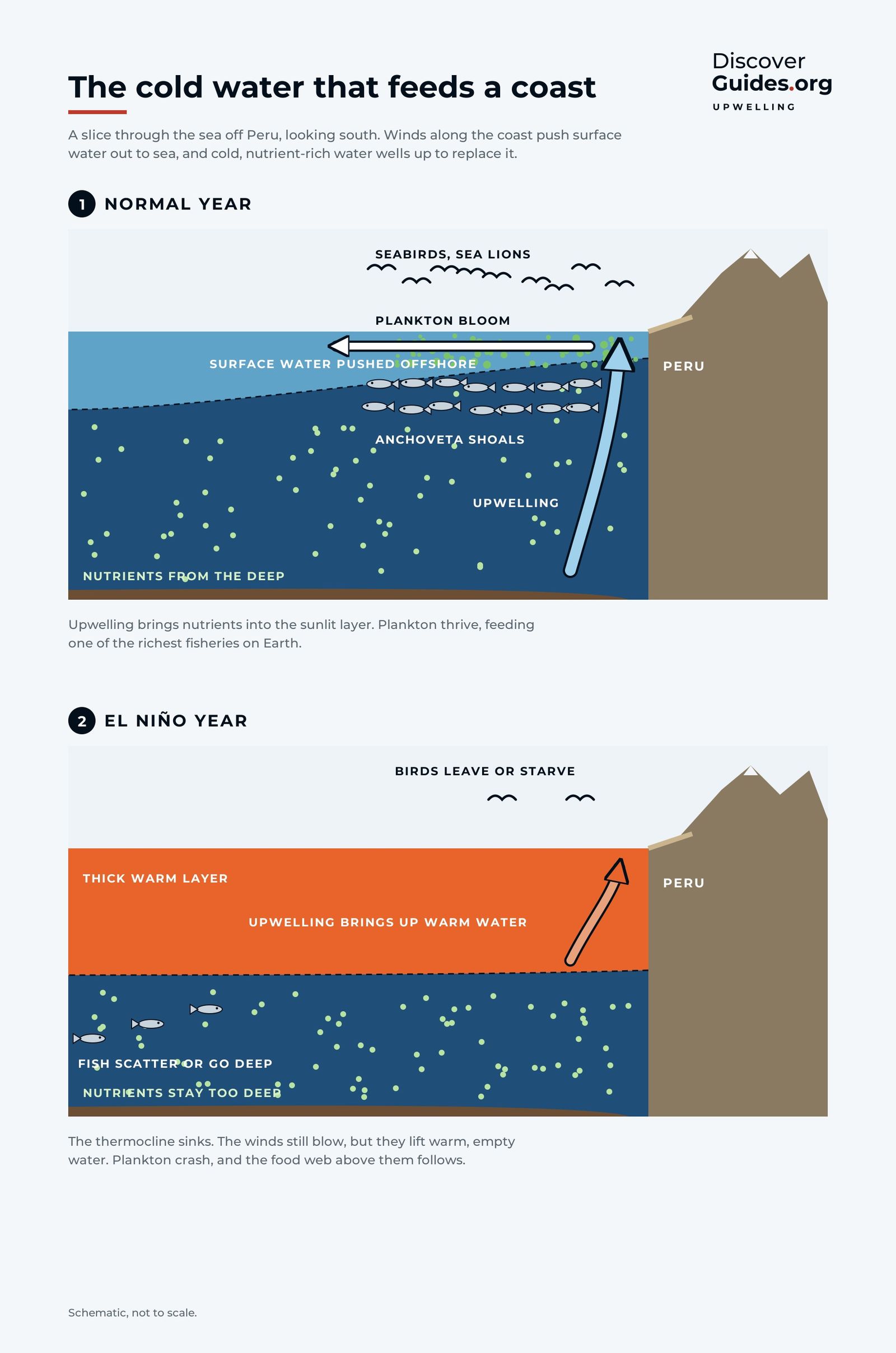
Peru's coast is a long strip of desert between the Pacific and the Andes. The reason it is so dry is the sea. Winds blowing along the coast push surface water offshore, and cold water from the deep wells up to replace it, carried north by the Humboldt Current. The cold water chills the air above it, so rain clouds cannot build. Lima, on the same coast, sees almost no rain in a normal year.
The same upwelling makes the sea extraordinarily rich. It lifts nutrients into the sunlit surface layer, plankton bloom, and vast shoals of Peruvian anchoveta feed on them. The anchoveta in turn feed seabirds, sea lions and one of the largest single-species fisheries in the world, most of it ground into fishmeal and fish oil for aquaculture and livestock feed.
When the sea turns warm
In an El Niño, warm water from the western Pacific travels east and piles up against South America. The thermocline, the boundary between warm surface water and cold deep water, is pushed down. Upwelling continues, but now it brings up warm water with few nutrients. Plankton crash. Anchoveta scatter, move south or dive deeper, and many die or fail to breed. Seabirds that depend on them leave the coast or starve, and sea lion pups go hungry.
The guano birds
The anchoveta feed millions of seabirds along the coast, among them the guanay cormorant, the Peruvian booby and the Peruvian pelican. Their droppings, built up over centuries on rainless offshore islands, became guano, a fertiliser so valuable that it drove a boom in Peru's economy in the nineteenth century.
In strong El Niño years the birds suffer first and most visibly. With the fish gone or out of reach, colonies abandon their nests and adult birds scatter along the coast or die. Their numbers have recovered after past events, but each strong El Niño sets them back.
The fishery that fell
In 1970 Peru landed a record 12.4 million tonnes of anchoveta, far above what scientists considered sustainable. When El Niño arrived in 1972, the weakened stock collapsed, and the catch fell to about 4.4 million tonnes that year. Later research concluded that overfishing and El Niño together caused the crash; neither alone explains it. The fishery took years to recover and remains under close scientific management today.
The warm years of 1982-83 and 1997-98 hit the anchoveta hard again. In 2023 Peru's government cancelled the first anchovy fishing season of the year after surveys found too many juvenile fish, a decision linked to the warm conditions of that year's coastal El Niño. Peru's marine research institute, IMARPE, now surveys the stock before each season to guide the decision. The bigger events are profiled in El Niño 1982-83 and El Niño 1997-98.
When the desert floods
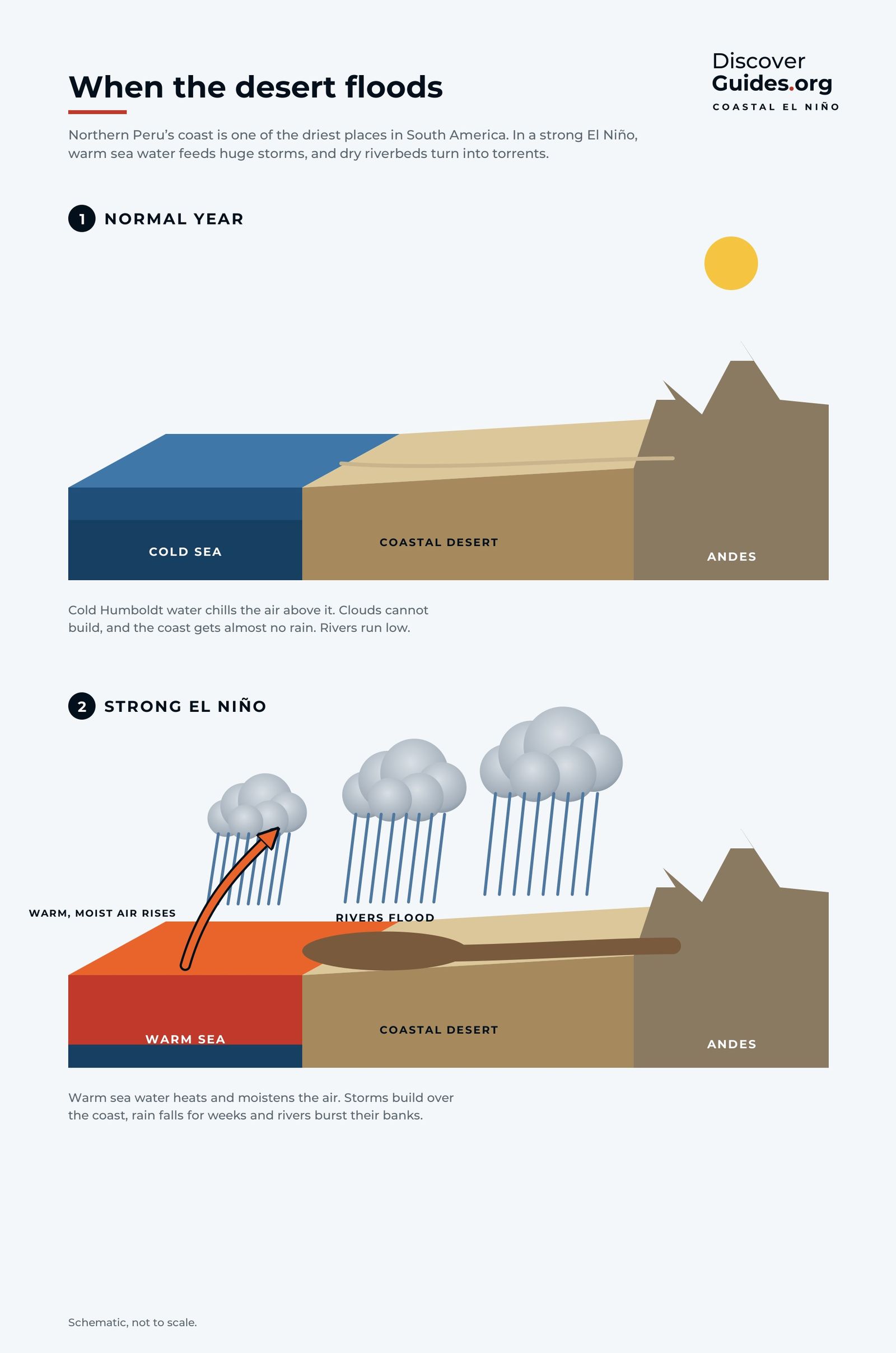
The graphic at the top shows the other side of El Niño in Peru. With warm water offshore, the air over the coast becomes warm and humid, storms build, and rain falls for weeks on a desert that is not built for it. Dry riverbeds turn into torrents, roads and bridges wash out, and in the north, around Piura and Tumbes, farmland and towns flood. In 1982-83 and 1997-98 the floods along Peru's north coast were among the worst disasters of those events.
Peru also has its own kind of event: the coastal El Niño, when the sea warms sharply off South America without a full Pacific-wide El Niño. The coastal El Niño of early 2017 brought deadly floods and mudslides to northern Peru, and another in early 2023 brought heavy rain to the north coast.
SafetyIn northern Peru's rainy season, sudden mudflows, known locally as huaicos, can come down dry ravines with little warning. Stay out of quebradas and dry riverbeds during heavy rain, never cross flooded roads, and follow warnings from SENAMHI, Peru's weather service, and INDECI, its civil defence agency.
Peru in 2026-27
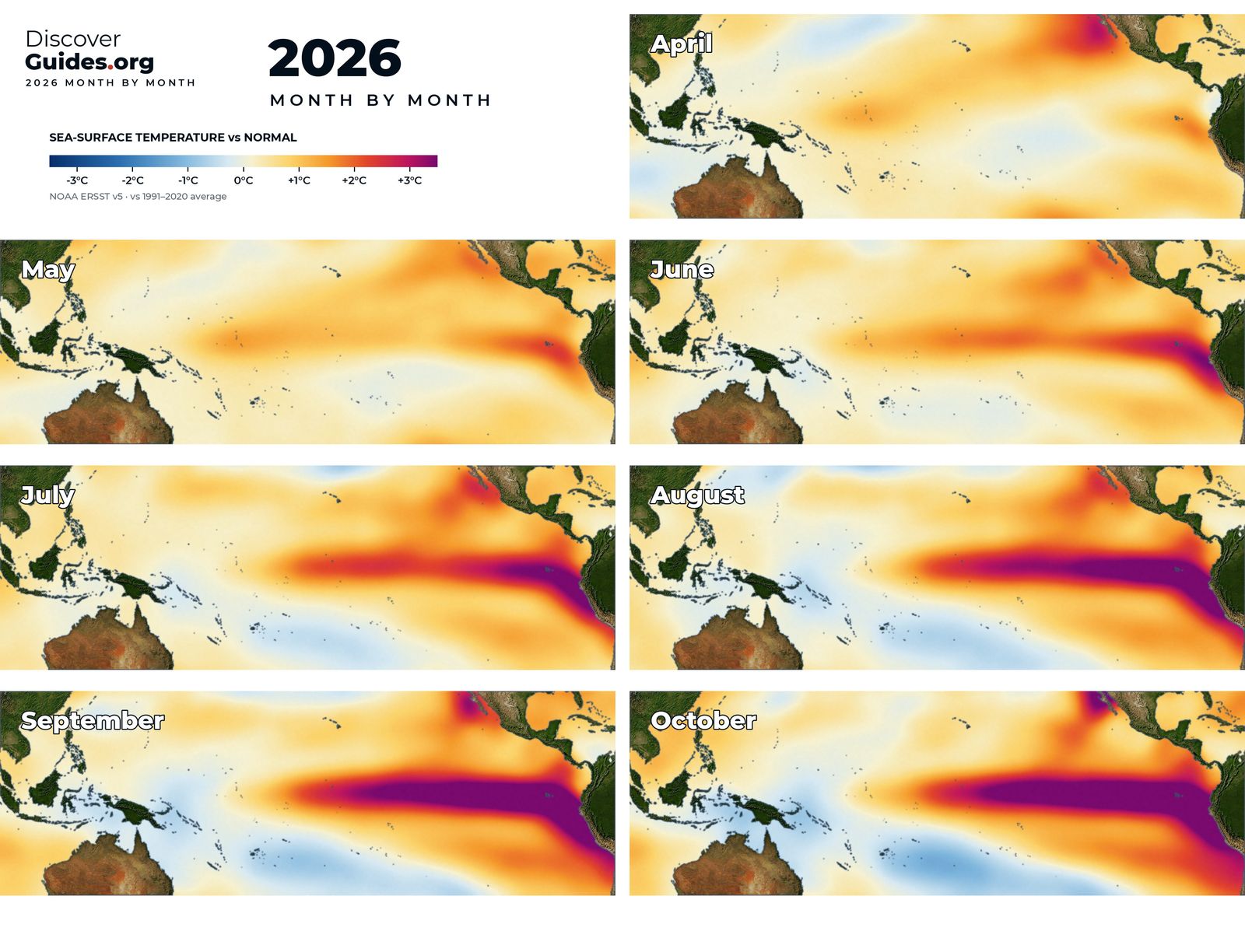
Peru's national El Niño study committee, ENFEN, issued a coastal El Niño alert early in 2026 and tracks the event in regular official communiqués. As of NOAA's October 2026 update, the Niño-1+2 region off Peru and Ecuador was running about +3.9°C (7.0°F) above normal, and sea surface temperatures exceeded +4°C in parts of the eastern equatorial Pacific. NOAA expected a strong to very strong El Niño through January to March 2027, which overlaps the north coast's rainy season. Outlooks can change; ENFEN's communiqués give the latest for Peru.
The book Discover El Niño follows the story from the fishermen who named the current to the scientists who now forecast it, and El Niño and coral bleaching looks at what the same warm water does to reefs.
To see the places in this story for yourself, our guide Discover Peru takes you there.
Questions
Why is it called El Niño?
Peruvian fishermen named the warm current that sometimes appeared off the coast around Christmas after the Christ child, El Niño. Scientists later applied the name to the whole Pacific pattern.
Why does El Niño cause floods in Peru?
Normally cold water off the coast keeps the air too cool for rain clouds. In El Niño the sea warms, the air becomes warm and humid, and storms build over the desert coast, causing heavy rain and floods.
How does El Niño affect the anchoveta?
The thermocline sinks, so upwelling brings up warm, nutrient-poor water. Plankton crash, and anchoveta scatter, go deeper or fail to breed, which cuts catches and starves seabirds.
What is a coastal El Niño?
A strong warming of the sea off Peru and Ecuador that can happen without a full Pacific-wide El Niño. The coastal El Niño of 2017 caused deadly floods in northern Peru.