At a glance
Dengue
A 2025 study in Nature Communications, using dengue records from 57 countries in the Americas and Asia between 1980 and 2024, found that ENSO explained about 63 per cent of the year-to-year variation in cases. Each 1 °C rise in the Niño 3.4 index was associated with roughly 48 per cent more annual cases through its effect on temperature.
The authors estimated that the 2023-24 El Niño alone added about 9.6 million dengue cases beyond normal seasonal patterns, with effects lasting up to two years. That fits the record: the World Health Organization reported 14.4 million dengue cases worldwide in 2024, the highest burden ever recorded, with more than 11,000 deaths and over 90 per cent of cases in the Americas.
| El Niño | Estimated extra dengue cases |
|---|---|
| 1982-83 | About 0.2 million |
| 1997-98 | About 1.4 million |
| 2015-16 | About 4.1 million |
| 2023-24 | About 9.6 million |
The rising totals are not down to El Niño alone: the WHO also points to the growing presence of Aedes mosquitoes in urban areas.
Cholera in Bangladesh
In 2000 Mercedes Pascual, Xavier Rodó, Stephen Ellner, Rita Colwell and Menno Bouma reported in Science on hospital records from Bangladesh covering 1980 to 1998, a period in which every incoming patient was tested for cholera. Cholera peaks came every 3.7 years, matching the rhythm of ENSO events over the same years, and followed El Niño's onset by about 11 months. A 2003 review in The Lancet, led by Sari Kovats, judged that link well established, along with the link with malaria epidemics in parts of South Asia and South America.
Rift Valley fever after the 1997 floods
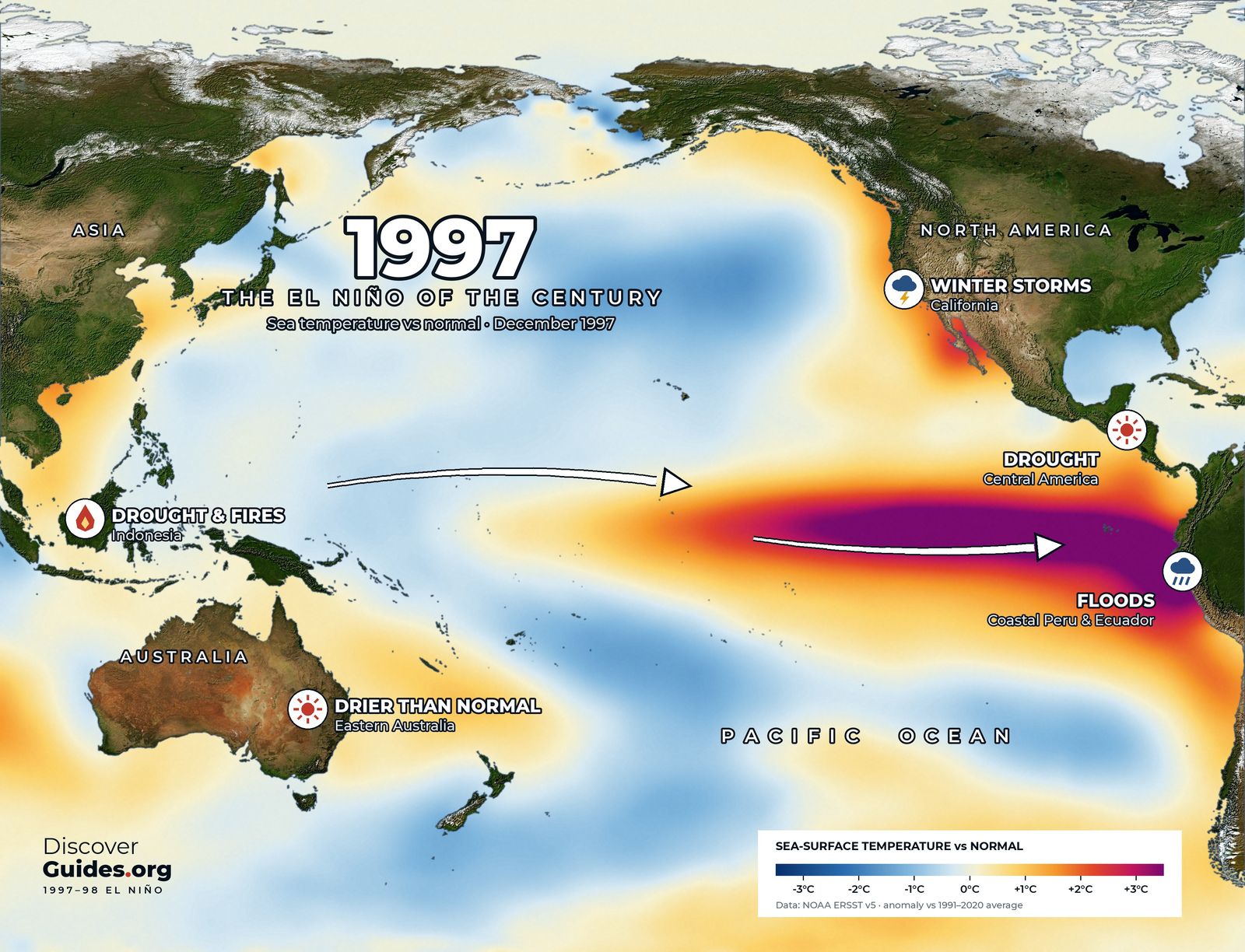
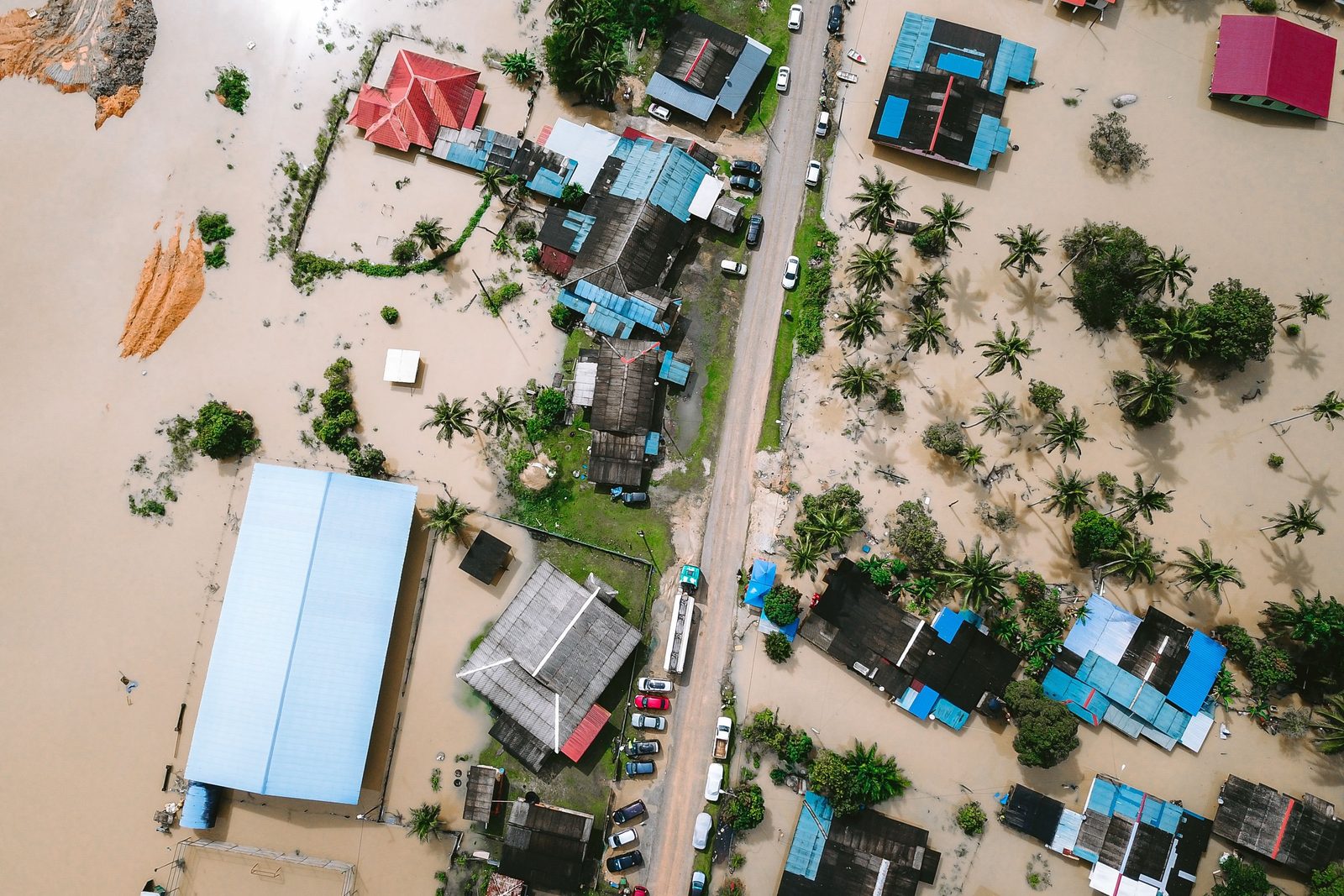
The giant El Niño of 1997-98, shown at its peak at the top of this page, brought East Africa its worst regional flooding since 1961. Between late October 1997 and January 1998, parts of north-eastern Kenya and southern Somalia received 60 to 100 times their usual seasonal rainfall, according to the US Centers for Disease Control and Prevention. The floodwater bred mosquitoes, and with them came Rift Valley fever, a virus that passes from livestock to people.
In December 1997 the WHO and Kenya's health ministry received reports of 478 unexplained deaths, and the CDC later estimated that about 89,000 people in the region could have been infected. Herders reported losing about 70 per cent of their sheep and goats. In 1999 Kenneth Linthicum, Assaf Anyamba, Compton Tucker and colleagues showed in Science that every documented outbreak in East Africa from 1950 to 1998 had followed unusually heavy rain, and that outbreaks could be predicted up to five months ahead from ocean temperatures and satellite images of vegetation (see El Niño 1997-98).
Diseases on a delay
- Cholera in Bangladesh: peaks about 11 months after El Niño begins.
- Dengue: extra cases for up to two years after an event.
- Rift Valley fever: outbreaks predictable up to five months ahead from ocean and vegetation data.
Haze and heat
El Niño also harms health through the air. The 2015 fires in Indonesia filled South-east Asia with smoke; a Harvard-led study estimated about 100,300 excess deaths across Indonesia, Malaysia and Singapore (see El Niño and Indonesia's Fires). In April 2024, as El Niño faded, Thailand's health ministry counted 30 heat-related deaths by late April.
Looking ahead
The same 2025 dengue study projected that, allowing for stronger El Niño events under human-induced warming, cumulative dengue cases in 2020-2099 could rise by roughly 39 to 82 per cent depending on the emissions path, while noting that many climate model runs project weaker, not stronger, ENSO swings (see El Niño and Climate Change).
Local tipIn warm, wet El Niño spells, clear standing water around your home to reduce mosquito breeding, and follow your health ministry's dengue alerts.
Questions
Does El Niño cause dengue outbreaks?
It raises the risk. A 2025 study across 57 countries found each 1 °C rise in Niño 3.4 was associated with about 48 per cent more dengue cases, and estimated the 2023-24 El Niño added about 9.6 million cases.
How is El Niño linked to cholera?
In Bangladesh, cholera peaks matched the rhythm of El Niño from 1980 to 1998 and followed El Niño's onset by about 11 months.
What is Rift Valley fever and how is it linked to El Niño?
A mosquito-borne virus that passes from livestock to people. Outbreaks in East Africa follow unusually heavy rain, such as the El Niño floods of 1997-98, when about 89,000 people may have been infected.
Can disease outbreaks be forecast from El Niño?
Partly. Rift Valley fever outbreaks can be predicted up to five months ahead from ocean temperatures and satellite vegetation data, and health planners use seasonal forecasts to target control.