At a glance
A lake that serves two masters
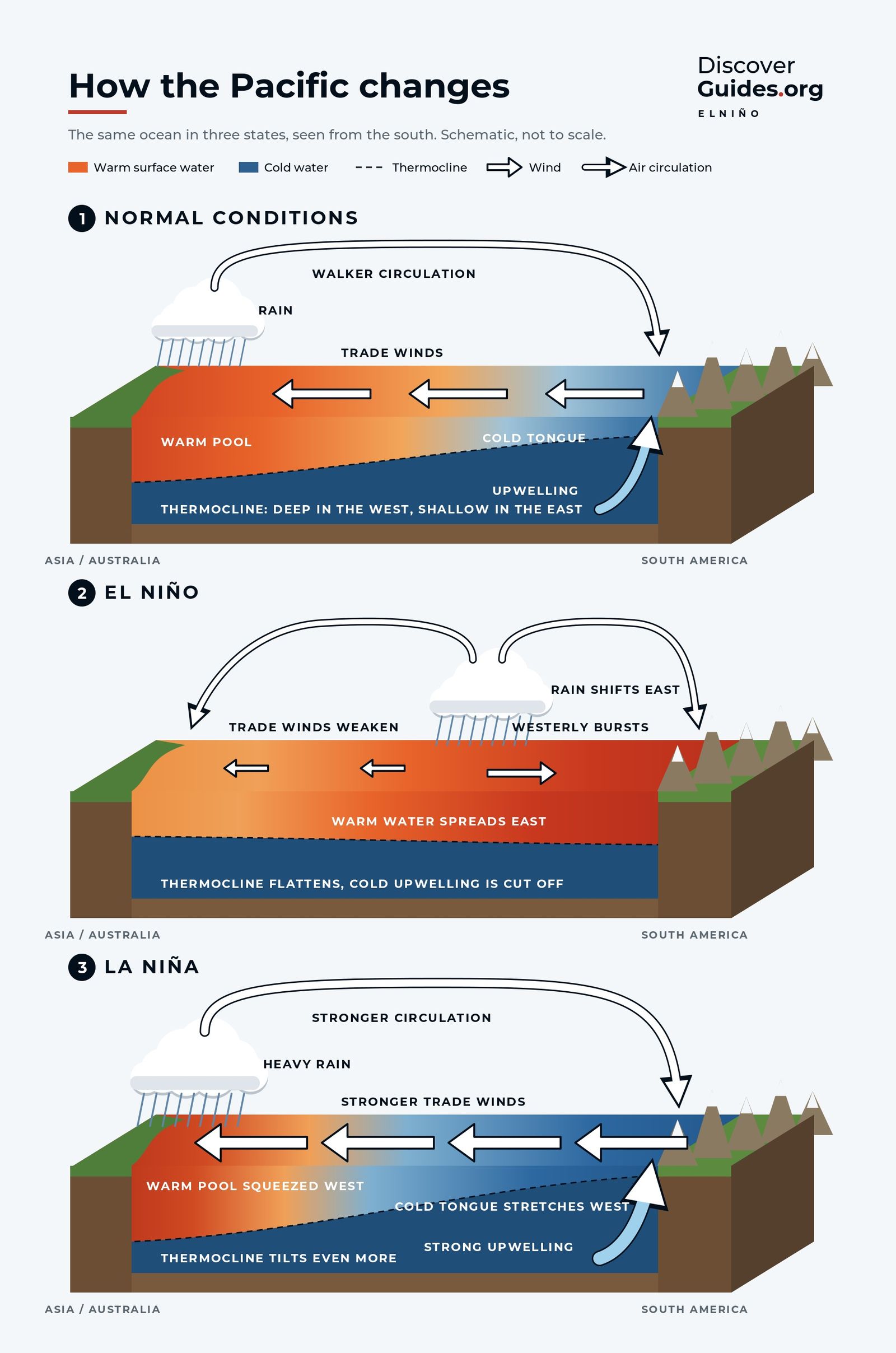
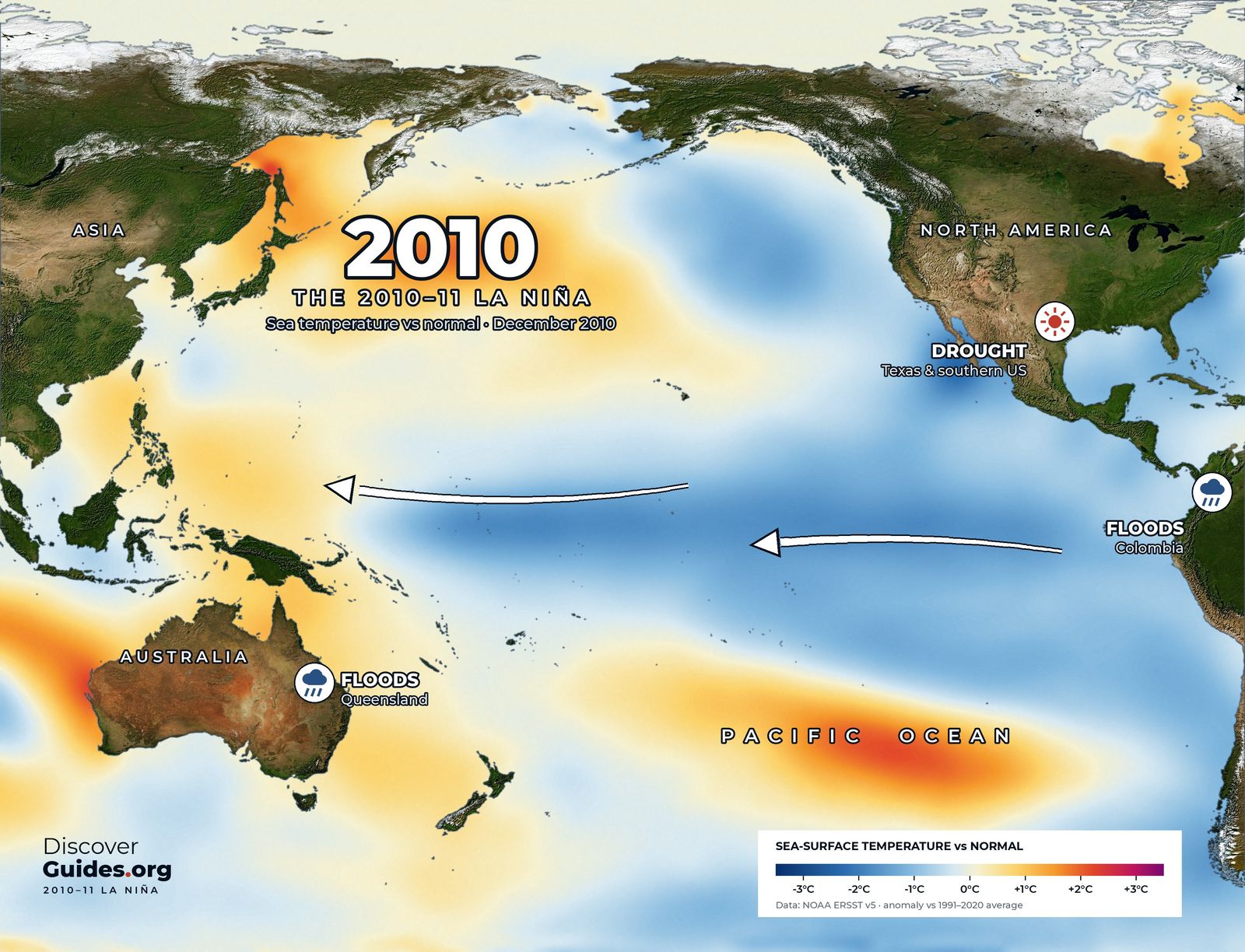
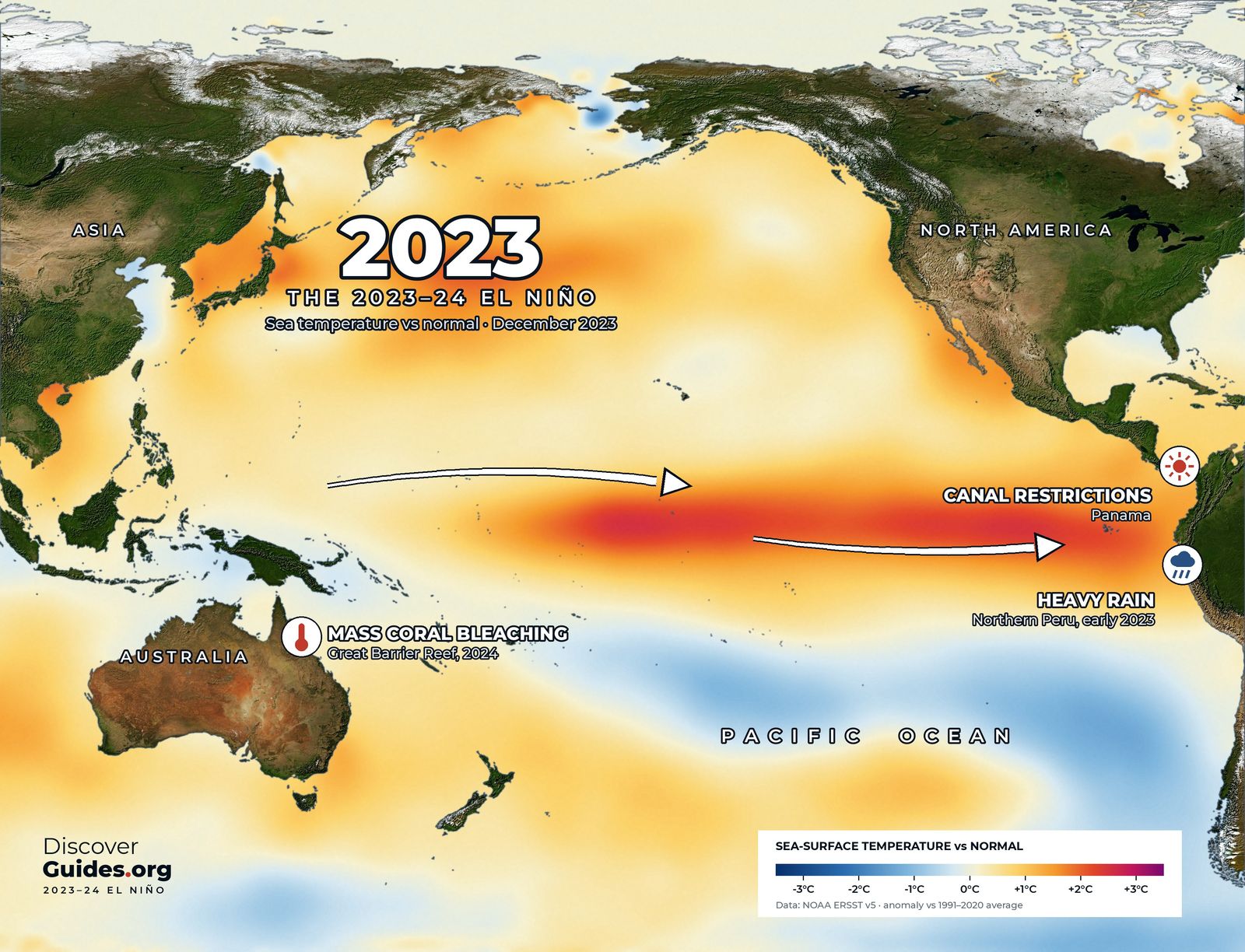
Gatún Lake is the Panama Canal's principal water reserve, and every ship that passes through the locks uses its water. Growing towns and a growing population draw on the same watershed, so in a drought the canal authority must ration. World Weather Attribution scientists found that so dry a rainy season is more likely in El Niño years, which bring about 8 per cent less rain to the region.
2023: the canal cuts back
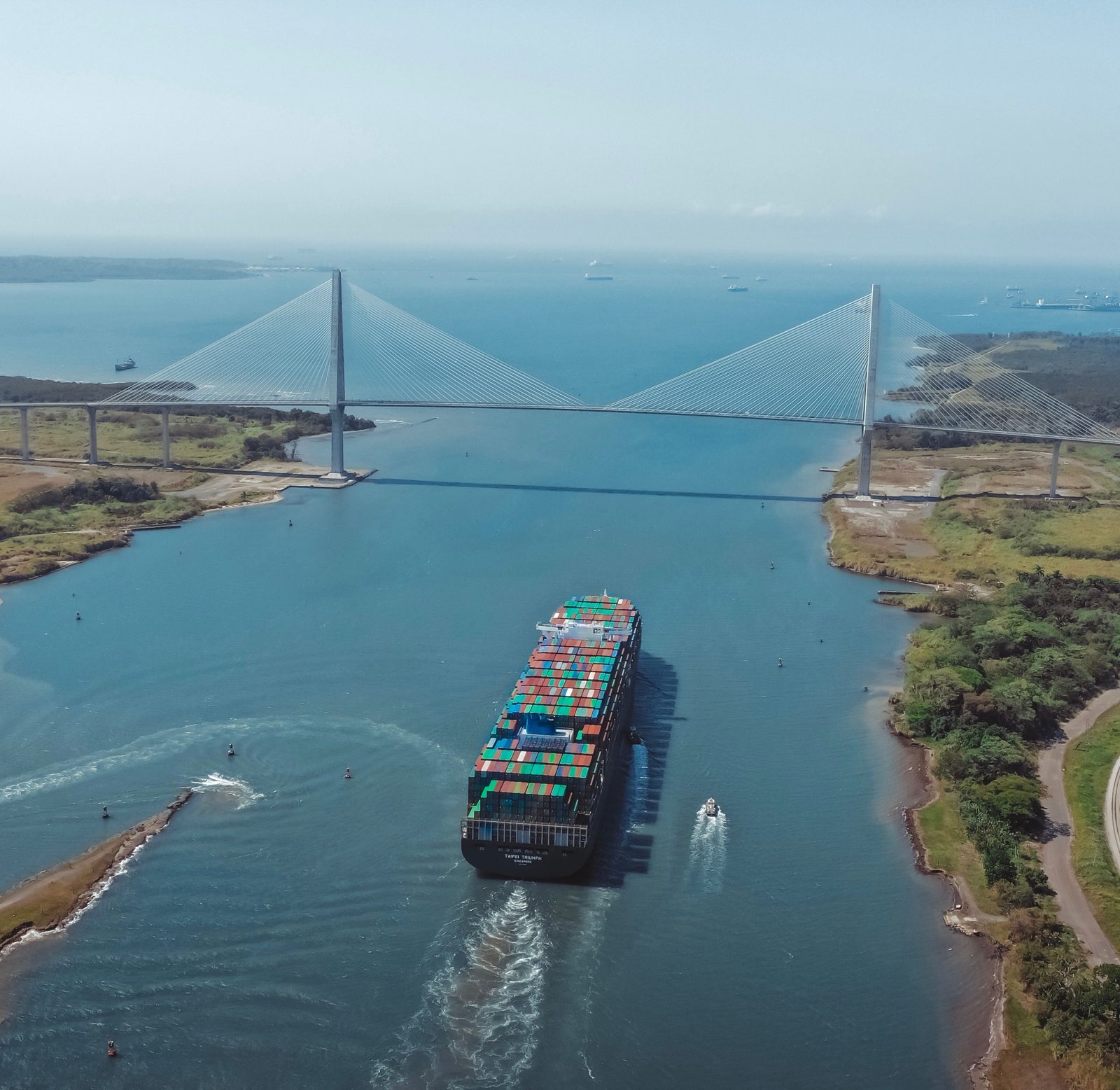
2023 was one of Panama's driest years on record, and the canal authority logged its driest October since 1950, with rainfall 41 per cent below average. As Gatún Lake fell to unprecedented levels for the time of year, the canal cut its daily booking slots to 25 from 3 November 2023, then to 24, and to 22 in December, against 36 transits a day in normal conditions.
- 8 Jun 2023El Niño declared
NOAA's Climate Prediction Center issues an El Niño Advisory.
- Oct 2023Driest October since 1950
Rainfall in the canal watershed runs 41% below average.
- 3 Nov 202325 slots
Daily booking slots are cut to 25, then to 24.
- Dec 202322 transits
Daily transits fall to 22, against 36 in normal conditions.
2026: draft limits return
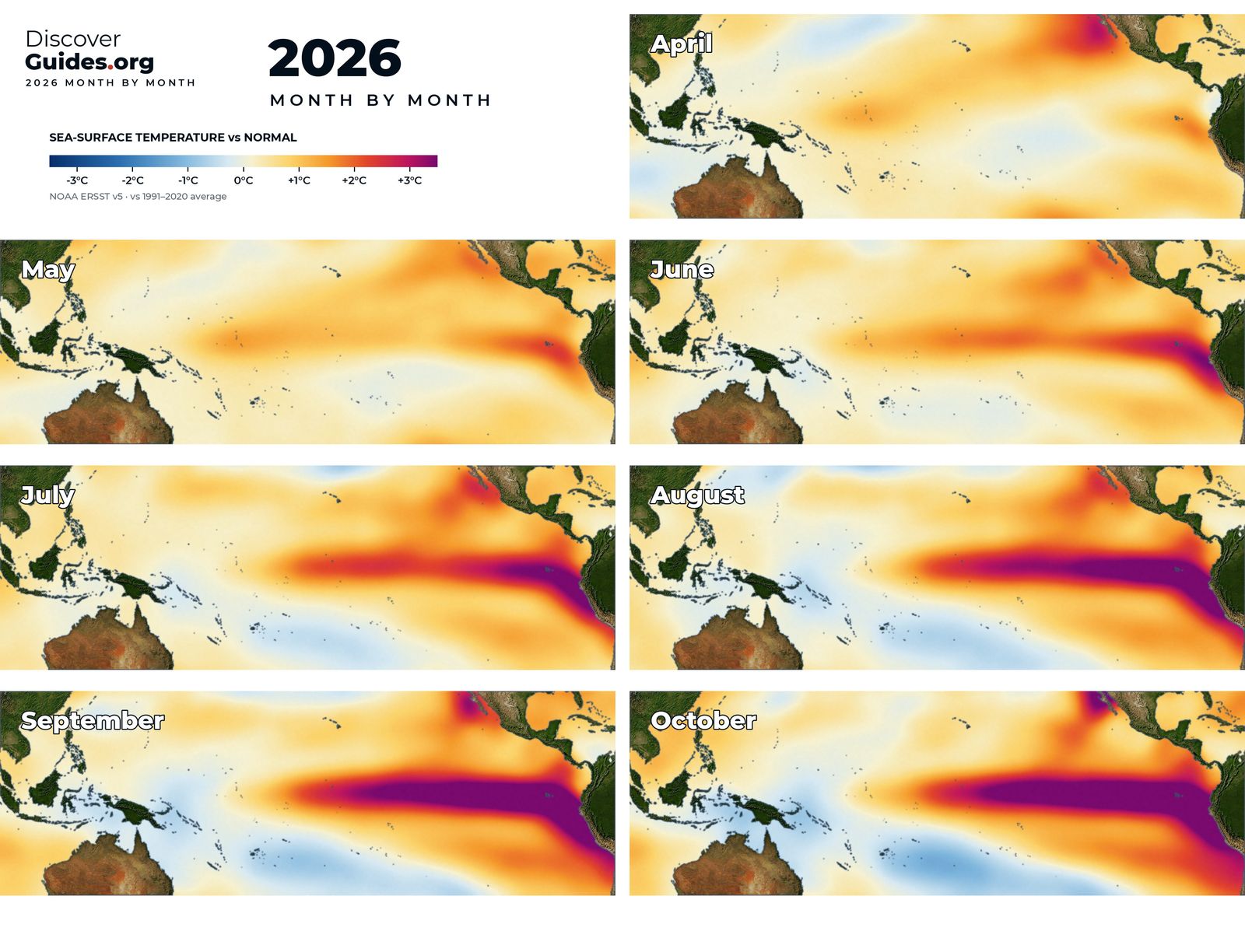
In 2026 the pattern returned. Under water-saving measures in place since December 2025, the Panama Canal Authority announced its fourth and fifth draft adjustments, lowering the maximum draft for the largest ships, in the Neopanamax locks, to 14.63 m (48 ft) from 26 August and to 14.48 m (47.5 ft) from 3 September. A shallower draft means each ship must carry less cargo. The graphic at the top of this page follows the 2026 El Niño month by month (see The 2026-27 Super El Niño).
Why it matters beyond Panama
Shipping is one of several ways El Niño reaches markets. A 2015 International Monetary Fund working paper found that most economies in its sample faced short-term inflation after an El Niño shock, as energy and non-fuel commodity prices rose. Rivers can fail as well as canals: in October 2023 the Rio Negro at Manaus, a highway for the Amazon, fell to a record low (see El Niño and the Amazon Drought and The Cost of El Niño).
Local tipBusinesses that rely on canal, river or hydropower routes should build in slack for El Niño years. World Weather Attribution scientists warn that, without adaptation, future El Niño years will likely bring low rainfall and low lake levels again.
Questions
How does El Niño affect the Panama Canal?
El Niño tends to reduce rainfall in Panama, lowering Gatún Lake, which supplies the water for every lock transit. The canal then limits transits or ship draft to save water.
How many ships could pass the Panama Canal in the 2023 drought?
Daily booking slots were cut to 25 from 3 November 2023 and transits to 22 a day in December, against 36 in normal conditions.
Are there Panama Canal restrictions in 2026?
Yes. The canal authority lowered the maximum Neopanamax draft to 14.63 m from 26 August 2026 and to 14.48 m from 3 September 2026 to save water.
Why does the Panama Canal need rain?
Its locks are filled with fresh water from Gatún Lake, which also supplies nearby towns. When rain fails, the lake falls and the canal must ration water.