At a glance
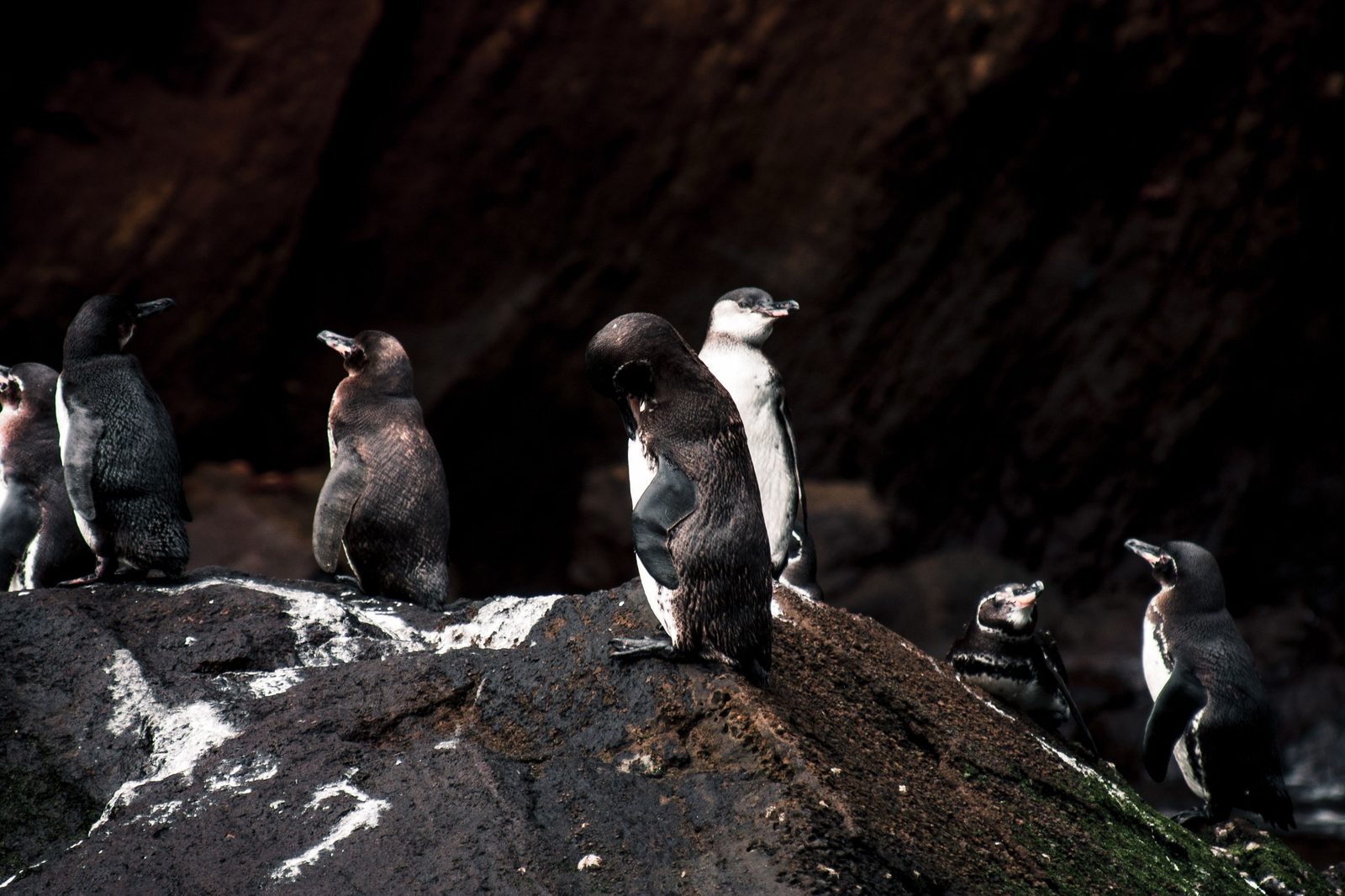
The Galápagos penguin lives on the equator, and it survives there only because cold currents well up around the western islands. About 95 per cent of the population lives on Fernandina and Isabela. Sea lions, fur seals, flightless cormorants and seabirds all depend on the same cold, fish-rich water (see Ocean Upwelling Explained).
When the upwelling stops
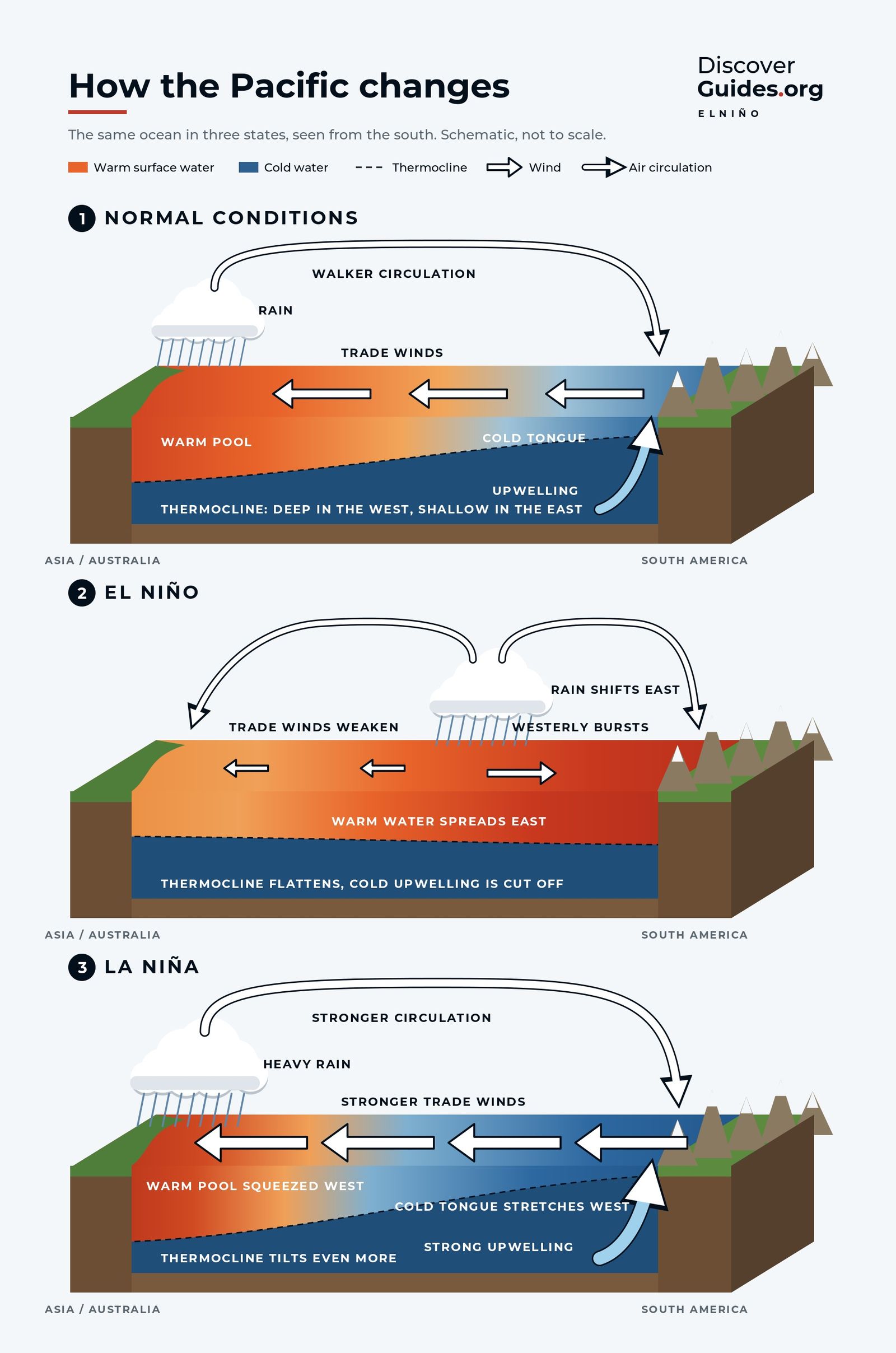
During El Niño a warm lid of water settles over the islands, the plankton thin out, and the effects climb the food chain within weeks. In 1982-83 Galápagos waters stayed 4 to 8 °C above normal until June or July 1983, and sea level rose by 22 cm. The Charles Darwin Research Station recorded 3,264 mm of rain between October 1982 and July 1983, against an annual average of 254 mm.
1982-83: a year without pups
| Species | What happened in 1982-83 |
|---|---|
| Galápagos penguin | From 1,720 birds (1980) to 398 (1983) |
| Flightless cormorant | From 802 birds (1980) to 409 (1983) |
| Galápagos fur seal | About 30% of adult females and almost all three-year-olds died |
| Galápagos sea lion | All pups born in 1982 died; 1983 pup production about a third of normal |
| Waved albatross | About 60% of eggs deserted in 1982 |
| Darwin's finches | About 1,000 young ringed on Daphne Major, Dec 1982-Jun 1983 |
Sources: Trillmich (1985), Noticias de Galápagos; Merlen (1984), Oryx. At Cape Hammond on Fernandina, all but one of 90 fur seal pups had died by mid-February 1983. Thousands of marine iguanas died as the algae they graze died back, and blue-footed boobies abandoned their colonies. Not every species lost: on land, Darwin's finches bred in large numbers in the rains.
The penguins never fully recovered. Galápagos Conservation Trust reports that the 1982-83 El Niño cut the population by about 80 per cent and the 1997-98 event by about a further 65 per cent. Numbers have slowly recovered but remain roughly half of their pre-1982 levels.
The iguanas that shrink
Galápagos marine iguanas graze on seaweed, which dies back when the water warms. In a study published in Nature in 2000, Martin Wikelski and Corinna Thom showed that adult iguanas can actually get shorter, losing up to 6.8 cm, or about 20 per cent of body length, over two-year periods. Shrinking helped: iguanas that shrank by about 1 cm improved their survival rate by roughly 10 per cent.
Coral reefs
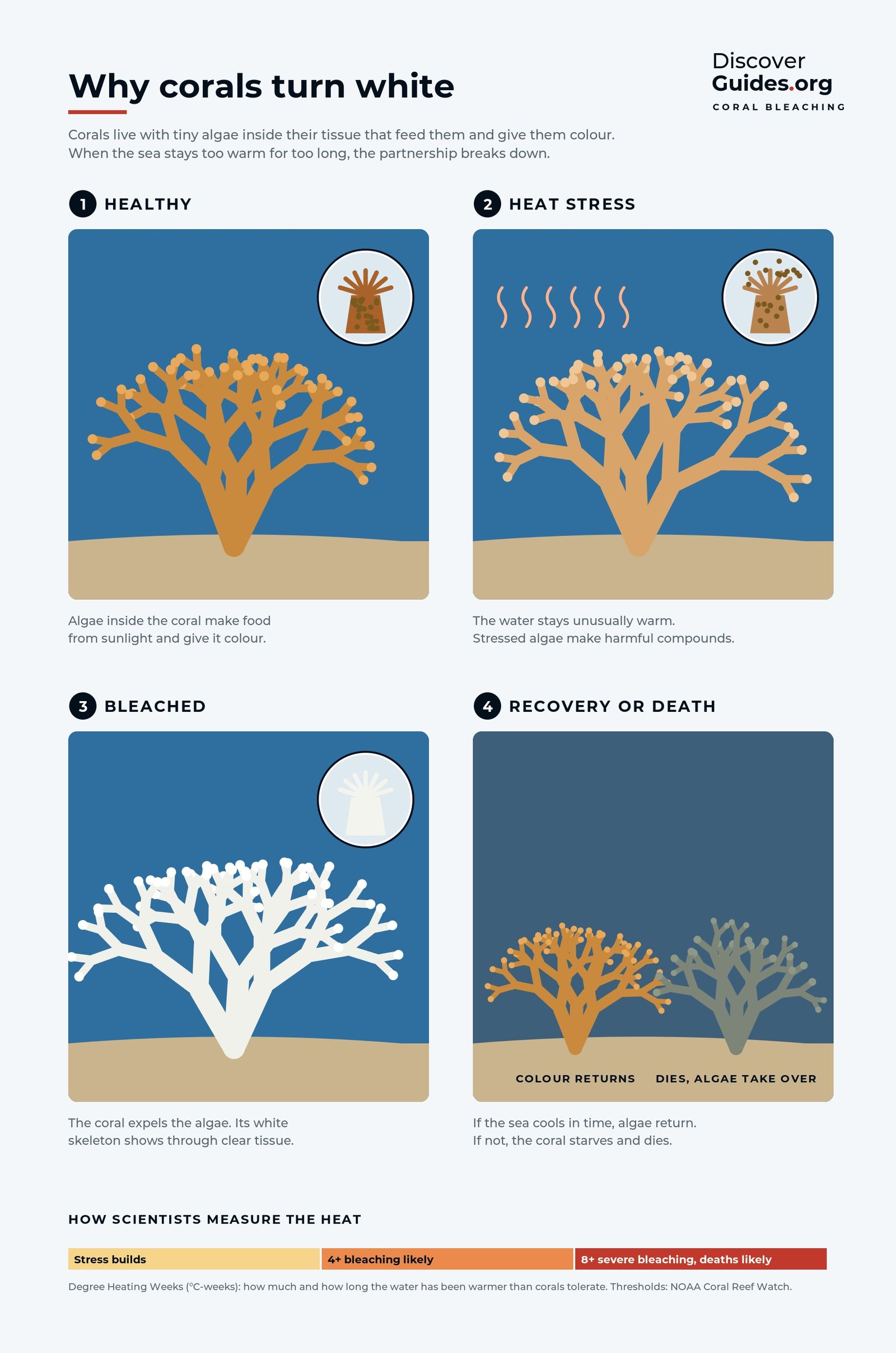
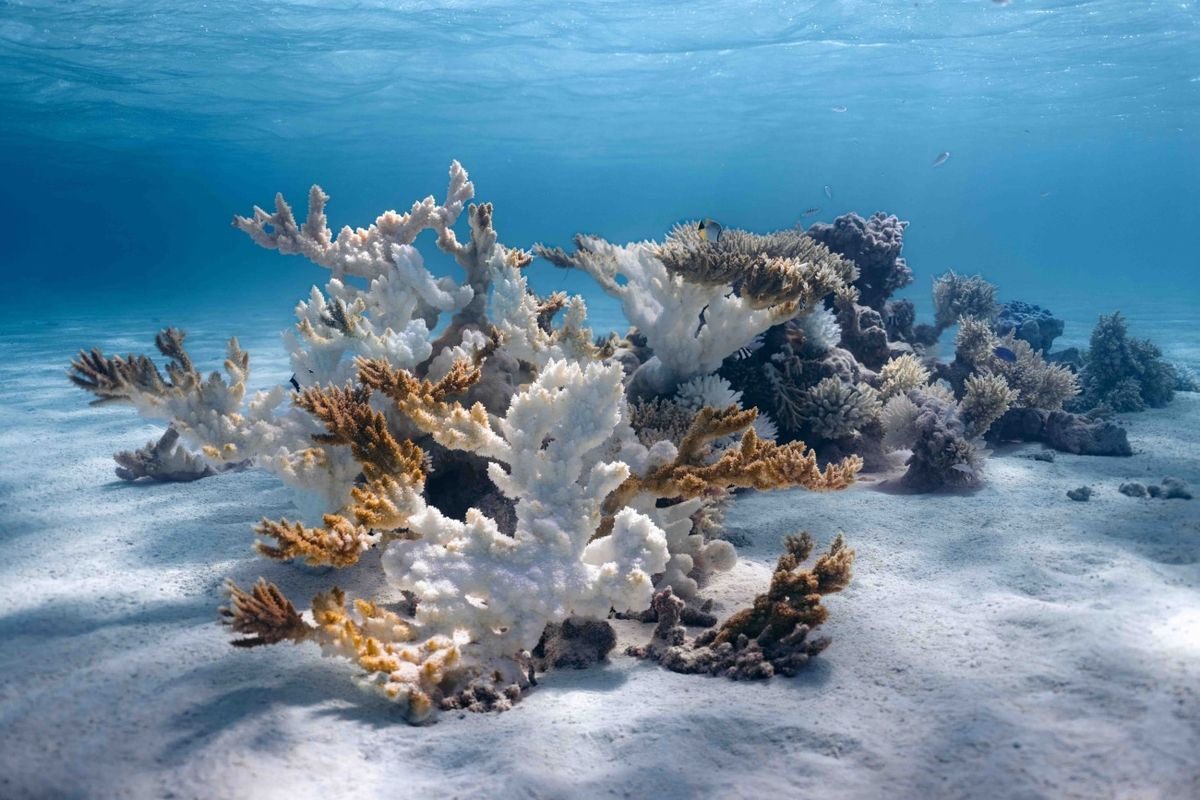
The eastern Pacific shows how deep reef damage can run. The Charles Darwin Foundation estimates that Galápagos reefs suffered about 97 per cent mortality during the 1982-83 El Niño, and the 1997-98 event then hindered their recovery and caused local extinctions. The graphic at the top of this page shows how heat stress bleaches a coral (see El Niño and Coral Bleaching).
Watching the 2026-27 giant
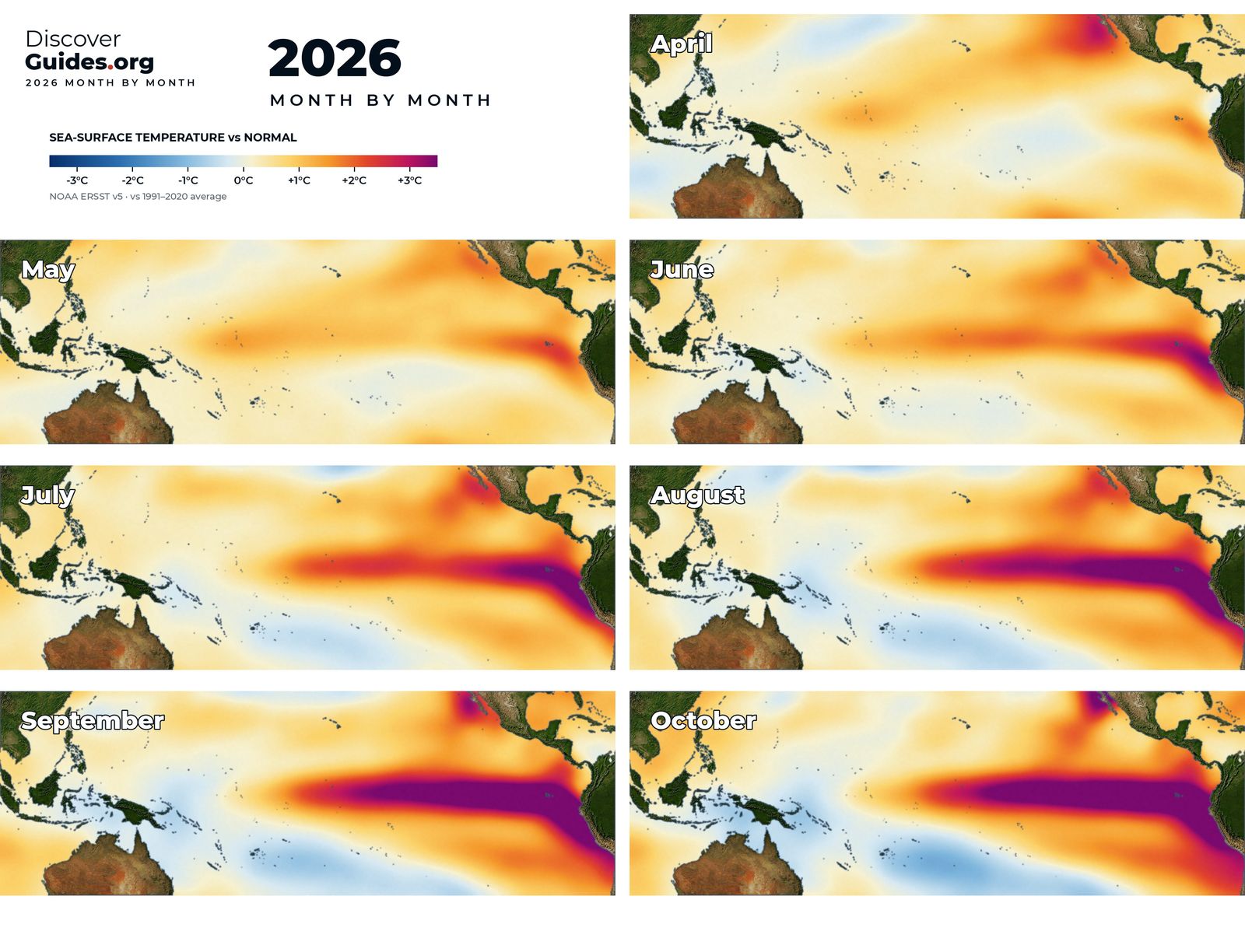
In September 2026 the Charles Darwin Foundation said El Niño was already under way in the islands, with sustained ocean warming through the first half of the year. Its science director, María José Barragán, explained the chain simply: "with warmer water, primary productivity declines." Marine iguanas, which lose weight when algae decline, are in her words a signal that "something is happening in the ocean." The foundation expected corals to be among the biggest losers, and warned that effects on breeding and survival can appear weeks or months after the warm water arrives.
Questions
How does El Niño affect the Galápagos?
It stops the cold, nutrient-rich upwelling that feeds the islands' sea life. Fish disappear, so penguins, sea lions, fur seals and seabirds go hungry, and marine iguanas lose their seaweed. It also brings heavy rain on land.
How many Galápagos penguins died in El Niño?
The 1982-83 El Niño cut the population by about 80 per cent, from 1,720 birds in 1980 to 398 in 1983. The 1997-98 event cut it by about a further 65 per cent.
Do marine iguanas really shrink?
Yes. A 2000 study in Nature found adult marine iguanas can lose up to 6.8 cm, about 20 per cent of their length, during food shortages, which improves their survival.
Do any Galápagos animals benefit from El Niño?
Darwin's finches on land bred in large numbers during the rains of 1982-83, with about 1,000 young ringed on Daphne Major.