At a glance
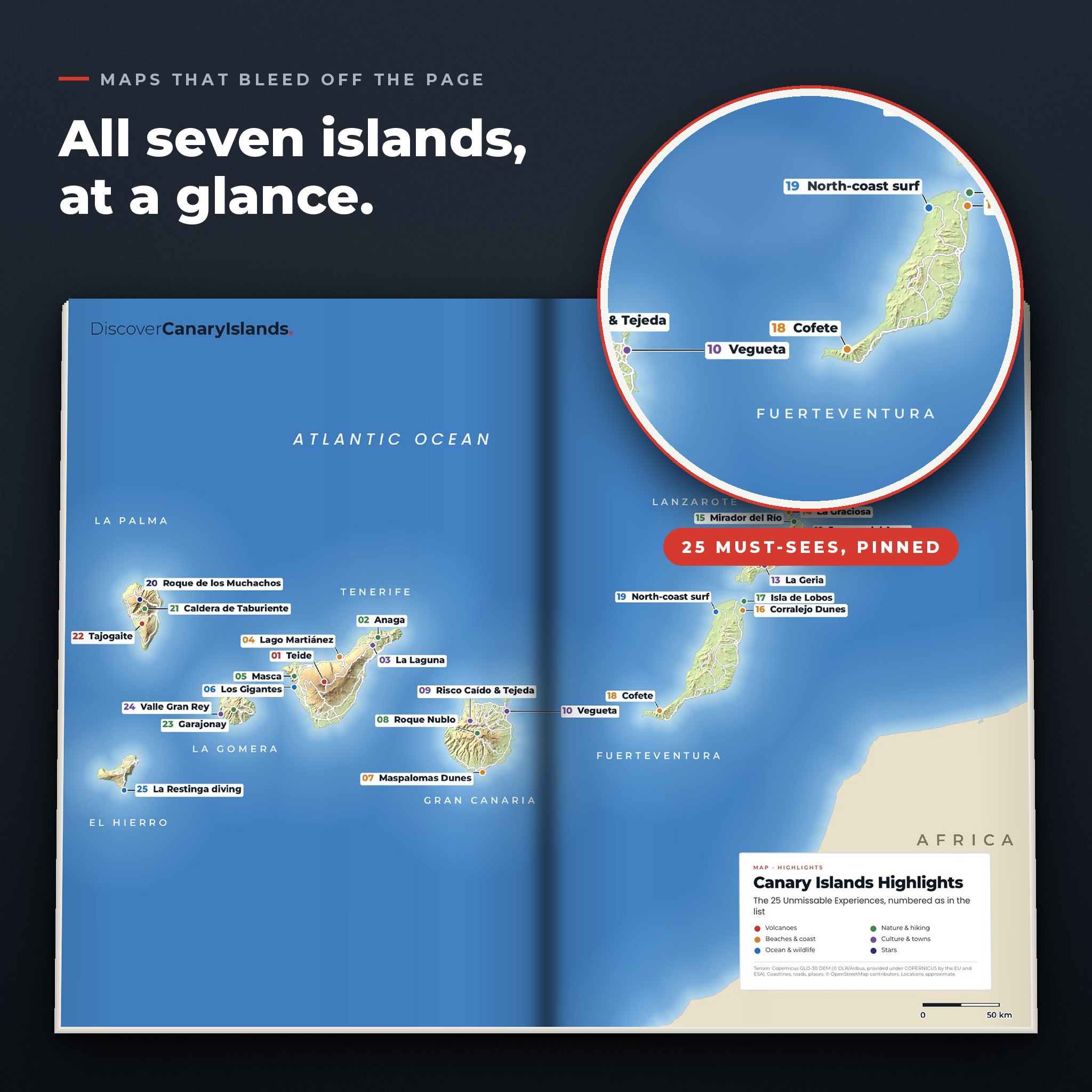
The Canaries lie off the north-west coast of Africa, and their climate is mild all year. Most visitors know the three big holiday islands, Tenerife, Gran Canaria and Lanzarote, plus Fuerteventura for beaches. The western islands, La Palma, La Gomera and El Hierro, are greener, steeper and much quieter.
The islands at a glance
| Island | Best for | Signature |
|---|---|---|
| Tenerife | Big landscapes, whales, variety | Teide National Park |
| Gran Canaria | City life, dunes, compact touring | Roque Nublo, Maspalomas |
| Lanzarote | Volcanoes, art, design | Timanfaya, César Manrique |
| Fuerteventura | Long beaches, wind, surf | Corralejo dunes, Cofete |
| La Palma | Hiking and stargazing | Caldera de Taburiente |
| La Gomera | Forest walks, slow travel | Garajonay |
| El Hierro | Diving, real remoteness | Mar de las Calmas |
| La Graciosa | A day or two of nothing | Sand streets, no cars |
The big three
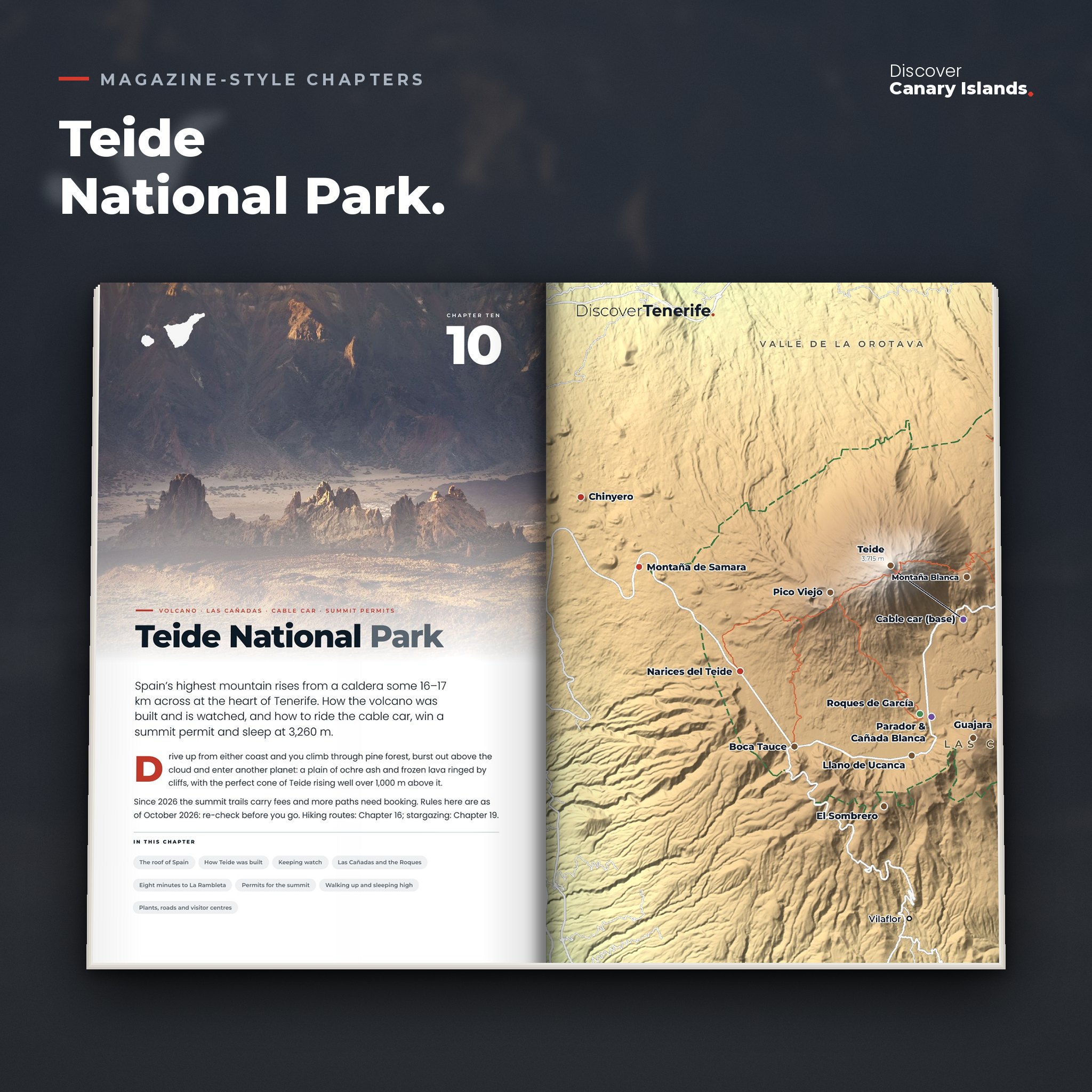
Tenerife is the largest island, at about 2,034 km², and the most varied. Teide National Park, a World Heritage Site since 2007, dominates the centre; the north has the old town of La Laguna and the laurel forests of Anaga; the south has the resorts and the whale-watching boats. Pick it for a first visit if you want a bit of everything.
Gran Canaria packs city, mountains and desert dunes into a round island of about 1,560 km². Las Palmas is the largest city in the Canaries, the summits around Roque Nublo are part of a World Heritage landscape, and the south coast has the dunes of Maspalomas. Our Tenerife or Gran Canaria guide compares the two in detail.
Lanzarote is the island of lava and art. The 1730s eruptions left the moonscape of Timanfaya, and César Manrique turned volcanic caves into gardens, pools and viewpoints. It is the driest of the three, and small enough to see well in four days.
Beaches and wind: Fuerteventura
Fuerteventura, the second largest island and the closest to Africa, has the longest beaches in the Canaries: the dunes of Corralejo in the north, the wild sweep of Cofete and the lagoons of Sotavento on the Jandía peninsula. Its steady winds make it a centre for windsurfing and kitesurfing, and a short boat ride from Corralejo reaches the tiny island of Lobos.
The green west: La Palma, La Gomera and El Hierro
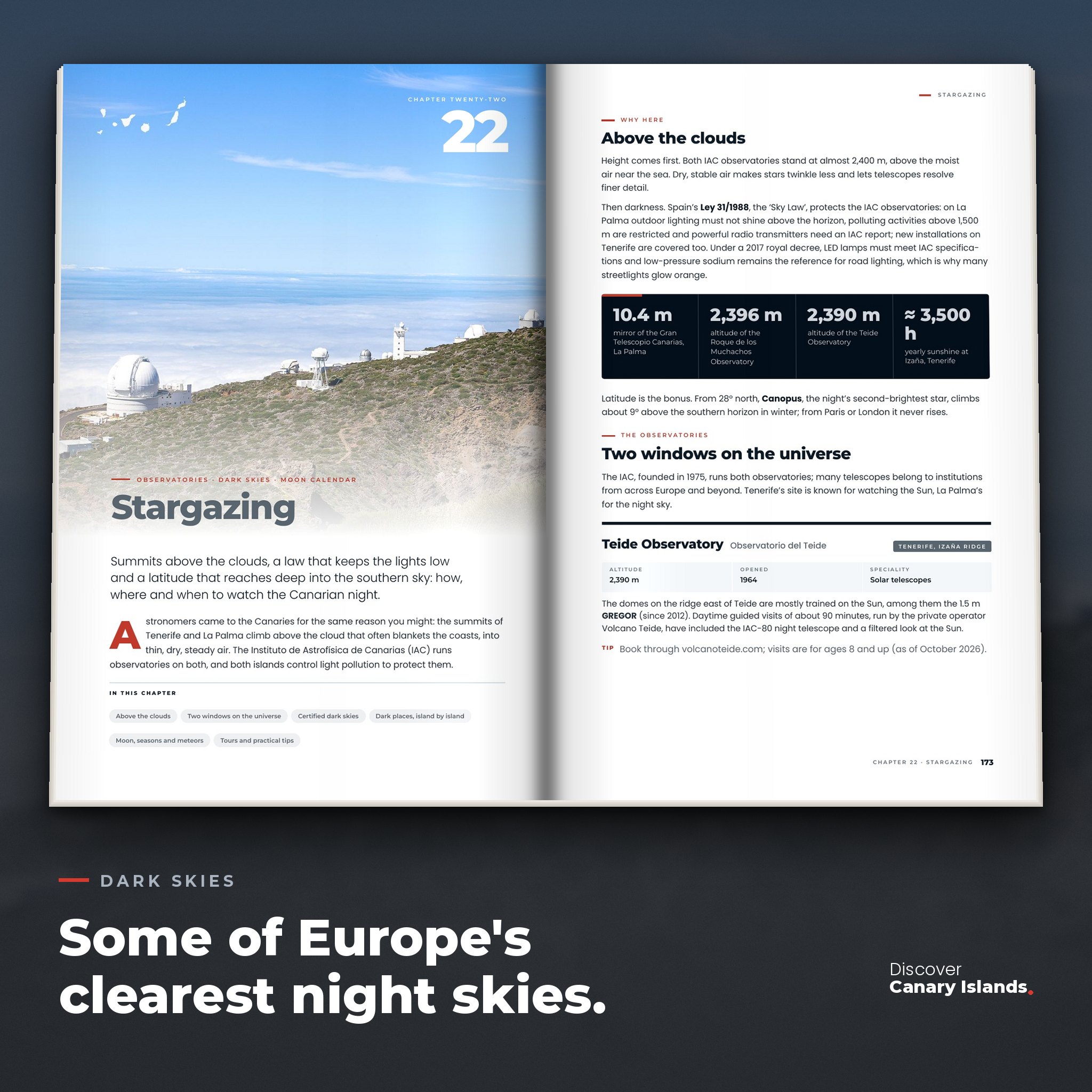
La Palma is steep, forested and built for hikers, with the vast Caldera de Taburiente and the observatories on Roque de los Muchachos, at 2,426 m. Its skies are protected by law against light pollution. In 2021 the island lived through a three-month eruption on its western side.
La Gomera is a round island cut by deep ravines, with the laurel forest of Garajonay National Park, a World Heritage Site since 1986, at its heart. It is about 50 minutes by ferry from Tenerife and is famous for Silbo Gomero, a whistled language still taught in schools.
El Hierro is the smallest and most remote of the main islands, a UNESCO Biosphere Reserve with fewer than 13,000 residents. Divers come for the calm, clear water of the Mar de las Calmas marine reserve off La Restinga.
Which island for which trip?
- First visit, a bit of everything: Tenerife.
- Winter sun on a beach: the south of Tenerife or Gran Canaria, or anywhere on Lanzarote and Fuerteventura.
- Families: Tenerife (Costa Adeje), Gran Canaria (Maspalomas) or Fuerteventura (Corralejo).
- Hiking: La Palma, La Gomera or Tenerife.
- Volcanoes: Lanzarote and Tenerife.
- Watersports: Fuerteventura and Lanzarote.
- City break with a beach: Las Palmas de Gran Canaria.
- Peace and quiet: El Hierro, La Gomera or La Graciosa.
Combining islands
Island-hopping is easy. Ferries link Tenerife with La Gomera (about 50 minutes from Los Cristianos) and with Gran Canaria (about 80 minutes from Santa Cruz to Agaete), and Lanzarote with La Graciosa and Fuerteventura. Short inter-island flights connect all the main islands. Popular pairs are Tenerife with La Gomera, Lanzarote with Fuerteventura, and Gran Canaria with Tenerife.
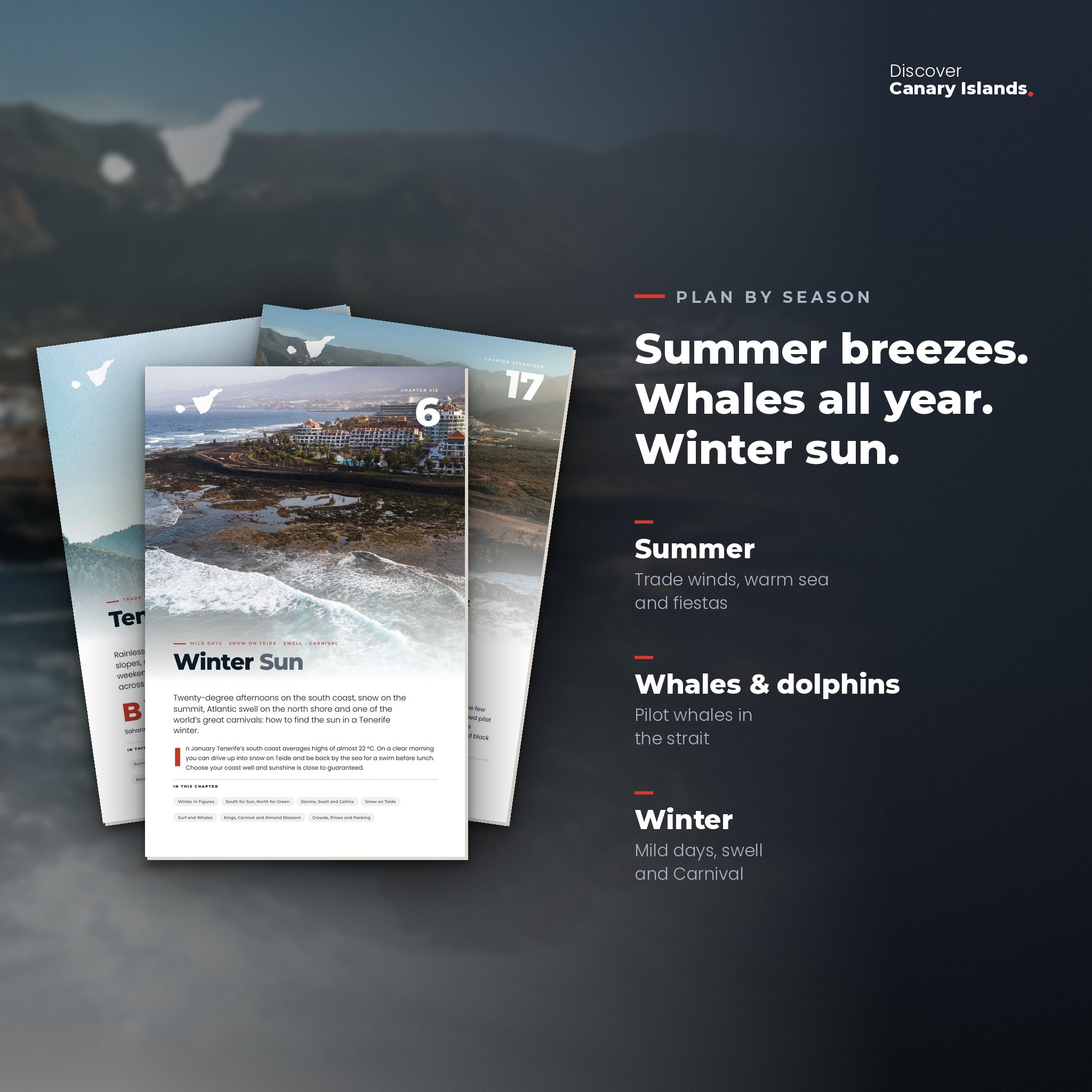
Local tipMatch the island to the month. Winter is best for the sunny south of the big islands and for the eastern islands; spring and autumn are best for the hiking islands in the west, when the trails are dry and green.
For month-by-month detail, see the best time to visit Tenerife, Gran Canaria or Lanzarote. Discover Canary Islands covers all eight islands in one book, with the best island for each month and ready-made island-hopping routes.
Questions
Which Canary Island is best for a first visit?
Tenerife, for its variety: Teide National Park, whale-watching, historic towns and beaches. Gran Canaria is a close second, especially if you like cities.
Which Canary Island has the best beaches?
Fuerteventura, for long natural beaches and dunes. Gran Canaria has Maspalomas and Las Canteras, and Lanzarote has the coves of Papagayo.
Which Canary Island is the quietest?
El Hierro, the smallest of the main islands, with about 12,000 residents. La Gomera and La Graciosa are also very peaceful.
Which Canary Island is best for hiking?
La Palma and La Gomera are the great hiking islands, with forests, ravines and calderas. Tenerife adds Teide and the Anaga mountains.
How many Canary Islands are there?
Seven main islands: Tenerife, Gran Canaria, Lanzarote, Fuerteventura, La Palma, La Gomera and El Hierro. La Graciosa, off Lanzarote, is often counted as the eighth.