At a glance
The island's long-term averages, measured at Gran Canaria airport on the east coast, show how even the climate is: about 18°C on average in January and about 25°C in August, with only around 151 mm of rain across a whole year, most of it between November and February (AEMET, 1981 to 2010).
So any month works. Winter (November to March) is best for warm sun while Europe is cold. Spring and autumn are best for hiking in the summits. Summer is hot and dry on the coast and lively with Spanish holidaymakers.
Gran Canaria month by month
| Daytime high | Rain | Sea | |
|---|---|---|---|
| Jan to Feb | About 21°C | Some showers, 3 days a month | About 19°C |
| Mar to May | 22 to 24°C | Little | 19 to 20°C |
| Jun to Aug | 25 to 27.5°C | Almost none | 21 to 23°C |
| Sep to Oct | 26 to 27°C | Little | 23 to 24°C |
| Nov to Dec | 22 to 24°C | The wettest months, 4 days a month | 21 to 22°C |
Air temperatures and rain are AEMET averages for Gran Canaria airport. Sea temperatures are typical monthly values from Climates to Travel.
North vs south: where the sun is
The trade winds blow from the north-east, so the northern half of the island catches more cloud. Las Palmas often sits under a grey layer of low cloud in late spring and summer, locally called the *panza de burro*, the donkey's belly, while the south around Maspalomas and Puerto de Mogán stays bright. For the most sunshine, stay in the south. For a city break with mild temperatures, Las Palmas works year-round.

Season by season
Winter (December to February)
Peak season in the south. Days reach about 21°C, nights fall to about 15°C on the coast, and the sea is about 19°C. The summits are cold, sometimes frosty, and can be wet. In late January and February the almond trees flower around Tejeda and the central villages. Carnival fills Las Palmas in February or March, with dates that move each year.
Spring (March to May)
Settled, warm and quieter after Easter. This is the best season for the mountain trails, when the high country is green and the days are long. The sea is at its coolest, around 19 to 20°C.
Summer (June to August)
Hot, dry and breezy. Daytime highs reach about 27°C on the east coast, and inland valleys in the south can be much hotter. Steady winds make the east and south coasts good for windsurfing. Book ahead for July and August, when Spanish and European families arrive.
Autumn (September to November)
The sea is warmest, about 23 to 24°C, the crowds have thinned and the air is still warm. Rain begins to return in November. A strong choice for a beach week with a day or two in the hills.
SafetyCalima, hot air carrying Saharan dust, can push temperatures up suddenly and cut visibility, mostly in summer. Avoid long walks in the heat on calima days and follow AEMET and Cabildo warnings, which can close trails during high fire risk.
Best time for...
- Beaches and winter sun: November to March in the south.
- Hiking the summits: March to June and October to November.
- Warmest sea: September and October.
- Almond blossom: late January and February around Tejeda.
- Lowest prices: May, June and early autumn, outside school holidays.
Where to stay in each season
In winter, base yourself in the south: Maspalomas, Playa del Inglés, Puerto Rico or Puerto de Mogán get the most reliable sun when the north is cooler and greyer. From late spring to early autumn, Las Palmas comes into its own, with Las Canteras sheltered by its reef and the city's evening life at its best, even when the morning starts under cloud. Hikers in any season do well with a night or two in Tejeda or the summit villages, close to the trails at first light.
School holidays shape prices more than the weather does. Christmas and New Year, Carnival, Easter and the Spanish summer holidays in July and August are the busiest weeks on the south coast, so book early for those dates.
Local tipWhatever the month, take a fleece to the summits. Roque Nublo stands at 1,813 m and it can be 10°C cooler than the beach, and often in the clouds.
Once your dates are set, our 5-day Gran Canaria itinerary shows how to fit the island together. Still choosing an island? See Tenerife or Gran Canaria.
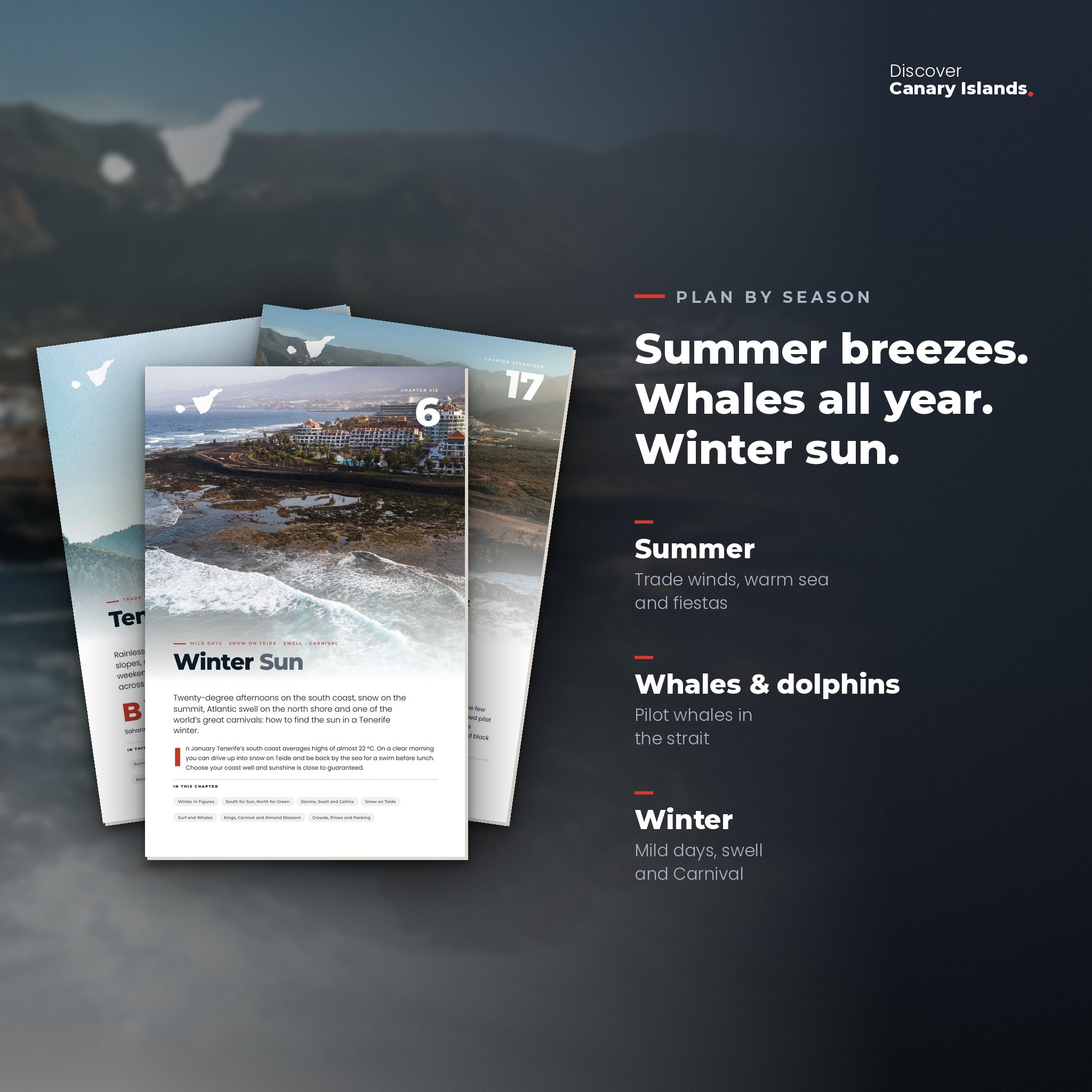
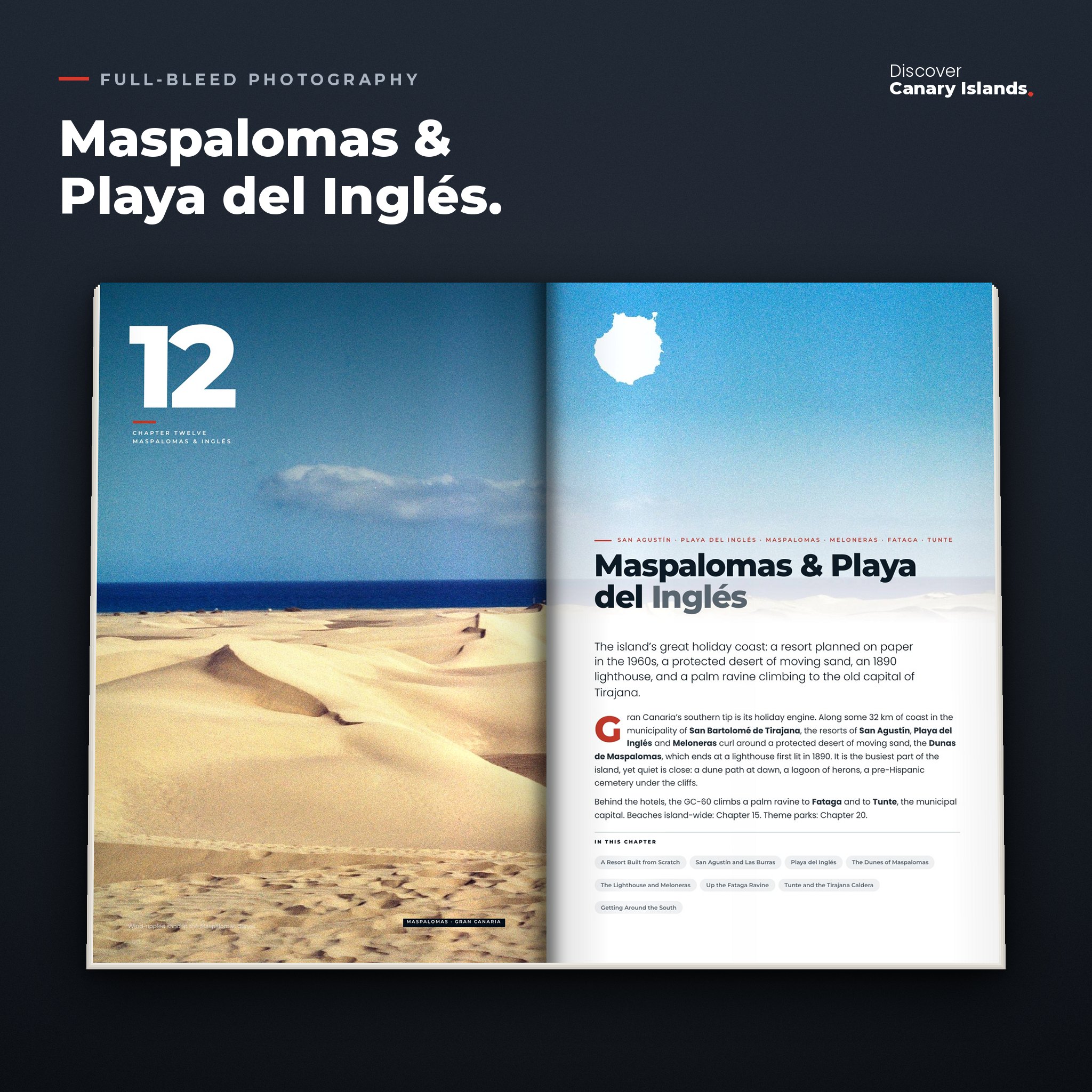
Discover Gran Canaria has a full chapter on seasons, plus every region, beach and summit trail.
Questions
What is the best month to visit Gran Canaria?
For warm sun and fewer crowds, October or April and May. For winter sun, November to March in the south. For the warmest sea, September and October.
Is Gran Canaria warm in winter?
Yes. Daytime highs average about 21°C in January and February, with sea temperatures around 19°C. The south is the sunniest part of the island.
When does it rain in Gran Canaria?
Rarely. The airport averages about 151 mm a year, mostly from November to February. Summer is almost completely dry.
Why is Las Palmas cloudy in summer?
The north-east trade winds bring a layer of low cloud to the north of the island in late spring and summer. The south, around Maspalomas, is usually sunny at the same time.