At a glance
The short answer: any month works for a beach holiday in the south, and the best months for doing everything, from hiking to swimming, are spring (March to June) and autumn (September to November). The longer answer depends on where you stay and what you want to do, because Tenerife has more climates than its size suggests.
North and south: two climates on one island
The north-east trade winds push cloud against the northern slopes, which is why the Orotava valley and Anaga are green and the south is dry. The numbers make it plain. At Tenerife Sur airport, the long-term average rainfall is about 132 mm a year, falling on around 15 days. At Tenerife Norte, near La Laguna, it is about 520 mm on around 64 days (AEMET, 1981 to 2010).
Temperatures differ too. In January, Tenerife Norte, at around 600 m, averages about 13°C, while the southern coast averages about 18°C. That is why winter visitors cluster in Costa Adeje and Los Cristianos, and why the north is better loved in spring and summer.
| South coast | North (La Laguna) | Teide high country | |
|---|---|---|---|
| Winter | Mild and sunny, about 18°C | Cool, cloudier, wettest season | Cold, snow possible |
| Spring | Warm, settled | Green, flowers, some cloud | Good hiking, cold mornings |
| Summer | Hot, dry, breezy | Warm, often cloudy mornings | Hot days, clear nights |
| Autumn | Warmest sea | Rain returns from October | Fine, cooling off |
Tenerife season by season
Winter (December to February)
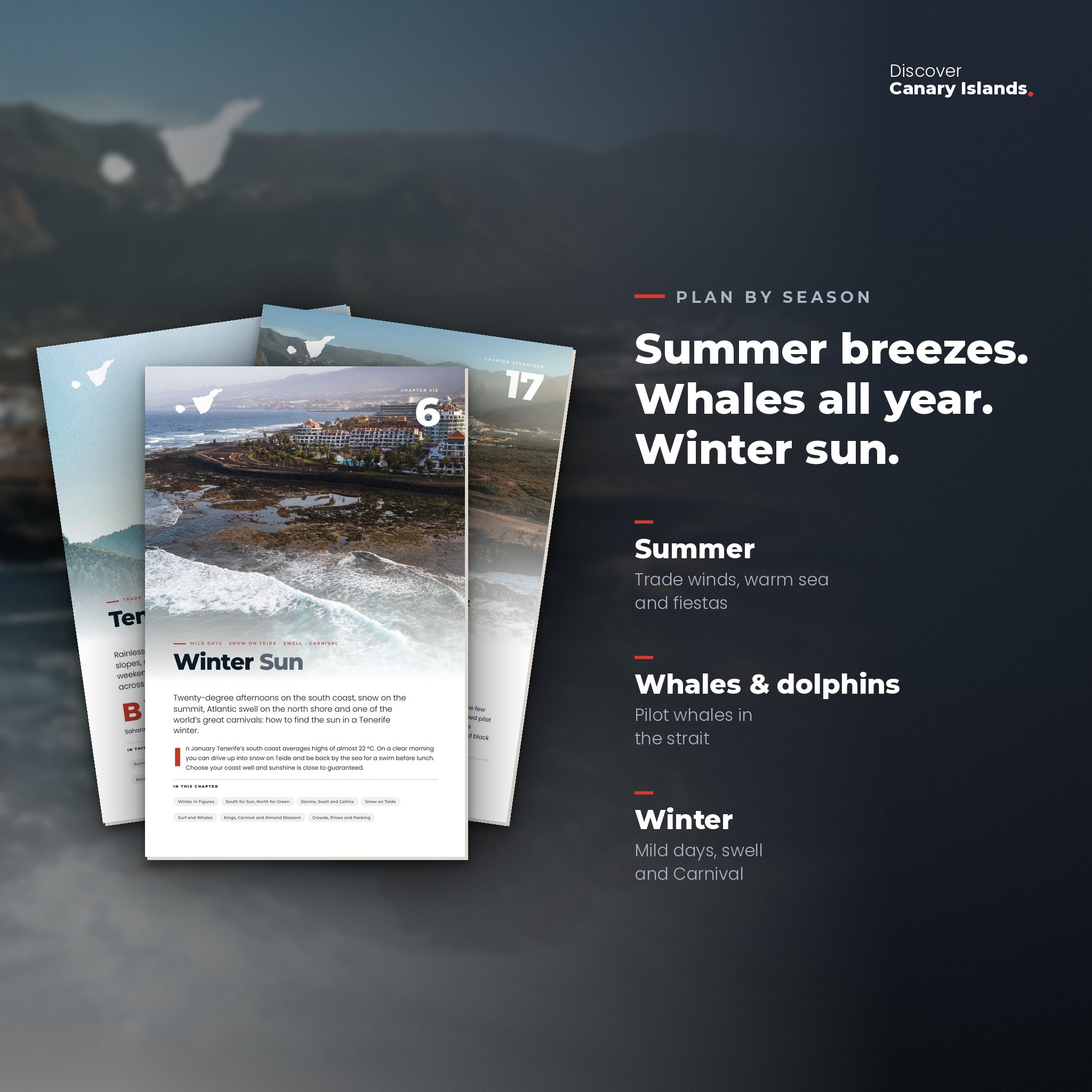
This is high season for northern Europeans. Santa Cruz averages about 21°C by day and 15°C at night in January, and the south is sunnier and drier. The sea is about 19 to 20°C: fine for a swim, bracing for a long one. In the north expect more cloud and rain, and on Teide expect cold, with snow on the summit in many winters. February brings the Carnival of Santa Cruz, one of the biggest in the world, with dates that move each year.
Spring (March to May)
Many people's favourite. Rain fades quickly after March, the north is at its greenest and the days lengthen. It is the best season for hiking across the whole island, from Anaga to Teide, and prices drop after Easter. The sea is still at its coolest, around 19 to 20°C.
Summer (June to August)
Hot and almost rainless. Santa Cruz averages about 29°C by day in August and the south about 28°C, with steady trade winds that keep the coast comfortable. Inland and at middle altitudes it can be much hotter. This is Spanish holiday season, so beaches and resorts are at their busiest. Teide is a good escape in the evening, when the skies are clear for stargazing.
Autumn (September to November)
The sea is at its warmest, about 23 to 24°C in September and October, and the summer crowds have gone. Rain starts to return in the north from October and builds through November, but the south stays mostly dry. A strong choice for a beach holiday with some walking.
Best time for whales, hiking and stargazing
- Whales and dolphins: year-round. Pilot whales and bottlenose dolphins live in the strait between Tenerife and La Gomera, so a boat trip works in any month when the sea is calm.
- Hiking: March to June, and September to November. Winter is fine on the coast and in Anaga, but the high trails can be icy.
- Teide summit: late spring to autumn is the easier season. The summit permit is needed all year, and the cable car stops in high wind.
- Stargazing: any clear night above the clouds. Summer gives the warmest evenings in the national park.
SafetyCalima, hot air laden with Saharan dust, can arrive in any season, most often in summer. It raises temperatures, cuts visibility and can affect people with breathing problems. Avoid long hikes on calima days and check the AEMET warnings.
Local tipPack for two climates. Even in August you will want a fleece on Teide, and in January a light rain jacket for the north.
When to book
Christmas, New Year, Carnival and Easter are the busiest and most expensive weeks in the south, along with July and August. Book the Teide summit permit as soon as your dates are fixed: places are limited in every season. When your dates are set, our 5-day Tenerife itinerary shows how to fit the island together.
Discover Tenerife & La Gomera has a full chapter on seasons, with what each month is like on the coast, in the north and in the high country.
Questions
What is the warmest month in Tenerife?
August. Santa Cruz averages about 25.5°C over the day and night, with daytime highs around 29°C (AEMET 1981 to 2010 normals).
Is Tenerife warm in winter?
Yes, on the coast. The south averages about 18°C in January with highs around 21 to 22°C. The north is cooler and wetter, and Teide can have snow.
Which side of Tenerife is sunnier?
The south. Tenerife Sur airport averages about 132 mm of rain a year, against about 520 mm at Tenerife Norte in the north.
When is the sea warmest in Tenerife?
September and October, at about 23 to 24°C. It is coolest, around 19°C, from February to April.