At a glance
Tenerife is the bigger, taller island, built around Teide, at 3,715 m the highest mountain in Spain. Gran Canaria is rounder and more compact, with its summits at 1,949 m and a sweep of dunes in the south. Both have a big city, busy southern resorts and wild mountains, so the choice comes down to details.
Tenerife and Gran Canaria compared
| Tenerife | Gran Canaria | |
|---|---|---|
| Signature sight | Teide National Park | Roque Nublo and the Maspalomas dunes |
| Highest point | Teide, 3,715 m | Pico de las Nieves, 1,949 m |
| City | Santa Cruz and La Laguna | Las Palmas, the largest city in the Canaries |
| Best beaches | Playa del Duque, Las Teresitas, El Médano | Las Canteras, Maspalomas, Amadores |
| Hiking | Teide, Anaga, Masca, Teno | The summits, Tejeda caldera, ravines |
| Wildlife | Pilot whales and dolphins year-round | Dolphin trips off the south-west |
| Island-hopping | La Gomera, 50 minutes by ferry | Fuerteventura and Tenerife by ferry |
Choose Tenerife if...
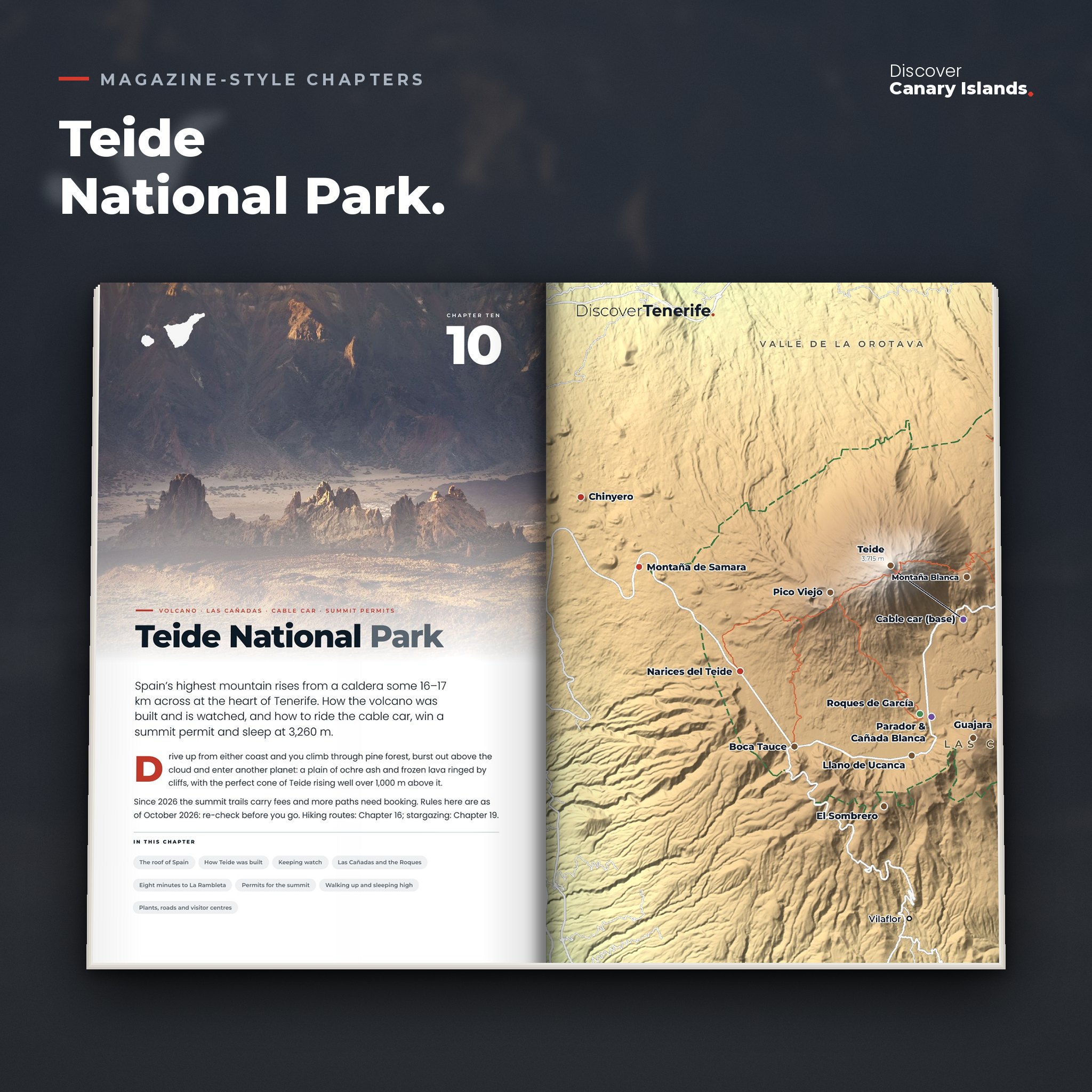
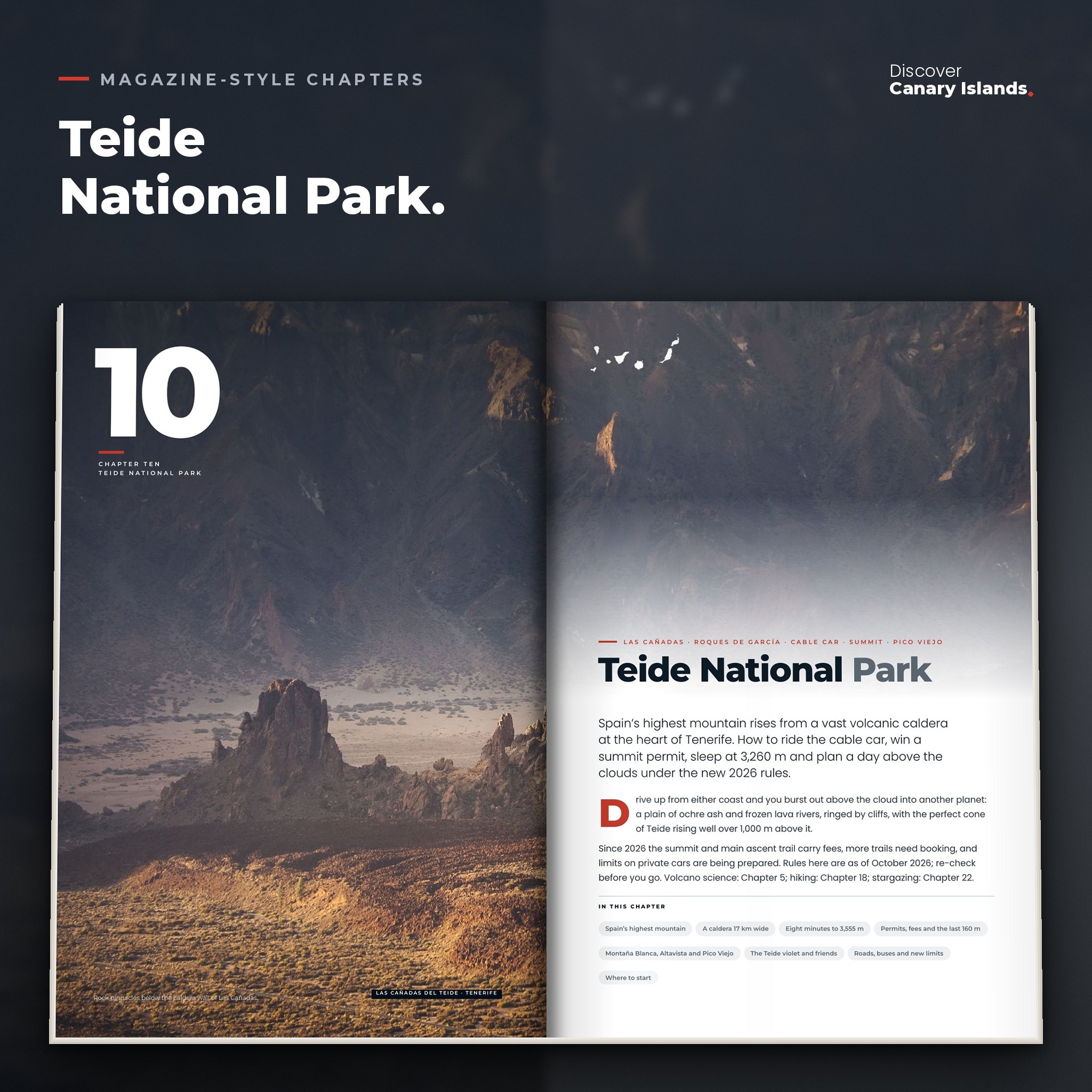
You want one big landscape. Nothing in the Canaries matches the drive up to Teide National Park, through the pine forest and out into the lava fields below the peak. The cable car rises to 3,555 m, and the summit itself needs a permit booked in advance.
You want variety in the north. The laurel forests of Anaga, the old towns of La Laguna and La Orotava, and Garachico on the coast give Tenerife a depth beyond the resorts.
You want whales. Pilot whales and bottlenose dolphins live in the strait between Tenerife and La Gomera, and boats run from the south-west coast all year.
You want a second island. La Gomera is about 50 minutes by ferry from Los Cristianos and makes a superb day trip or a few nights' stay.
Choose Gran Canaria if...
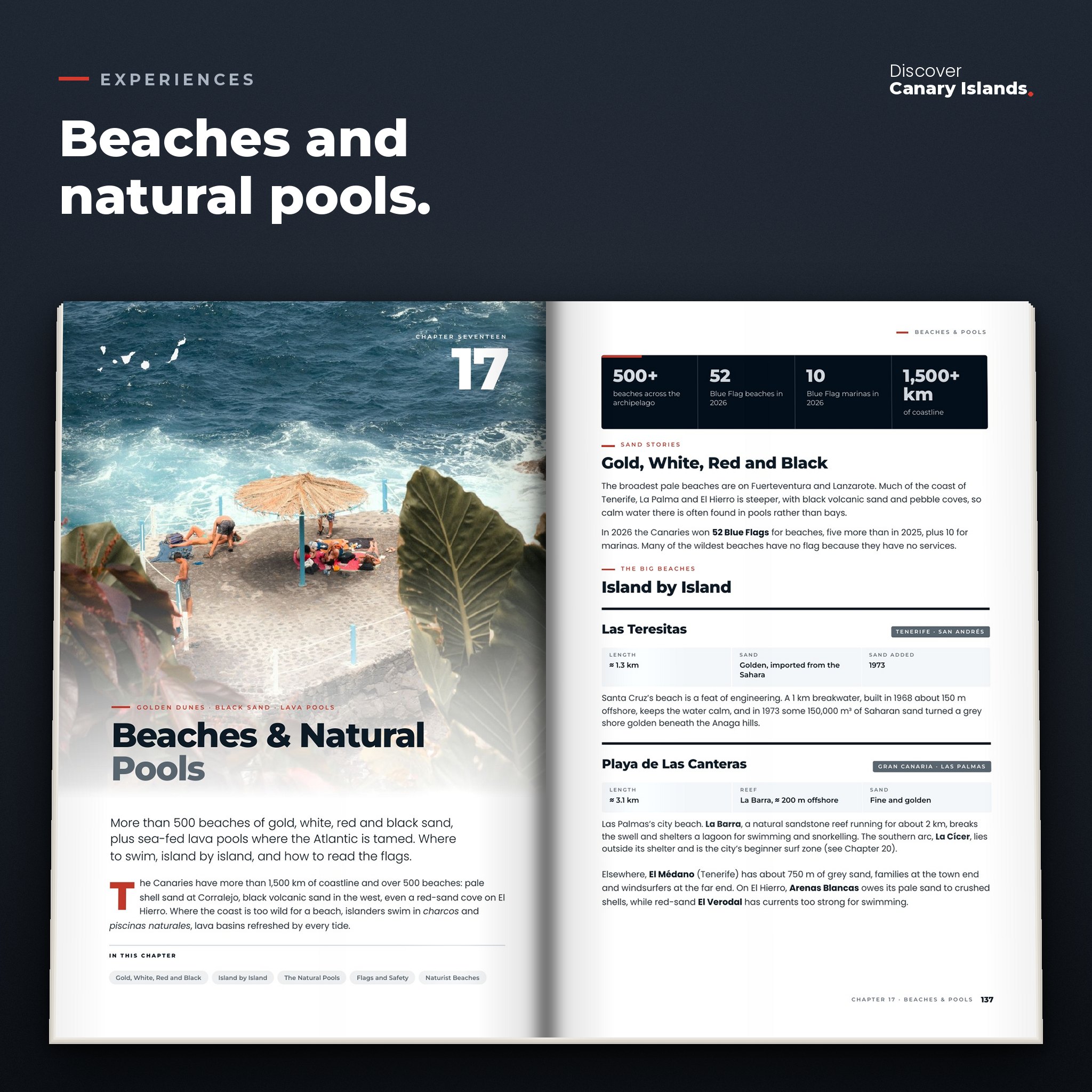
You want a real city. Las Palmas has the old quarter of Vegueta, a lively food scene and Las Canteras, a city beach of just over 3 km sheltered by a natural reef. It works as a holiday base in a way few Canarian cities do.
You want the dunes. The Maspalomas dunes, about 400 hectares of protected sand at the southern tip, are unlike anything on Tenerife.
You want everything close together. Gran Canaria is smaller and round, so city, mountains and beaches are rarely more than an hour apart. Roque Nublo, the island's emblem, is a short walk from the road, though it now needs a time-slot booking during the day.
Atmosphere and nightlife
Both islands have lively resort strips: Playa de las Américas on Tenerife and Playa del Inglés on Gran Canaria are the main nightlife centres. The bigger difference is in the cities. Las Palmas feels like a Spanish city that happens to have a beach, with tapas bars in Vegueta and a long promenade along Las Canteras. On Tenerife, the everyday Canarian life is spread between Santa Cruz, the student bars of La Laguna and the old towns of the north.
For a quieter stay, look to the north and west of either island: Garachico or La Orotava on Tenerife, Agaete or the summit villages on Gran Canaria.
Weather: is one warmer?
Barely. Long-term AEMET averages for Tenerife Sur and Gran Canaria airports are almost identical: about 18°C in January and 24 to 25°C in August on both islands. Both have a cloudier, greener north and a drier, sunnier south, so where you stay on the island matters more than which island you choose. Our guides to the best time to visit Tenerife and Gran Canaria go month by month.
Getting there and around
Both islands have frequent flights from across Europe. Tenerife has two airports, Tenerife Sur and Tenerife Norte; Gran Canaria has one, on the east coast. On either island a hire car is the easiest way to reach the mountains, and both have good island-wide bus networks.
Local tipYou do not have to choose. Fred. Olsen's fast ferry links Agaete on Gran Canaria with Santa Cruz de Tenerife in about 80 minutes, and inter-island flights are short. A week split between the two, four nights and three, is easy.
The verdict
- First-time visitors who want the big sights: Tenerife.
- City lovers and food-led trips: Gran Canaria.
- Hikers: Tenerife for altitude and variety, Gran Canaria for compact, dramatic day walks.
- Families on a beach holiday: either; Costa Adeje on Tenerife or Maspalomas on Gran Canaria.
- Short breaks: Gran Canaria, where everything is closer.
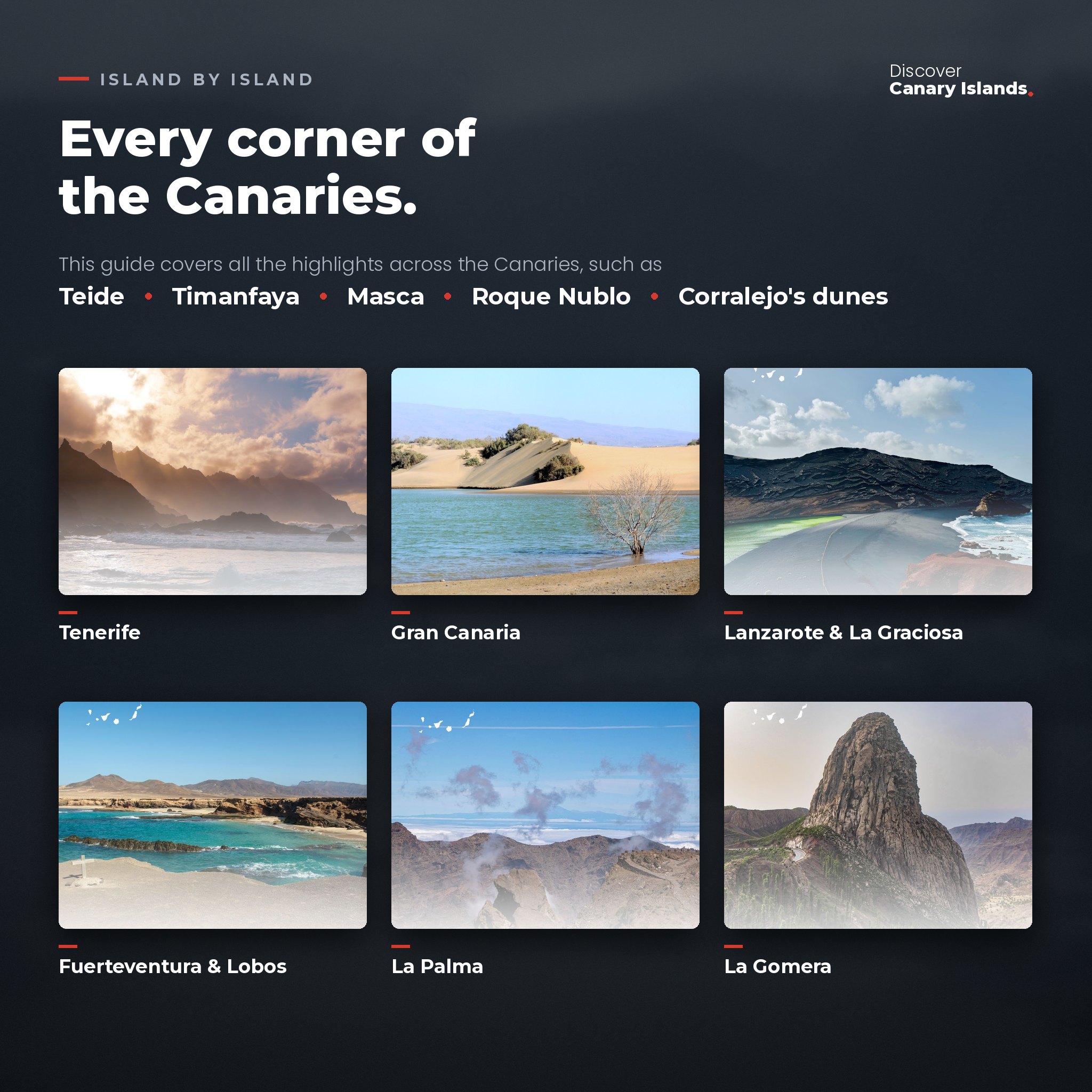
Ready to plan? Try our 5-day Gran Canaria itinerary, or the 5-day Tenerife itinerary. Weighing up the other islands too? Read which Canary Island is best for you. Discover Canary Islands covers all eight islands, with ferry routes and the best island for each month.
Questions
Is Tenerife or Gran Canaria better?
Neither is better overall. Tenerife has Teide, whale-watching and La Gomera next door. Gran Canaria has the best city in Las Palmas, the Maspalomas dunes and shorter distances between sights.
Which is warmer, Tenerife or Gran Canaria?
They are almost the same. The main airports on both islands average about 18°C in January and 24 to 25°C in August. Where you stay on each island matters more.
Which is bigger, Tenerife or Gran Canaria?
Tenerife, at about 2,034 km², is the largest Canary Island. Gran Canaria is about 1,560 km².
Can you visit Tenerife and Gran Canaria in one trip?
Yes. The fast ferry between Santa Cruz de Tenerife and Agaete takes about 80 minutes, and there are frequent short flights between the islands.