At a glance
Mauritius is small, about 65 by 45 km, and the official tourism site notes that everything is within a two-hour drive. Even so, where you sleep shapes your days. Winter wind, summer rain, sunsets and nightlife all vary around the island, and so does the drive to the sights you care about.
The coasts compared
| Best for | Weather | Feel | |
|---|---|---|---|
| North | First trips, families, restaurants | Sheltered, sunnier in winter | Lively |
| East | Long beaches, Île aux Cerfs | Breezy, windy in winter | Resort calm |
| South-east | Blue Bay, airport | Windy in winter | Local, quiet |
| West | Sunsets, value, dolphins | Driest, sunniest | Relaxed to lively |
| South-west | Le Morne, kitesurfing, hiking | Windy in winter | Scenic, outdoorsy |
The north: Grand Baie, Pereybère and Trou aux Biches
The north is the most developed coast and the easiest first choice. Grand Baie has the most restaurants, bars and shops. Pereybère is a small, popular public beach with cafés nearby. Trou aux Biches and Mont Choisy have long, calm beaches shaded by casuarina trees. The north is sheltered in winter and close to Port Louis and Pamplemousses. The trade-off is that it is busier than the rest of the island.
The east: Belle Mare and Trou d'Eau Douce
The east has some of the longest beaches in Mauritius, including Belle Mare, with a wide lagoon protected by the reef. It is the coast of sunrises and of large resorts, and the base for boat trips to Île aux Cerfs from Trou d'Eau Douce. The east catches the trade winds, which keep it cool in summer but can make it windy from about June to September.
The south-east: Blue Bay and Mahébourg
Blue Bay, with its marine park, has some of the best snorkelling on the island, and Mahébourg is an old town with a market and a waterfront. The airport is close by, which suits short stays and early flights. The south-east is quieter and more local than the north, and exposed to the winter wind.
The west: Flic en Flac and Tamarin
The west is the driest and sunniest side of Mauritius and faces the sunset. Flic en Flac has a long public beach lined with casuarinas, plus restaurants, bars and some of the island's better-value stays. Tamarin is quieter, with a bay and a surf break. The west is well placed for Chamarel and Black River Gorges, and for boat trips along the coast.
The south-west: Le Morne
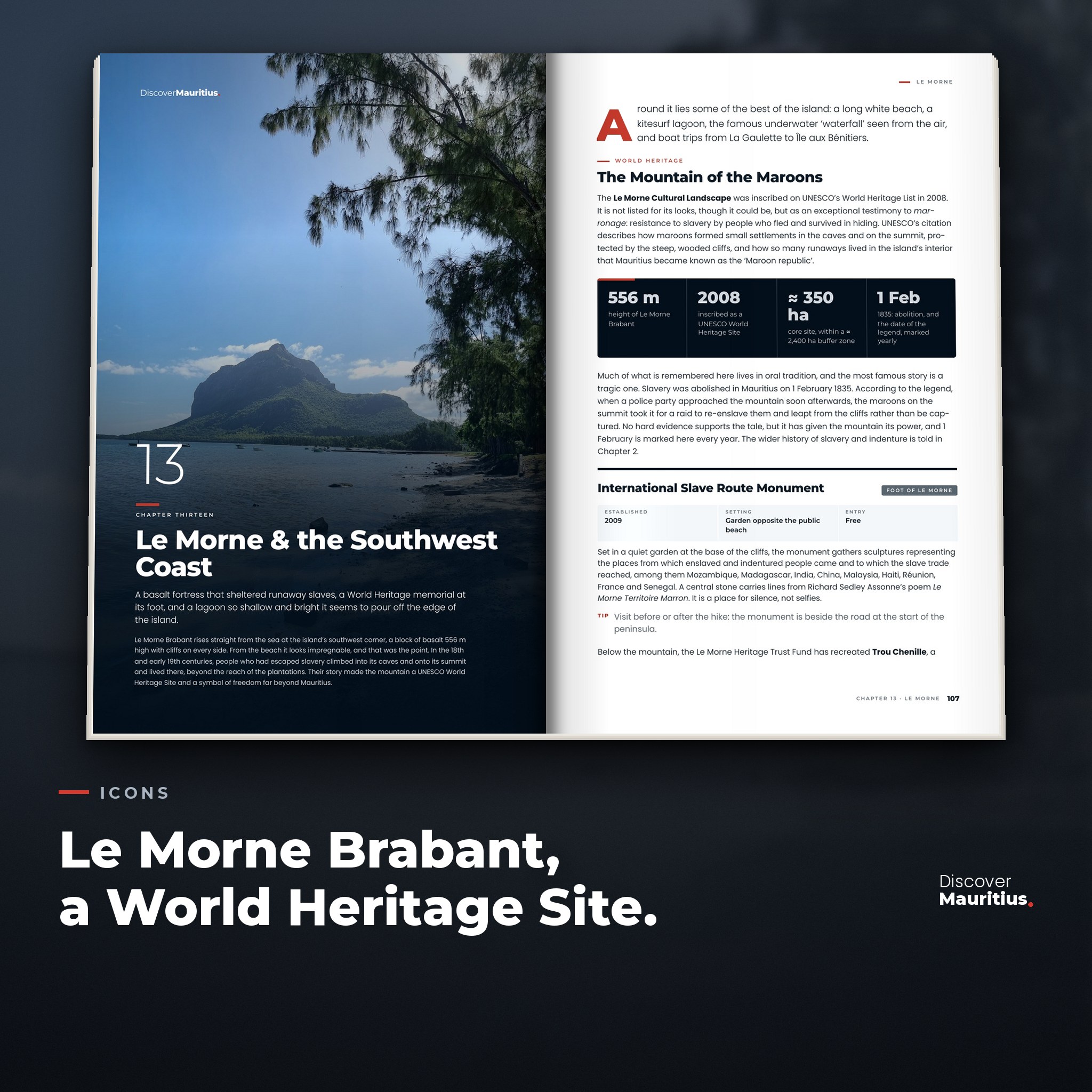
The peninsula below Le Morne Brabant, a UNESCO World Heritage Site, has one of the finest beaches in Mauritius and a shallow lagoon famous for kitesurfing. It is the best base for hiking Le Morne, for Chamarel and for the coast road east to Baie du Cap and Bel Ombre. It is mostly resorts, with fewer independent restaurants, and the beach can get busy at weekends.
Inland and Rodrigues
Few visitors stay inland, but the central plateau around Curepipe and Moka is cooler, greener and closer to Black River Gorges and Grand Bassin. It suits hikers and anyone who prefers villages to beaches, though it is cloudier and wetter than the coast. Rodrigues, reached by a domestic flight, is a different kind of stay: guesthouses, fishing villages and a huge lagoon, with a far slower pace than the main island.
Getting around from your base
Wherever you stay, a hire car makes day trips easy, and Mauritius drives on the left. Buses link the coasts with Port Louis and the plateau towns, and taxis wait at hotels and the airport. From the north, the motorway makes Port Louis and the south quick to reach; from the west and south-west, the plateau and Chamarel are close, but Grand Baie is a long day there and back.
Local tipSplitting a week? Combine the north with the west or south-west. That pairs the capital and the east-coast islands with Chamarel, Black River Gorges and Le Morne, with little doubling back.
Match the coast to the season
In winter, from about June to September, the south-east trade winds blow hardest on the east and south coasts. The north and west are more sheltered and sunnier, so they are the safer bets for beach days. In summer, from about November to April, every coast works, and the breezy east is pleasantly fresh. The best time to visit Mauritius explains the seasons.
How to choose
- First trip or with children: the north.
- Long beach and resort calm: the east, ideally outside the windiest winter months.
- Short stay or early flight: the south-east near Blue Bay.
- Sunsets and value: the west, around Flic en Flac.
- Hiking and kitesurfing: Le Morne.
SafetyDo not swim or snorkel in the passes through the reef, where currents run out to sea. On coasts without a reef, such as parts of the south, the sea can be dangerous. Follow local advice and red flags.
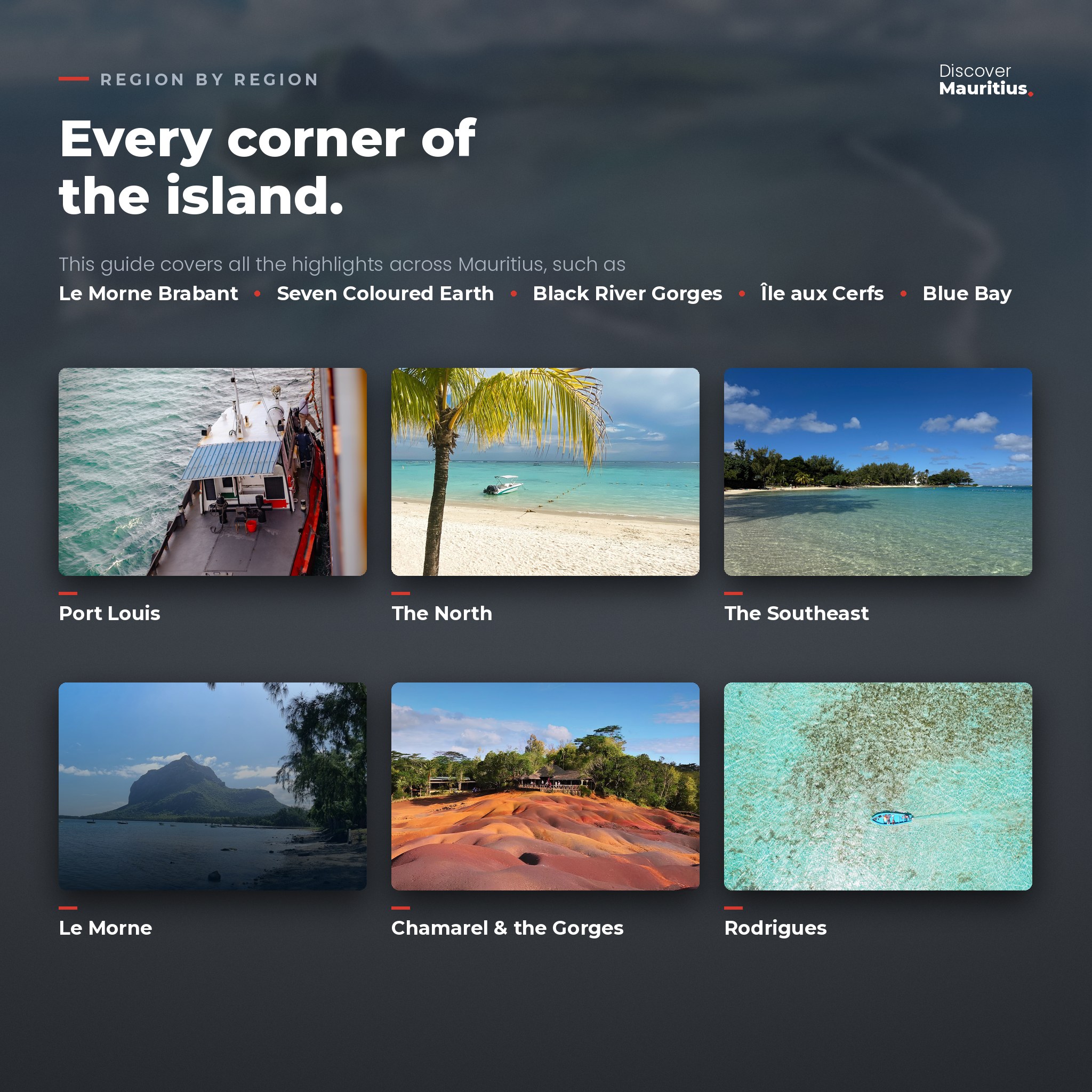
For a route that uses two of these bases, see Mauritius in 7 days. The Discover Mauritius guide covers every coast, with where to stay, driving and the lagoon.
Questions
What is the best area to stay in Mauritius?
It depends on your trip. The north is best for a first visit and restaurants, the west for sunsets and value, the east for long beaches, and Le Morne for hiking and kitesurfing.
Which side of Mauritius has the best weather?
The west is the driest and sunniest side. The north is also sheltered and sunny in winter, while the east and south are windier from about June to September.
Is the east or west coast of Mauritius better?
The west is drier, sunnier and has the sunsets. The east has long beaches, sunrises and access to Île aux Cerfs, but is windier in winter.
Where should you stay in Mauritius for snorkelling?
Blue Bay in the south-east, with its marine park, is one of the best areas. The north, around Trou aux Biches, also has good snorkelling inside the reef.