At a glance
There is no cold season in the Maldives. Average daytime highs sit around 29 to 32 °C in every month, and the sea stays close to 28 °C, warming to about 30 °C in April. The question is not whether it will be warm but how much rain, wind and swell you are willing to trade for lower prices and particular animals.
The year turns on two monsoons. Maldivians call the dry north-east monsoon iruvai and the wetter south-west monsoon hulhangu. Between them sit two short shoulder months, April and December.
The dry season: January to March
This is the classic Maldives postcard: light north-east winds, long sunny spells and flat, clear water. February is the driest month, with Malé averaging only about 50 mm of rain, according to the Maldives weather guide on maldives.com, which draws on national meteorological records. March is often the hottest month, and the heat can feel intense in the middle of the day.
The catch is demand. The dry months are the most popular of the year, especially around Christmas, New Year and Easter, so resort rates and seaplane seats are at their highest. Book early if your dates are fixed.
April and December: the shoulder months
April is the bridge into the south-west monsoon. The sea reaches its warmest, around 30 °C, winds are often light and the weather is usually still settled, which makes it a strong month for divers. December is the bridge the other way: the wet season is ending, the north of the country dries out first, and rainfall in the central and southern atolls can still be double that of the north.
The wet season: May to November
The south-west monsoon brings more cloud, stronger winds and heavier showers, usually in bursts rather than all day. May can be very wet, with monthly totals ranging widely between years and atolls, and September is Malé's wettest month at about 243 mm on average. Between the squalls there are many sunny hours, and the sea remains warm.
This is also when prices fall. Many resorts and guesthouses cut rates in the wet months, and some of the Maldives' best wildlife encounters happen now. If you are flexible about the odd grey afternoon, it can be the smartest time to go.
Rain also varies from north to south. National averages put annual rainfall at about 1,780 mm in the northern atolls, 1,970 mm in the centre and 2,220 mm in the south, so the far south is the wettest part of the country and the north usually dries out first at the end of the year. Even in the wettest months, a typical day mixes squalls with long sunny spells, and the warm sea makes a shower easy to ignore.
For packing, think sun more than rain: reef-safe sunscreen, a rash vest for long snorkels and a light layer for air-conditioned boats and seaplanes. In the south-west monsoon, a waterproof bag for the speedboat is worth its space.
Mantas, whale sharks and surf: plan by animal
| North-east monsoon | South-west monsoon | |
|---|---|---|
| Months | About December to April | About May to November |
| Weather | Drier, calmer, sunnier | Wetter, windier, more cloud |
| Mantas | Often on the western sides of atolls | Hanifaru Bay in Baa, peak June to November |
| Whale sharks | South Ari, all year | South Ari, all year |
| Surf | Smaller swell | Bigger, more consistent swell |
| Prices | Highest | Lower |
Mantas follow the plankton, and the plankton follows the monsoon current. The great gathering at Hanifaru Bay in Baa Atoll, a UNESCO Biosphere Reserve, peaks from about June to November, and the bay is snorkel only during the season, with limited daily entries. In the north-east monsoon, mantas tend to feed and clean on the western sides of the atolls.
Whale sharks are the exception to every rule. Along the outer reef of South Ari, young whale sharks can be found in every month of the year, which is why the island of Dhigurah has become a base for budget travellers. For the surf, the south-west monsoon brings the more consistent swell to the breaks of North Malé, Laamu and Huvadhu.
Local tipSeaplanes only fly in daylight. If your international flight lands in the late afternoon or evening in any season, expect a night near the airport before the transfer.
So when should you go?
- For the most reliable sunshine: January to March, if the budget allows.
- For diving and warm, calm water: April, or the end of the dry season.
- For mantas at Hanifaru: June to November, with patience for showers.
- For value: May to November, especially on a local island. See the Maldives on a budget.
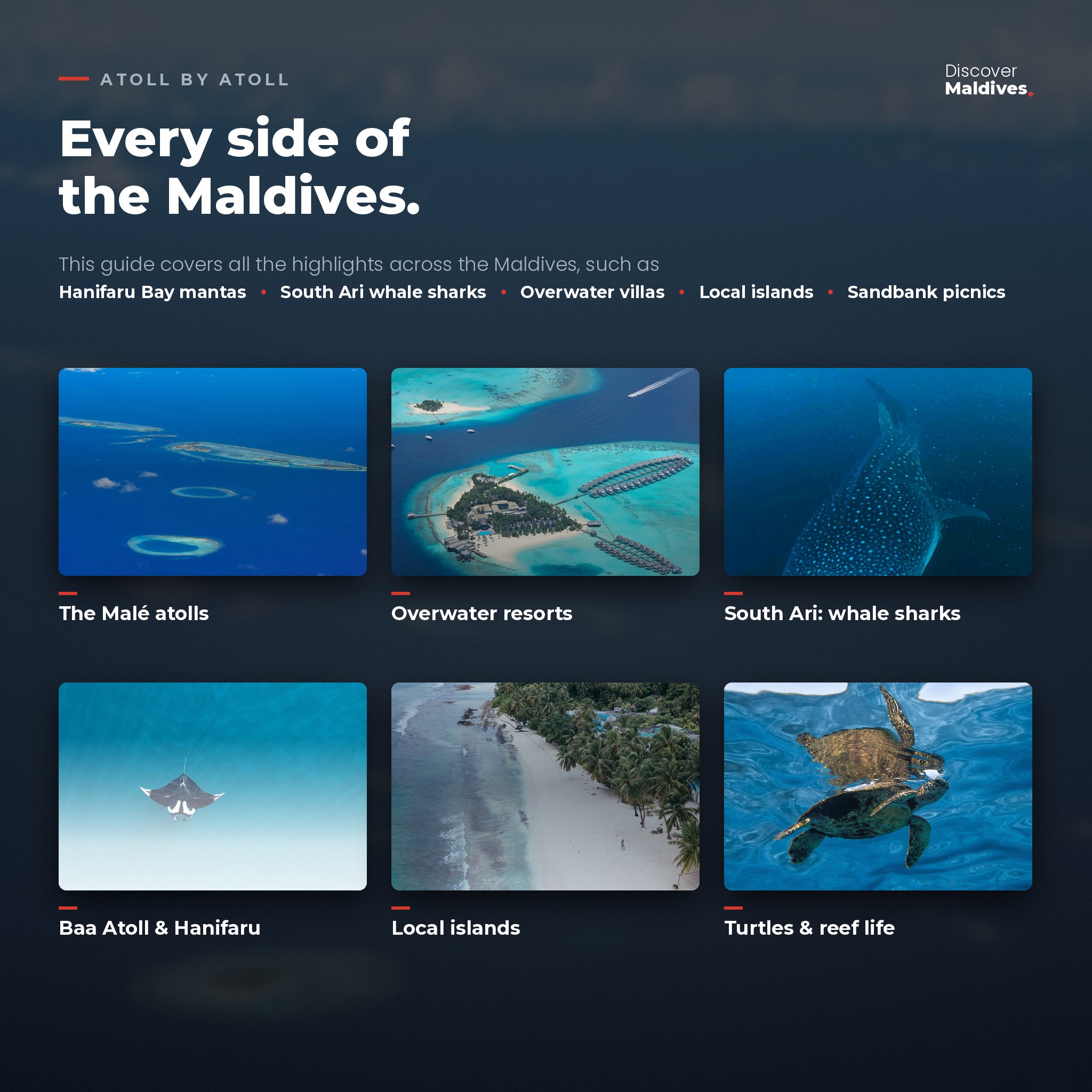
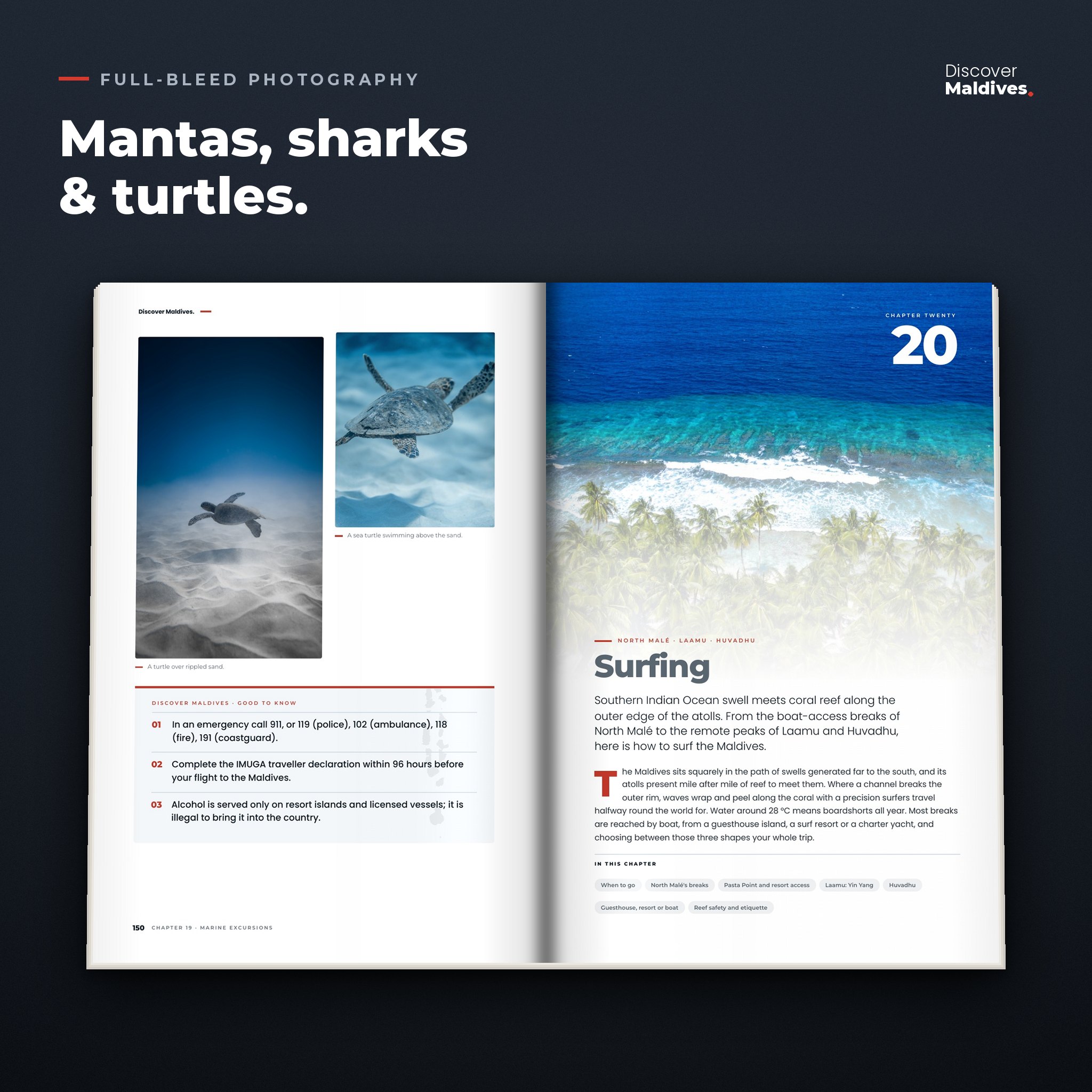
Where you stay also matters. Rain and swell differ between the north and the far south, and each atoll has its own character, from the easy Malé atolls to the tiger sharks of Fuvahmulah. Which Maldives atoll? explains how to choose. The Discover Maldives guide covers the seasons atoll by atoll, with the best months for every big encounter.
Questions
What is the best month to visit the Maldives?
February is usually the driest month, and January to March is the most settled period. April is excellent for warm, calm water. The south-west monsoon, from May to November, is wetter but cheaper.
What is the rainy season in the Maldives?
The south-west monsoon, from about May to November, is the wetter season. Rain tends to come in heavy bursts rather than all day, and September is the wettest month in Malé on average.
When can you see mantas at Hanifaru Bay?
The main manta season at Hanifaru Bay in Baa Atoll runs from about June to November. The bay is snorkel only during the season and daily entries are limited.
Can you see whale sharks in the Maldives all year?
Yes. Along the outer reef of South Ari Atoll, young whale sharks can be found in every month of the year.