At a glance
For most of the history of Maldivian tourism, visitors stayed only on resort islands, kept apart from Maldivian life. A change to the law in 2009 allowed guesthouses on inhabited islands, and they have spread across the atolls ever since. Today you can wake on a working island, eat breakfast of mas huni and roshi, and be snorkelling a reef by mid-morning.
Local-island travel is cheaper and more personal than resort life. It also asks visitors to fit in with a conservative Muslim community, and the trade-offs are worth knowing before you book.
What a local-island trip costs
Prices vary widely by island, season and comfort, so treat these as rough 2026 guides and check current rates before you go. Travel sites in 2026 quote simple guesthouse doubles from around US$ 50 to US$ 140 a night, with half-board and full-board packages costing more. Guesthouses usually cook for their guests, since many islands have only a handful of cafés.
On top of the room rate come two taxes. The green tax is US$ 6 per guest per night at guesthouses with 50 rooms or fewer on inhabited islands, against US$ 12 at resorts, under rates that took effect on 1 January 2025. Tourism goods and services tax (TGST) rose to 17 percent in 2025. Check whether a quoted price includes both.
Getting there: ferries, speedboats and flights
Public ferries are the cheapest way between Malé and the nearby atolls, often only a few dollars, but they are slow, may not run every day and have fewer services on Fridays. Shared speedboats are what most visitors use: faster, more frequent and typically tens of dollars per person each way. For distant atolls, domestic flights to airports such as Maamigili in South Ari or Dharavandhoo in Baa, followed by a short boat ride, save hours but cost much more.
Local tipBuild your trip around the transfer timetable, not the other way round. Ask your guesthouse to book the speedboat and confirm the time the day before.
The rules of a local island
- Alcohol: it cannot be bought, sold or drunk on inhabited islands. Some islands have licensed floating bars moored offshore.
- Bikini beaches: swimwear is fine on the designated tourist beach. Elsewhere on the island, cover shoulders and knees.
- Fridays: the day of prayer. Shops close around midday prayers and ferries are limited.
- Respect: ask before photographing people, and dress modestly in the village and at the harbour.
None of this gets in the way of a good trip. It simply means a different kind of holiday: quieter evenings, closer contact with island life and excursions as the main event.
Four islands to start with
| Atoll | Best for | Feel | |
|---|---|---|---|
| Maafushi | Kaafu (South Malé) | First trip, choice of trips | Busiest, most developed |
| Thulusdhoo | Kaafu (North Malé) | Surf | Local, laid back |
| Dhigurah | Alif Dhaal (South Ari) | Whale sharks | Long sandbank, quiet |
| Dharavandhoo | Baa | Mantas at Hanifaru Bay | Small, with an airport |
Maafushi is the easy first step, close to Malé, with dozens of guesthouses, dive shops and daily trips to sandbanks and reefs. Thulusdhoo in North Malé suits surfers. Dhigurah, on the southern rim of South Ari, sits beside the South Ari Marine Protected Area, the whale-shark coast. Dharavandhoo in Baa is the base for manta trips to Hanifaru Bay in season.
Before you fly
Visitors receive a free 30-day tourist visa on arrival. All travellers must also complete the IMUGA traveller declaration online within 96 hours before their flight to the Maldives. Bringing alcohol into the country is illegal, so leave duty-free bottles behind.
Cash is useful on local islands, where card machines can be scarce outside the guesthouse. US dollars are widely accepted for excursions, while small purchases in island shops are often in the local rufiyaa. Ask your guesthouse how they prefer to be paid before you arrive.
Where the money goes
The room is rarely the big cost. Excursions are: snorkel trips, sandbank picnics, dives and whale-shark boats add up quickly, and so do speedboat transfers between atolls. Choosing one island with the trips you care about most is cheaper than hopping across the country. Shared trips cost less per person than private boats, so ask the guesthouse which excursions are already running that week and join them.
A split trip also works well: a few nights on a local island, then a final night or two at a resort for the overwater villa. Timing helps too, as many guesthouses cut prices in the south-west monsoon. The best time to visit the Maldives explains the seasons, and Which Maldives atoll? helps you pick a region.
SafetyChannels and reef edges can have strong currents. Snorkel where the guesthouse or boat crew advises, never alone off an unfamiliar reef, and check conditions every day.
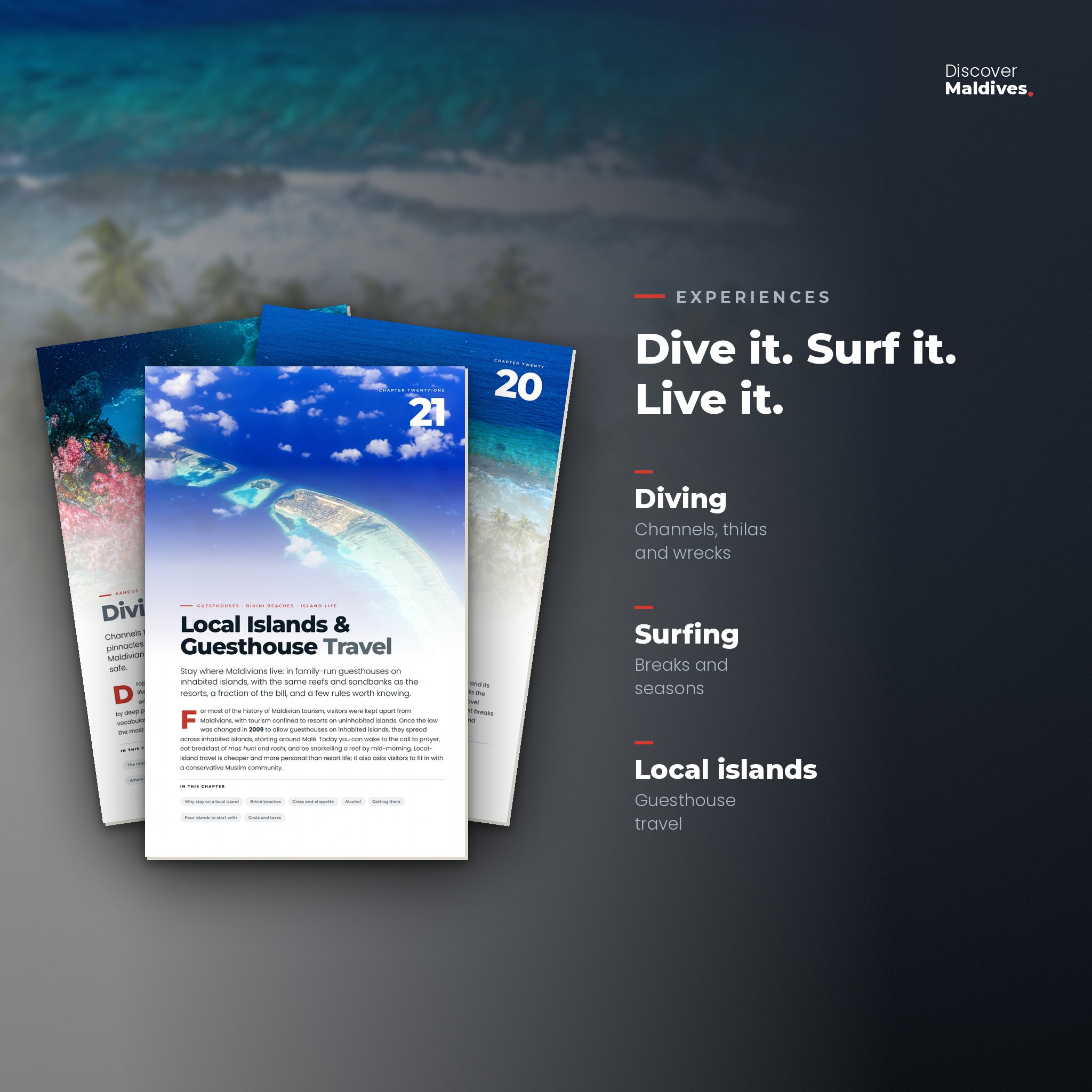
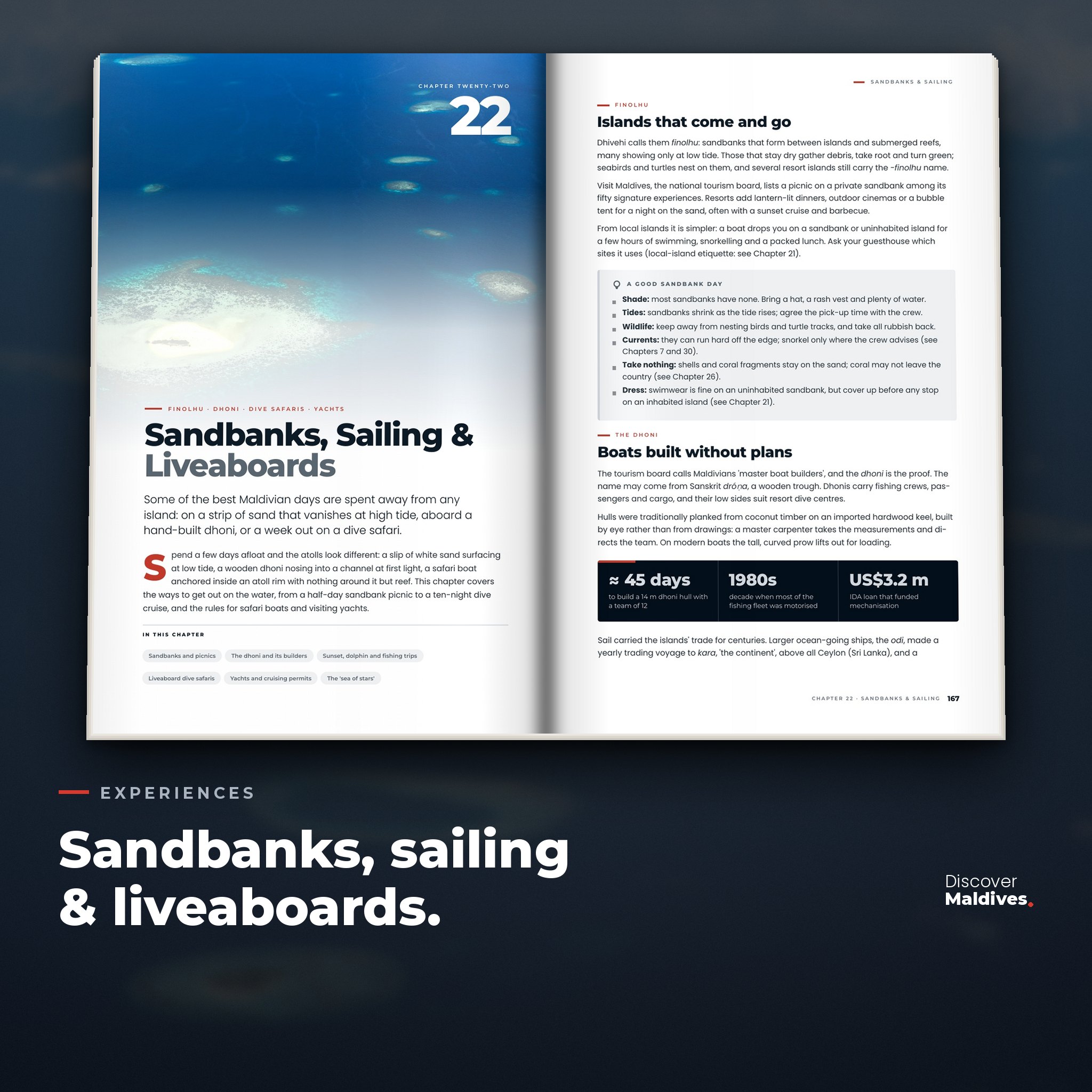
The Discover Maldives guide has a full chapter on local islands and guesthouse travel, with the rules, getting there, costs and taxes, and four islands to start with.
Questions
Can you visit the Maldives on a budget?
Yes. Since 2009, guesthouses on inhabited local islands have offered rooms at a fraction of resort prices. Public ferries and shared speedboats keep transfers cheap, and the reefs and sandbanks are the same ones resort guests visit.
Can you drink alcohol on local islands in the Maldives?
No. Alcohol cannot be bought, sold or drunk on inhabited islands. It is served at resorts and on licensed vessels, including floating bars moored off some local islands.
Can you wear a bikini on a local island in the Maldives?
Only on the designated bikini beach. Elsewhere on a local island, visitors should cover their shoulders and knees.
What is the cheapest island in the Maldives?
Prices vary by season, but local islands close to Malé, such as Maafushi, usually offer the widest choice of affordable guesthouses and the cheapest transfers.