At a glance
Mauritius lies in the southern hemisphere, so its seasons run opposite to Europe's. Summer lasts from about November to April and winter from about June to September, with May and October as short transition months. The island is warm all year, but the central plateau is cooler and cloudier than the coast.
Summer: November to April
Summer is hot and humid, with daytime highs around 30 °C on the coast in January and February. It is also the wetter season: the UK Met Office gives February as the wettest month, with about 250 mm of rain at its coastal station. Showers are often short and heavy, and the sea is at its warmest, around 27 °C, which makes summer good for lagoon swimming.
Summer is also the cyclone season, which local weather guides give as 1 November to 15 May. Most storms pass at sea, and a direct hit is unlikely in any given year, but a cyclone warning can close beaches, cancel boat trips and keep you indoors for a day or two. Travel insurance that covers weather disruption is worth having.
Winter: June to September
Winter brings cooler, drier and breezier weather. Average highs on the coast fall to the mid-20s °C, with July and August the coolest months. The south-east trade winds blow strongest in July and August, so the east and south coasts feel windy and fresh, while the west and north stay more sheltered.
This is the best season for hiking in Black River Gorges and on Le Morne, and the windiest months are prime time for kitesurfing at Le Morne. Humpback whales pass the island in the winter months, with sightings most often reported around July and August. Evenings on the plateau can feel cool, so pack a layer.
Pack for both seasons if you plan to go inland. The plateau towns of Curepipe and Vacoas, and the forests of Black River Gorges, are cooler, cloudier and mistier than the coast all year, and can be wet even when the beaches are sunny. A light jacket, good shoes and an early start make the hiking days far more enjoyable.
May and October: the sweet spots
The transition months are often the best all-round choice. October is the driest month at the Met Office's coastal station, with only about 53 mm of rain, and it falls before the cyclone season begins. May is warm, the summer rains have eased and the trade winds have not yet reached full strength. Both work well for a mix of beach, hiking and sightseeing.
The seasons at a glance
| Summer (Nov to Apr) | Winter (Jun to Sep) | |
|---|---|---|
| Weather | Hot, humid, showers | Cooler, drier, breezy |
| Sea | Warmest, about 27 °C | Cooler |
| Risk | Cyclones possible | Strong winds on east and south |
| Best for | Lagoon swimming, snorkelling | Hiking, kitesurfing, whales |
| Best coasts | Most coasts | North and west |
Which coast in which season
The weather changes around the island. The west, around Flic en Flac and Tamarin, is the driest and sunniest side and the place for sunsets. The east and central plateau receive most of the rain, and the east and south are windiest in winter. The north, around Grand Baie, is sheltered and gets more winter sunshine. In winter, a north or west base is the safe choice; in summer, every coast works. Where to stay in Mauritius compares them in detail.
Local tipOn windy winter days, plan east-coast lagoon trips such as Île aux Cerfs for the morning, when the sea is calmer.
Rodrigues, the quieter island to the east, reached by a domestic flight, shares the same broad pattern of summer and winter and the same cyclone season. If you plan to add it, the same advice applies: winter for walking, summer for the warmest water, and check the forecast before you book the flight.
Festivals
Mauritius follows several calendars, so festival dates move each year. Maha Shivaratri, when pilgrims walk to the sacred lake of Grand Bassin, falls in February or March, and Diwali usually falls in October or November. Check dates before you travel; they are memorable times to be on the island. Public holidays can also mean busier beaches, as Mauritian families spend the day by the sea, and some shops and offices close. Christmas, New Year and the European school holidays are the busiest periods for visitors, so book flights and rooms early for those weeks.
So when should you go?
- For the best all-round weather: May, or September to October.
- For warm sea and lagoon days: December to April, accepting showers and cyclone risk.
- For hiking: June to September.
- For kitesurfing and whales: the southern winter, from about June.
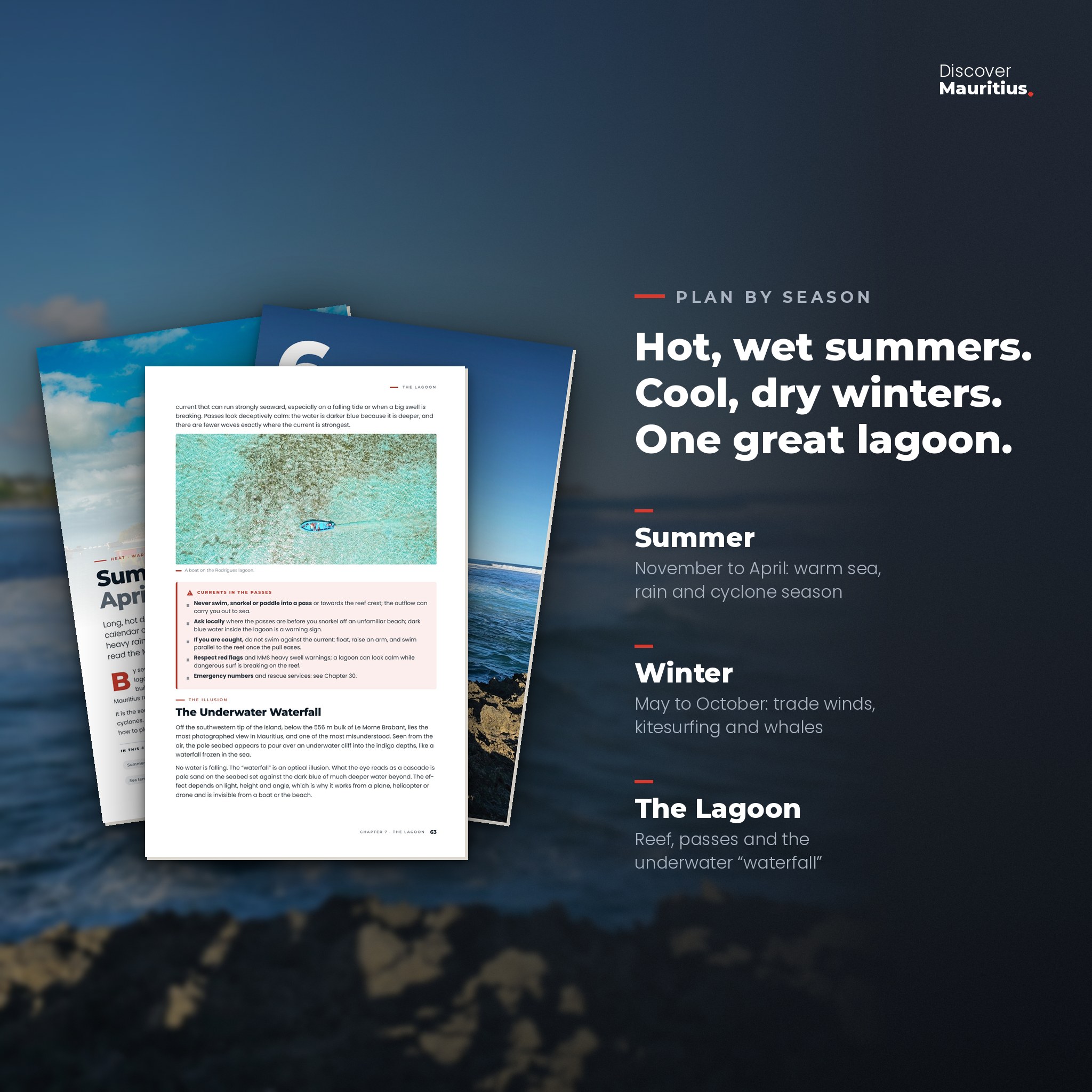
Once you have your dates, plan the route with Mauritius in 7 days. The Discover Mauritius guide explains summer, winter and the cyclone season, and the lagoon that shapes life on every coast.
Questions
What is the best month to visit Mauritius?
May and October are often the best all-round months: warm, fairly dry and outside the peak of the cyclone season. June to September is best for hiking.
When is cyclone season in Mauritius?
The cyclone season runs from 1 November to 15 May. Most storms pass at sea, but warnings can disrupt boat trips and beach days.
What is the rainy season in Mauritius?
Summer, from about November to April, is the wetter season. February is usually the wettest month, and the east and central plateau get the most rain.
Is Mauritius warm in winter?
Yes. Winter daytime highs on the coast are in the mid-20s °C, though evenings on the central plateau can feel cool and the east and south are windy.