At a glance
Temperatures barely move in the Seychelles. On Mahé, average highs run from about 29 °C in July and August to about 32 °C in April, and the sea ranges from about 26 °C in the coolest months to about 30 °C in April. The real seasons are the two winds: the north-west monsoon from about December to March and the south-east trades from about May to October, with short, calm transitions between.
The north-west monsoon: December to March
This is the hot, humid and wettest part of the year. Climate data for Victoria show January as the wettest month, with around 400 mm of rain, and December close behind. Rain usually comes as heavy showers rather than all-day downpours, and there is still plenty of sun between them.
The wind is lighter and comes from the north-west, so the south-east facing coasts are calm: think the south and east of Mahé and the south-east side of Praslin. North-west beaches such as Beau Vallon can see more swell. It is also the season of nesting turtles, and the festive weeks around Christmas and New Year are busy.
The south-east trades: May to October
From about May, a steady south-east wind settles in. These are the driest, sunniest and least humid months: June to August see the least rain, with July the driest month in Victoria at around 90 mm. Many visitors find this the most comfortable time to be on the islands.
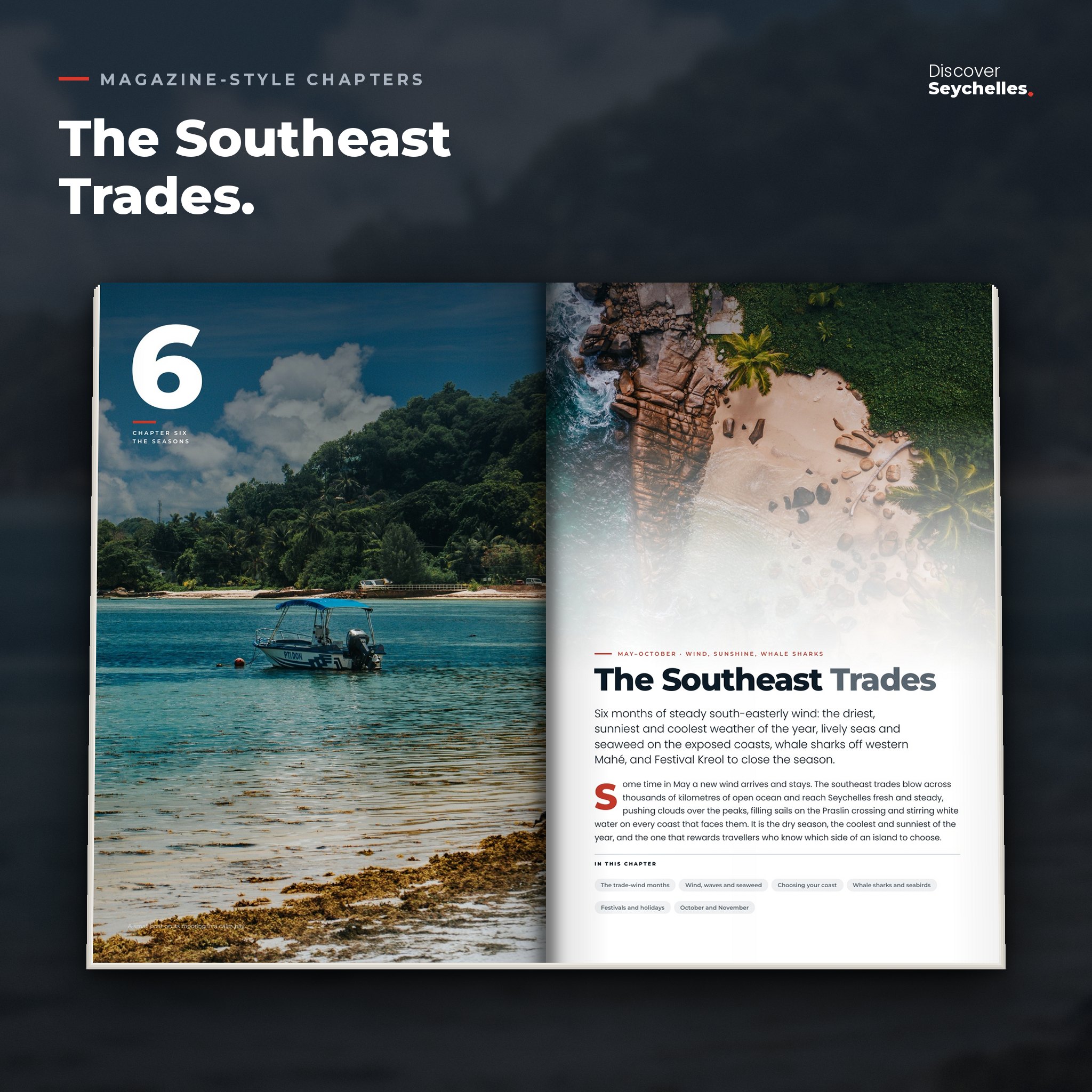
The trades also stir up the sea. Coasts facing south-east get choppier water, stronger currents and, from about June to September, seaweed on some beaches, especially on parts of Praslin. Sheltered north-west coasts are now the calm side, and the switch can be dramatic: a bay that is glassy in March may be all surf in July. Beau Vallon on Mahé and Anse Lazio on Praslin come into their own. This season can bring whale sharks off western Mahé, and the season ends with Festival Kreol in October.
The calm months: April, October and November
Between the two winds come short spells of light breezes and flat water. April and October to November are often recommended for snorkelling and diving, because visibility improves when the wind drops. The trade-off is heat: without a breeze, the islands can feel hotter. October also sits outside the main rainy months, which makes it a good all-round choice. May is similar at the other end of the year: the trades are arriving, the rain is easing and the sea is still warm. Both months tend to be quieter than the Christmas and Easter peaks, which can mean easier ferry bookings and more choice of rooms on La Digue and Praslin.
Month by month at a glance
| Weather | Calm side | Best for | |
|---|---|---|---|
| Dec to Mar | Hot, humid, wettest | South-east coasts | Turtles, lush forest |
| April | Hot, calm, sea at its warmest | Most coasts | Snorkelling, diving |
| May to Sep | Driest, breezy, cooler | North-west coasts | Hiking, sailing, sun |
| Oct to Nov | Calm, warm, mostly dry | Most coasts | Diving, all-round |
Hiking, birds and crowds
For hiking on Mahé and Praslin, the drier trade-wind months are the most comfortable, with cooler air and less mud on trails such as Copolia and Morne Blanc, where cloud and fog are common near the top. In the north-west monsoon, forests such as the Vallée de Mai are at their most lush, but paths can be slippery after rain.
Wildlife follows its own calendar. Hawksbill turtles start to nest on the beaches from about October, sometimes in broad daylight, and the season runs through the calmer, wetter months. Busy periods include Christmas, New Year and Easter, when ferries and the best-known guesthouses fill early, so book ahead if your dates are fixed.
Cyclones and safety
The granite islands lie close to the equator and are rarely hit by cyclones, though distant storms can bring wind and swell, and the islands have occasionally been affected. The bigger everyday risk is the sea itself, which can change from one side of an island to the other on the same day.
SafetyBeaches facing the wind can have strong currents and dangerous waves, especially in the south-east trades. Some of the most famous, such as Grand Anse and Anse Cocos on La Digue, are often unsafe for swimming. Check conditions, respect red flags and ask locally.
So when should you go?
- For dry, sunny weather: June to August, staying on north-west coasts.
- For snorkelling and diving: April, October and November.
- For an all-round trip: May or October, at the edges of the trades.
- For lush forest and turtles: December to March, accepting more rain.
Local tipChoose your hotel by season. In the trades, a north-west-facing bay will give you calm swimming; in the north-west monsoon, a south-east-facing one will.
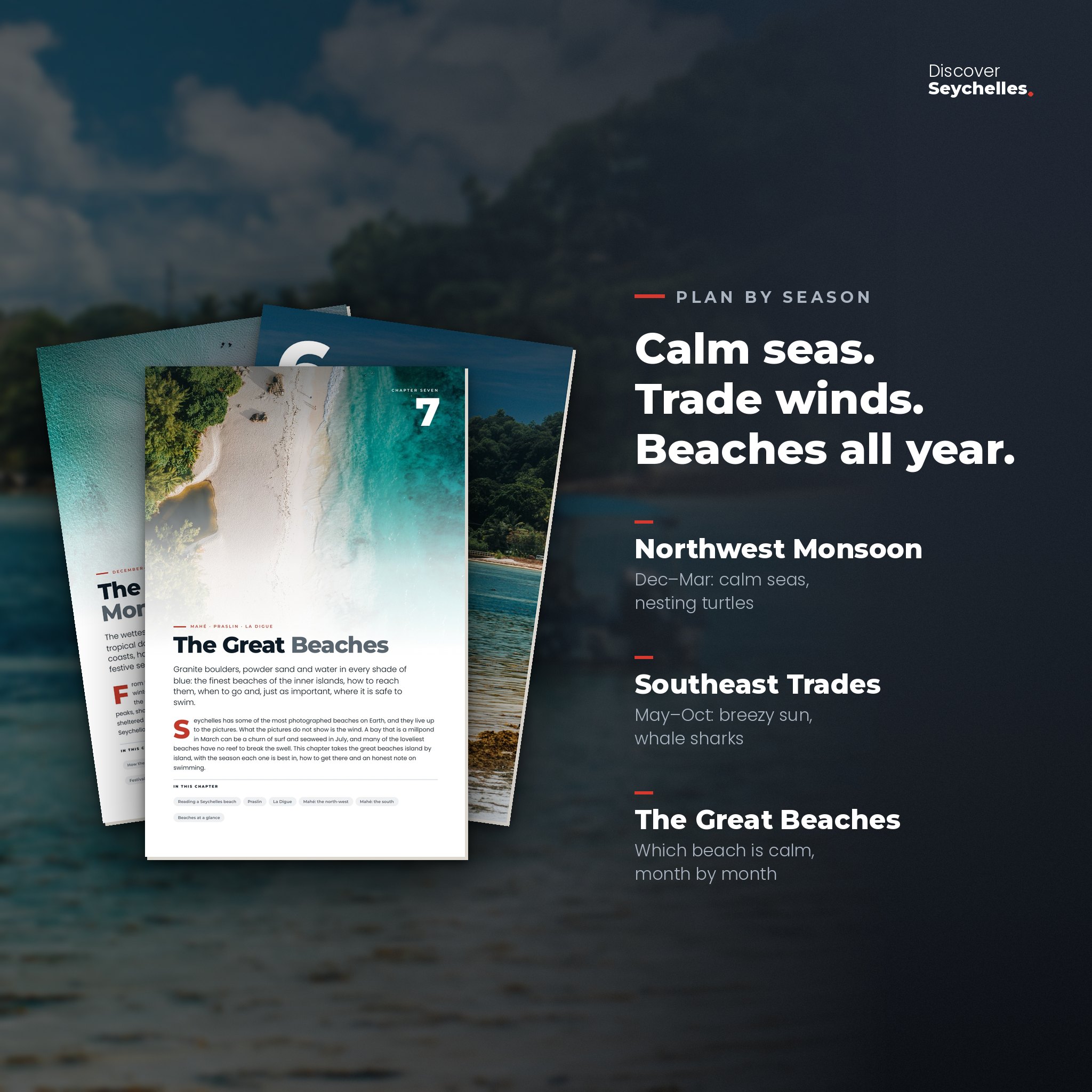
Once you know when, plan the route with the Seychelles in 7 days, or compare destinations with Maldives or Seychelles. The Discover Seychelles guide has a chapter on each season and a beach-by-beach guide to which bay is calm in which month.
Questions
What is the best month to visit the Seychelles?
There is no single best month. April, October and November are calm and good for snorkelling, while June to August are the driest and sunniest months.
What is the rainy season in the Seychelles?
The north-west monsoon, from about December to March, is the wettest period. January is usually the wettest month on Mahé.
Does the Seychelles get cyclones?
Rarely. The main granite islands lie close to the equator, outside the usual cyclone tracks, although distant storms can bring wind and swell.
When is there seaweed in the Seychelles?
Seaweed tends to wash up on some south-east facing beaches during the south-east trades, especially from about June to September. Beaches on the opposite side of the island are usually clear.