At a glance
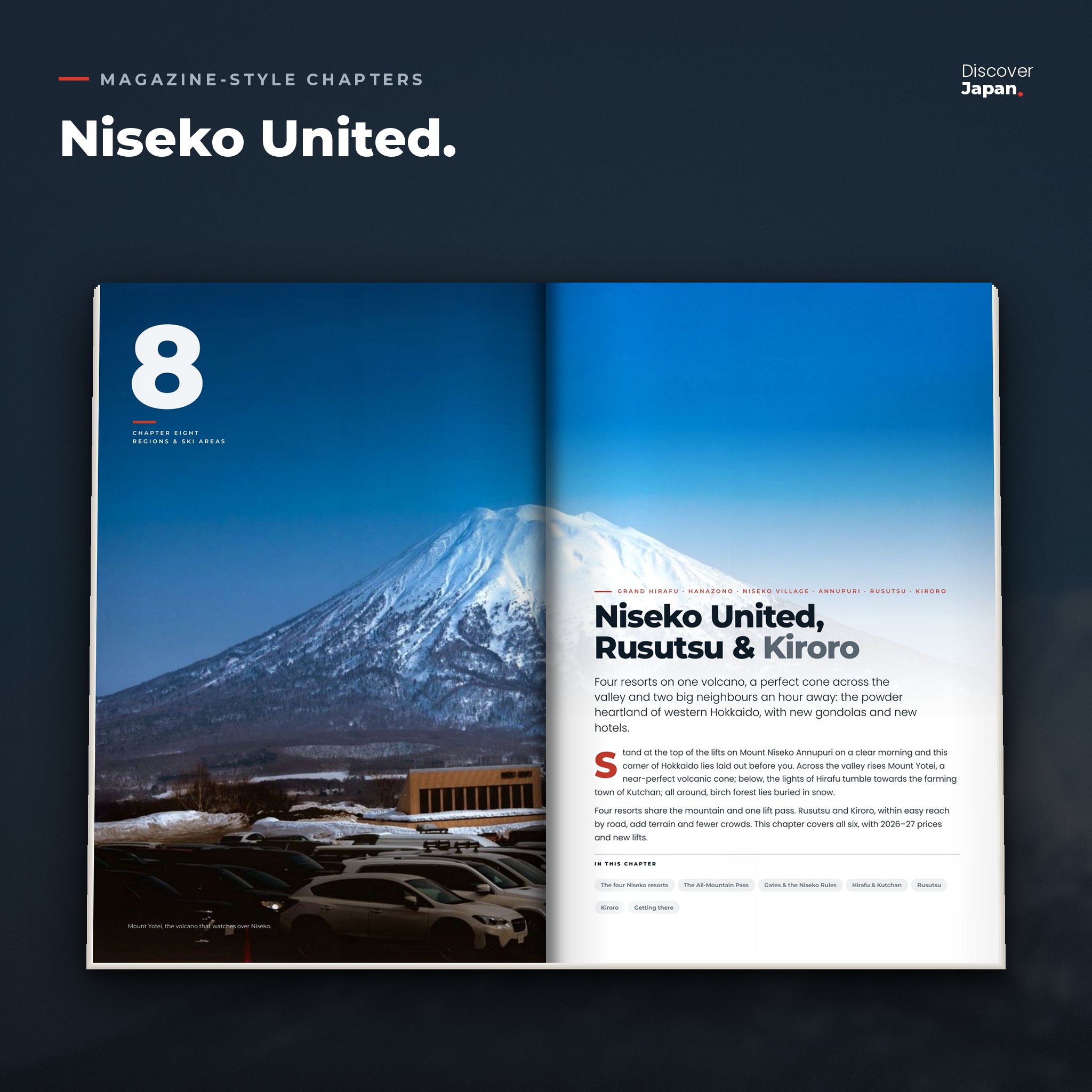
Niseko sits on Hokkaido, Japan's northern island, on the slopes of Mount Niseko Annupuri. Hakuba lies in Nagano, on the main island of Honshu, in a valley below the Northern Alps. Both are international, both have great snow, and they could hardly feel more different.
Niseko and Hakuba compared
| Niseko | Hakuba | |
|---|---|---|
| Snow | About 15 to 18 m a season, very dry | Up to about 11 m a season |
| Terrain | Rolling volcano, superb trees | Steep alpine peaks, big vertical |
| Layout | 4 linked resorts, one pass | 10 resorts linked by shuttle bus |
| Village | Hirafu: compact, international | Spread out along the valley |
| Getting there | Fly to New Chitose, then 2 to 3 hours by road | Shinkansen to Nagano, then about 75 min by bus |
| Season | Late November to early May | Into early May at the higher resorts |
| Best for | Powder lovers, first-timers to Japan | Advanced skiers, variety, Tokyo add-on |
The snow
This is Niseko's trump card. Cold air from Siberia sweeps across the Sea of Japan and hits Hokkaido first, and Niseko averages around 15 to 18 metres of snow a season. It falls often and it falls dry, and January in particular brings day after day of fresh powder.
Hakuba gets plenty too, up to about 11 metres a year, but it sits further south and the snow can be heavier and the weather more changeable. The higher resorts, such as Happo-one and Tsugaike Kogen, hold their snow well into spring.
The terrain
Here Hakuba wins. Its peaks belong to the Northern Alps, and the skiing is steeper and more varied, with real alpine bowls and long runs. Happo-one hosted the downhill at the 1998 Olympics. With ten resorts to choose from, you can ski somewhere different every day.
Niseko is a gentler volcano, with wide open slopes and some of the best tree skiing in the world among its birch forests. Off-piste is reached through gates under the Niseko Rules, which open only when the avalanche conditions allow.
For mixed groups, Niseko is the easier mountain: plenty of wide, forgiving runs and English-speaking ski schools. Hakuba suits groups with different tastes too, because each resort has its own character, from gentle family runs to the steeps of Happo-one.
The villages
Niseko's main village, Hirafu, is compact and walkable, with restaurants, bars and lodges a short walk from the lifts. It is the most international ski town in Japan, with English widely spoken. Some visitors love that; others feel they could be anywhere.
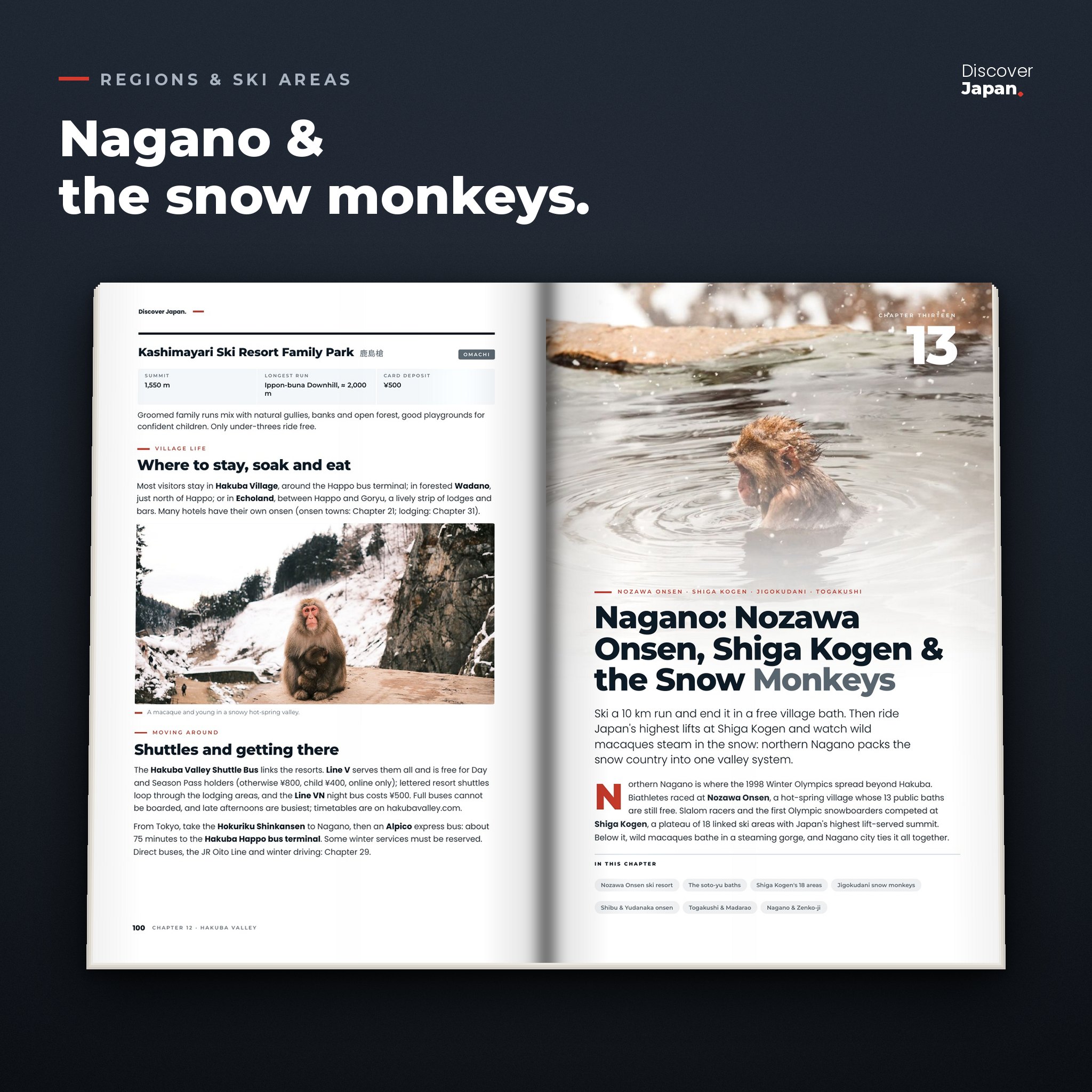
Hakuba's villages are spread along the valley: Hakuba Village around the Happo bus terminal, forested Wadano to the north and lively Echoland between Happo and Goryu. You will rely on the shuttle buses, which link the resorts and lodging areas. The valley feels more Japanese, and day trips to the snow monkeys at Jigokudani or the town of Nagano are easy.
Local tipOnsen are part of both trips. In Hakuba many hotels have their own hot springs, and Nozawa Onsen, with its 13 public baths, is within reach for a day. Around Niseko, hot-spring baths are never far from the slopes.
Getting there
Hakuba is the easy one from Tokyo. Take the Hokuriku Shinkansen to Nagano, about 95 to 110 minutes, then a bus of about 75 minutes to the valley. That makes it a natural add-on to a city trip.
Niseko means a flight from Tokyo to New Chitose, Sapporo's airport, then a shuttle bus, car or train. Allow roughly 2 to 3 hours by road, depending on which resort you stay at. It is a longer journey, but a direct flight into Hokkaido makes it simple.
SafetyBoth areas have serious avalanche terrain. Only leave the resort boundaries through open gates or with a qualified guide, carry a transceiver, shovel and probe, and check the daily avalanche information. Rescue costs outside the boundaries can be yours to pay.
The verdict
- Choose Niseko for the most reliable, lightest powder, superb tree skiing and the easiest first trip to Japan.
- Choose Hakuba for steeper, more varied terrain, ten resorts to explore, a more Japanese feel and quick access from Tokyo.
- Do both if you have two weeks: fly into Hokkaido for powder, then take the train to Nagano.
Timing changes the answer too: early January powder in Niseko is a different trip from spring sunshine in Hakuba. See when to ski in Japan, or compare the other great resorts in the best ski resorts in Japan. Both areas are covered resort by resort in Discover Japan Ski and Snowboard.
Questions
Is Niseko or Hakuba better?
Niseko is better for reliable, light powder and an easy first trip. Hakuba is better for steep, varied terrain and quick access from Tokyo.
Which has more snow, Niseko or Hakuba?
Niseko, with an average of about 15 to 18 metres a season. Hakuba receives up to about 11 metres.
How do you get from Tokyo to Hakuba?
Take the Hokuriku Shinkansen to Nagano, about 95 to 110 minutes, then a bus of about 75 minutes to Hakuba.
How far is Niseko from New Chitose Airport?
About 2 to 3 hours by shuttle bus or car, depending on the resort.