At a glance
Bali sits eight degrees south of the equator, so there is no winter, only a wet season and a dry one. On the south coast, daytime highs stay around 29 to 32°C all year and nights rarely drop below 23°C. The sea is warm enough to swim every month.
The short answer: April to October is the best time for most trips, and May, June and September are the sweet spot, with dry weather and fewer people than the peak of July and August.
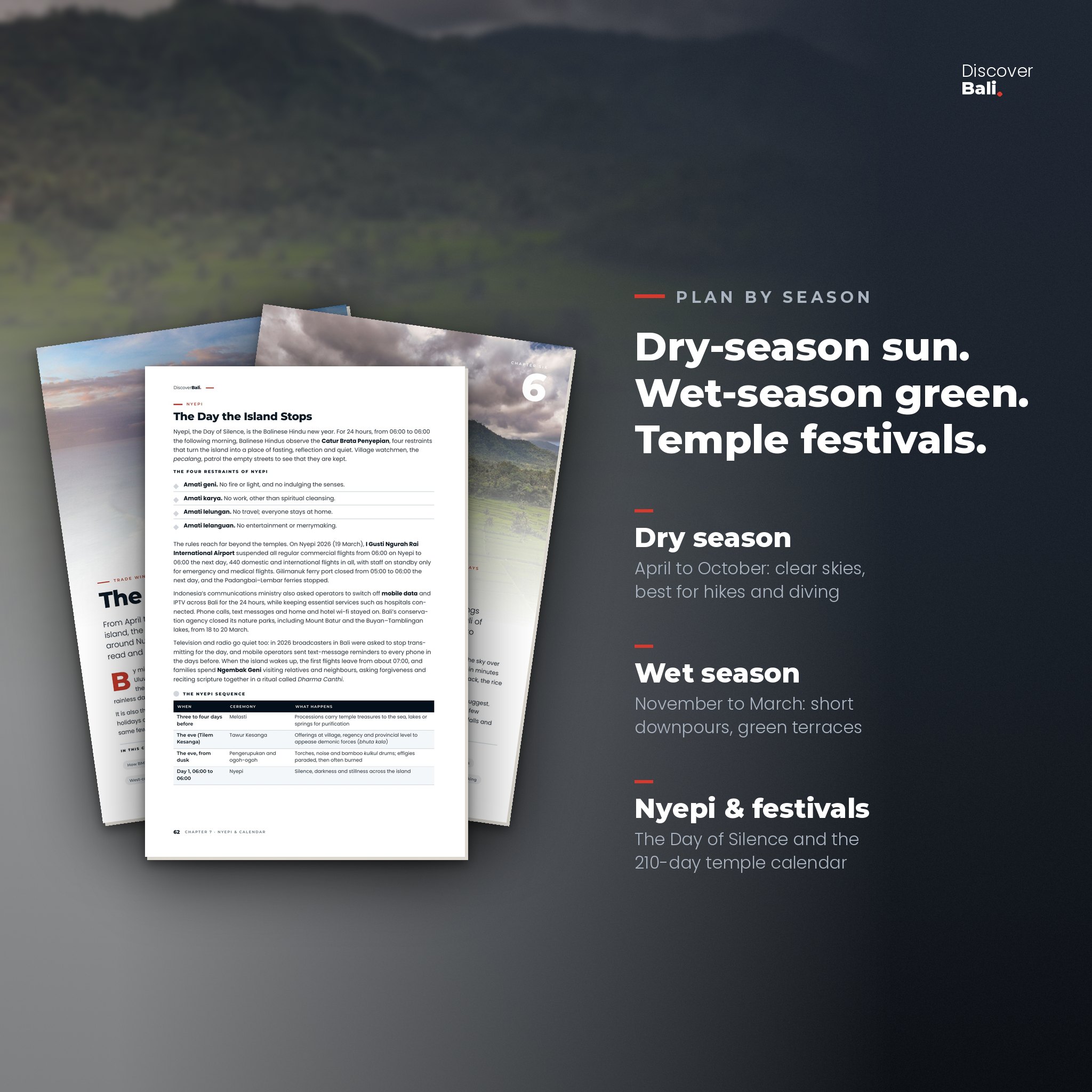
The dry season: April to October
From April, the monsoon eases and the skies clear. Long-term averages for the airport near Denpasar show less than 100 mm of rain a month through the dry season, with August the driest month at about 15 mm. Humidity drops a little and the evenings are pleasant.
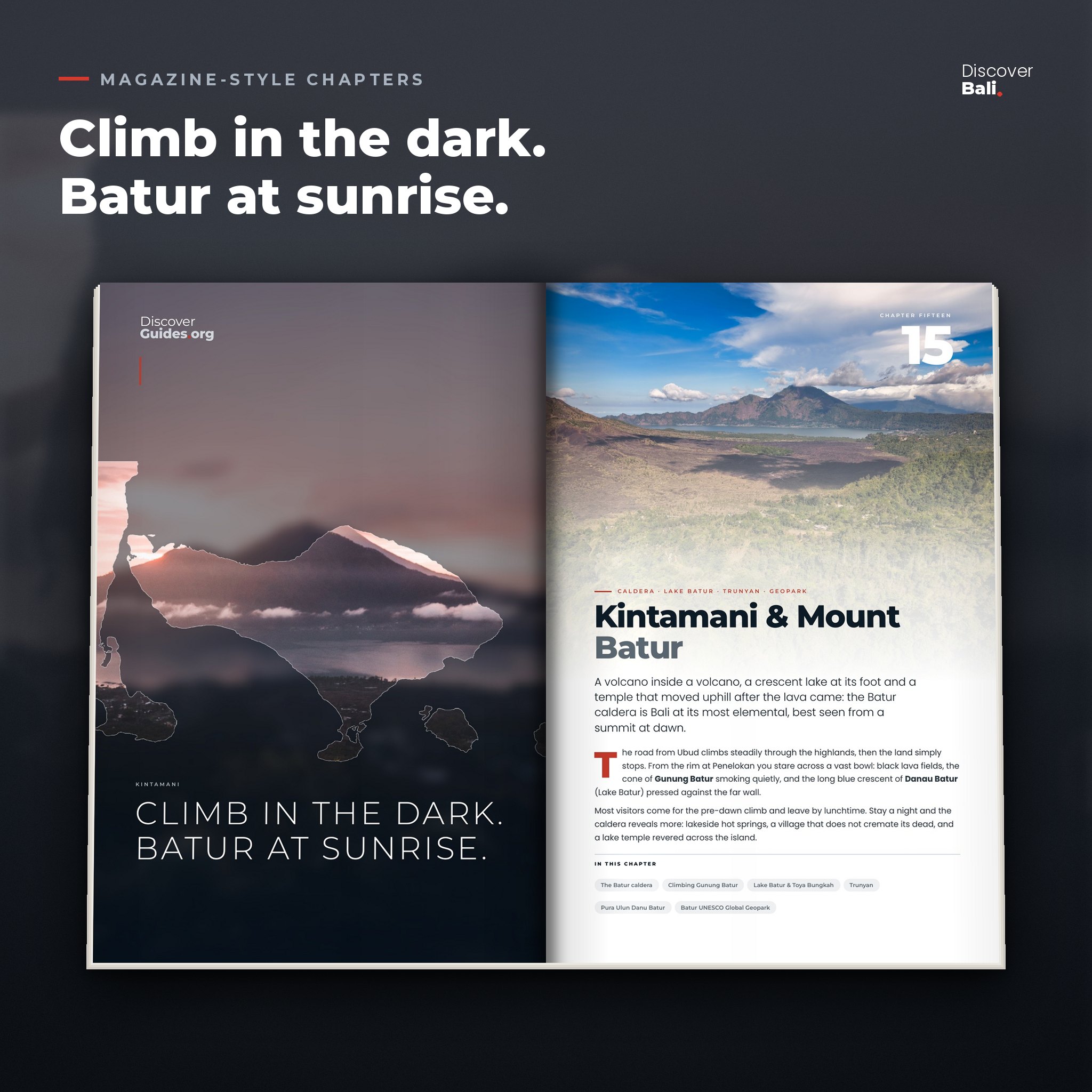
This is the season for climbing Gunung Batur, driving the mountain roads of the north and east, and diving. Visibility is generally at its best, and in the cooler months the strange ocean sunfish, the mola, rises to the cleaning stations around Nusa Penida. The surf breaks of the Bukit, Uluwatu among them, work best in this season too.
The catch is popularity. July and August bring European summer holidays, and prices and crowds rise with them. Book rooms and boats early for those months.
The wet season: November to March
The rains build from November and peak from December to February, when the Denpasar averages run between about 280 and 350 mm a month. That sounds like a washout, but the pattern is usually short, heavy downpours, often in the afternoon or evening, with sun in between.
The reward is green. The rice terraces are full, the waterfalls are at their strongest and the island feels lush. Prices drop outside the Christmas and New Year peak, which is one of the busiest weeks of the whole year.
Plan around the weather rather than against it. Do outdoor things in the morning, keep the afternoon for a spa, a cooking class or a temple, and expect some roads in the highlands to be slippery. Rough seas can also cancel boats to the Nusa islands on stormy days.

Bali month by month
| Month | Rain in Denpasar | What to expect |
|---|---|---|
| January | About 350 mm | Wettest month, green and quieter after New Year |
| February | About 280 mm | Wet, low prices, lush terraces |
| March | About 215 mm | Rains easing; Nyepi in 2027 falls on 8 March |
| April | About 90 mm | Dry season begins, good value |
| May | About 75 mm | Dry, green, uncrowded: a top month |
| June | About 70 mm | Dry and pleasant, busier late in the month |
| July | About 50 mm | Peak season, book ahead |
| August | About 15 mm | Driest and busiest month |
| September | About 40 mm | Dry, crowds thinning: a top month |
| October | About 90 mm | Hot, first storms late in the month |
| November | About 150 mm | Wet season returns, quiet |
| December | About 290 mm | Wet; very busy over Christmas and New Year |
Rainfall figures are 1991 to 2020 averages for the airport station near Denpasar. The highlands around Kintamani and Bedugul are cooler, often much cooler at night, and see more afternoon storms than the south coast.
Nyepi and the temple calendar
Bali runs on two calendars, and the festivals can shape a trip as much as the weather.
Nyepi, the Balinese Hindu new year, is a day of silence. In 2027 it falls on 8 March. For 24 hours from 6 am, there is no travel, no work and no lights. The airport closes, ferries stop, and visitors must stay inside their hotel grounds. The night before, villages parade huge ogoh-ogoh effigies through the streets, which is one of the most spectacular evenings of the Balinese year.
Galungan marks the victory of good over evil and follows the 210-day Pawukon calendar, so it comes around roughly twice a year. In 2027 it falls on 13 January and 11 August, with Kuningan ten days later each time. Bamboo penjor poles arch over every village road, and families gather at their temples. Some shops and restaurants close on the main days.
Local tipIf your dates touch Nyepi, choose a hotel you will be happy to stay in for a full day and night, and stock up the day before. Everything outside stops, including taxis and deliveries.
Before you go
Foreign tourists pay a Bali tourist levy, about IDR 150,000 per person in 2026, once per trip. Pay it on the official Love Bali website and keep the QR voucher on your phone. Rules and amounts can change, so check before you travel.
Once you have your dates, plan the route: Bali in 7 days works in either season, and Discover Bali has the full seasonal guide, the Nyepi sequence and the temple calendar.
Questions
What is the best month to visit Bali?
May, June and September. They fall in the dry season but avoid the peak crowds of July, August and the Christmas holidays.
When is the rainy season in Bali?
November to March, with the heaviest rain from December to February. Most rain falls in short, heavy showers rather than all-day downpours.
When is Nyepi in 2027?
Nyepi falls on 8 March 2027. For 24 hours from 6 am the island goes silent, and the airport closes.
Is it worth going to Bali in the wet season?
Yes, for green landscapes, full waterfalls and lower prices outside Christmas and New Year. Plan outdoor activities for the morning.