At a glance
The secret of Japanese snow is the wind. Cold air from Siberia crosses the Sea of Japan, picks up moisture and drops it as light, dry snow on the mountains of Hokkaido and Honshu. The result is the famous "Japow": deep, frequent and soft.
The resorts fall into two groups. Hokkaido, the northern island, has the coldest, most reliable powder. Honshu, the main island, has bigger mountains, onsen villages and easy access from Tokyo.
Hokkaido
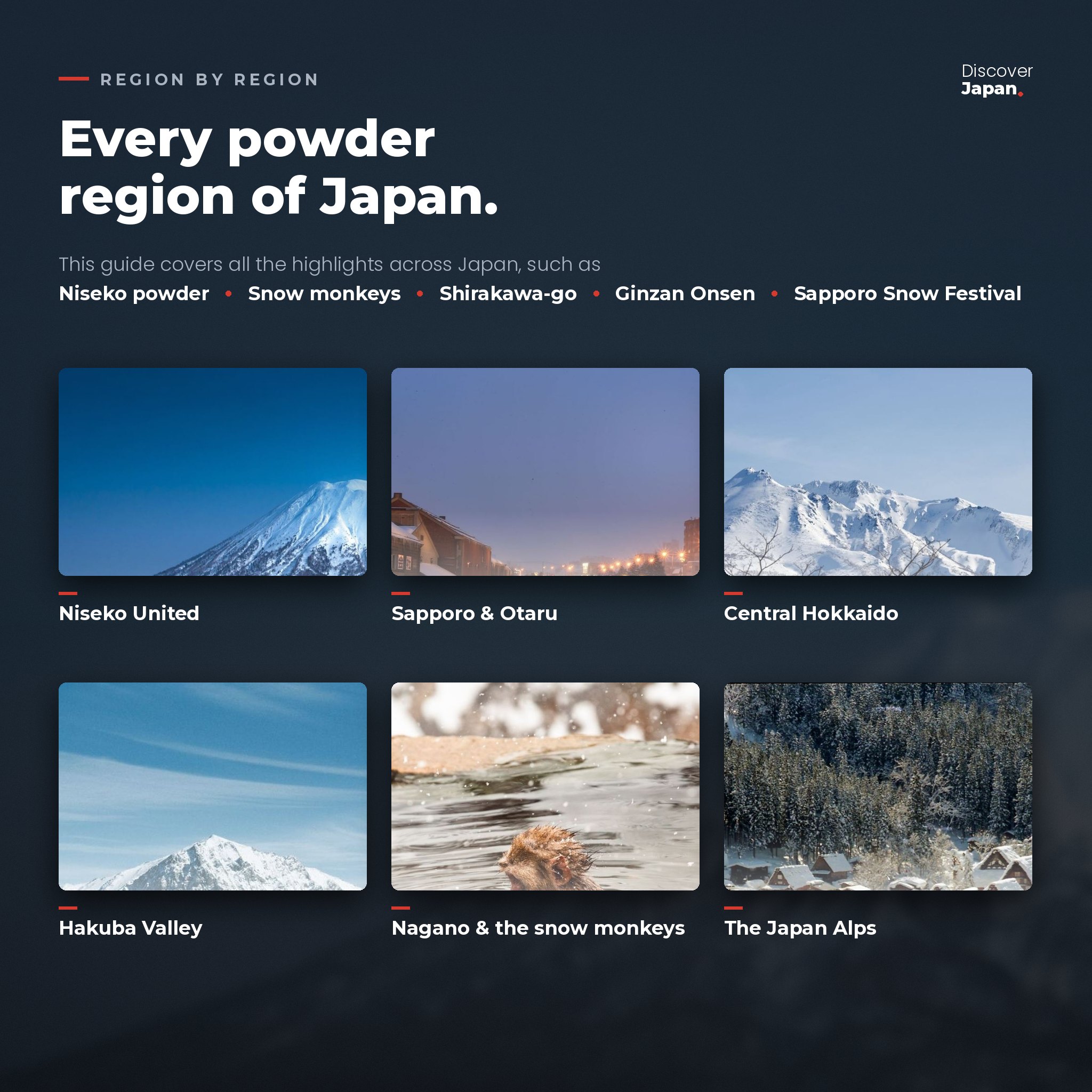
Niseko United
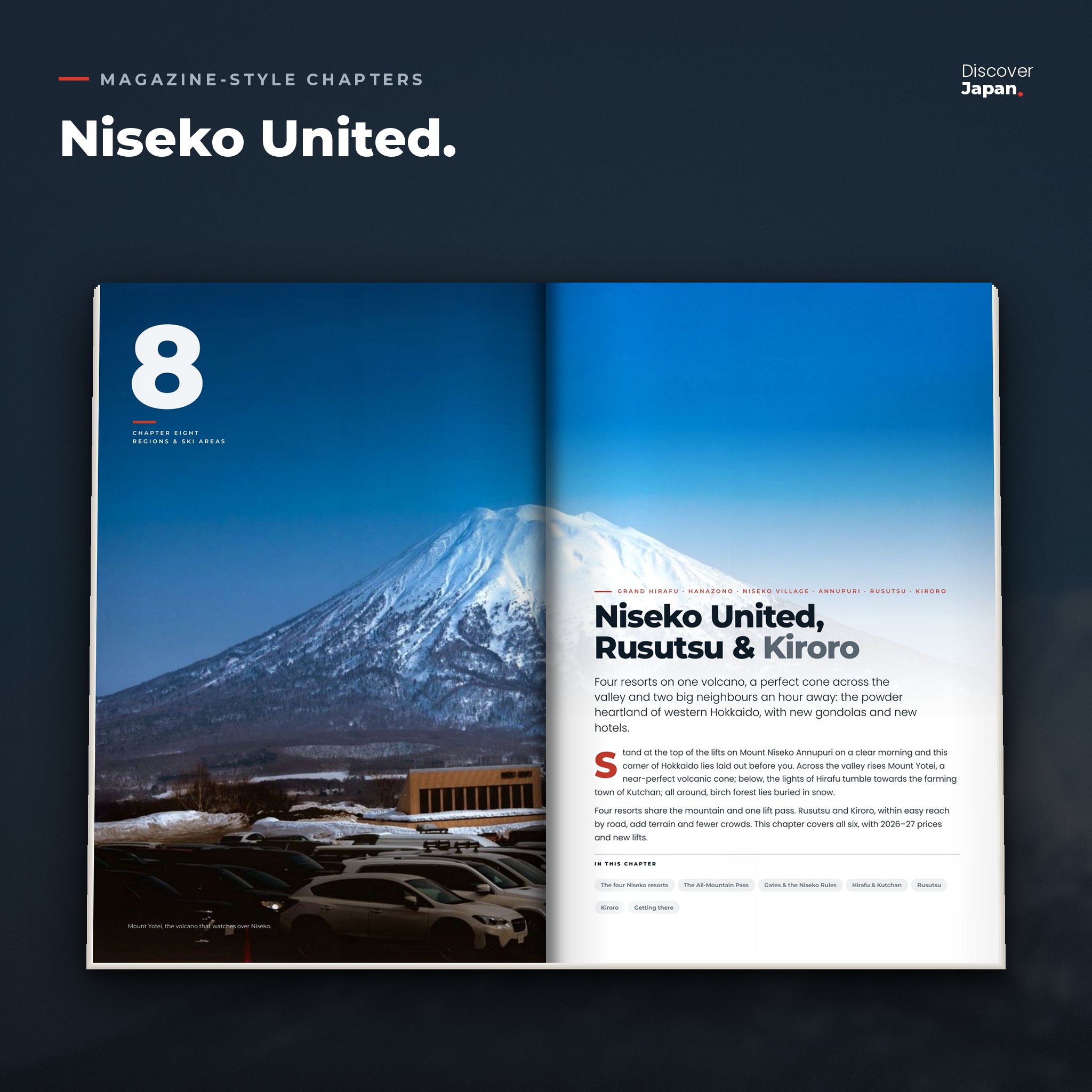
Japan's most famous ski area: four linked resorts, Grand Hirafu, Hanazono, Niseko Village and Annupuri, on one volcano, Mount Niseko Annupuri, with a shared lift pass. Average snowfall runs to about 15 to 18 metres a season. Across the valley rises the perfect cone of Mount Yotei.
Niseko has the most English-speaking services in Japan, a big choice of places to eat and night skiing under lights. Off-piste is accessed through gates under the Niseko Rules, which open only when conditions allow. The trade-off is crowds and prices, especially at peak times.
Rusutsu
A short drive from Niseko, Rusutsu spreads over three mountains: West Mountain, East Mountain and Mount Isola. It is known for its tree skiing and for having far fewer people on the slopes than its neighbour.
Kiroro
Inland from Otaru, Kiroro catches some of the heaviest snowfall in Hokkaido and often opens early in the season. It is a compact, quiet resort, good for a few days of deep snow.
Furano
In the centre of Hokkaido, far from the sea, Furano is colder and its snow drier. It has hosted World Cup races, and the town has a Japanese feel that the international resorts have lost. Asahidake, the island's highest mountain, is within reach for backcountry skiers.
Honshu and the Japan Alps
Hakuba Valley
Ten ski resorts in one valley below the Northern Alps, including Happo-one, Hakuba 47, Goryu, Iwatake, Tsugaike Kogen and Cortina. Hakuba hosted events at the 1998 Nagano Winter Olympics, and its terrain is the most alpine in Japan, with up to about 11 metres of snow a season. A shuttle bus links the resorts. From Tokyo, the Hokuriku Shinkansen to Nagano and a bus of about 75 minutes get you there.
Nozawa Onsen
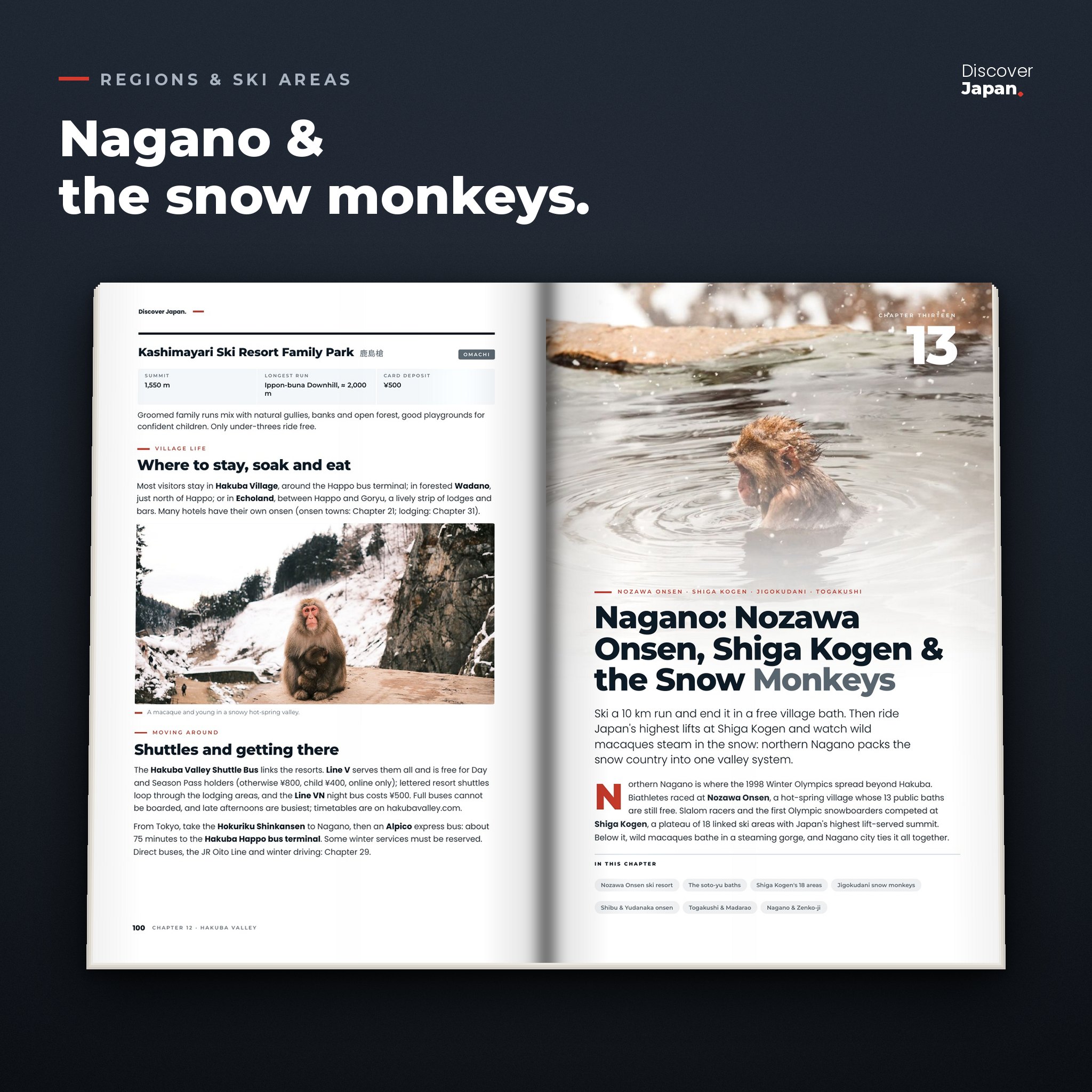
A hot-spring village that happens to have a superb ski mountain. Nozawa has 13 public baths, the soto-yu, in its narrow streets, and a vertical drop of about 1,085 m above them. On 15 January every year, the village holds the Dosojin Fire Festival, one of the most dramatic in Japan.
Shiga Kogen
Japan's largest ski area: 18 ski areas on one high plateau, with the highest ski summit in the country at Yokoteyama, 2,307 m. The altitude keeps the snow cold and the season long, often into early May. The snow monkeys of Jigokudani bathe in the hot springs just below.
Myoko Kogen
In Niigata, close to the Sea of Japan, the Myoko resorts, including Akakura Onsen and Suginohara, get some of the deepest snow on Honshu. The atmosphere is traditional, with onsen inns and few foreign skiers compared with Hakuba.
Zao Onsen
In Yamagata, Zao is famous for its juhyo, the "snow monsters": conifers coated in thick rime ice until they look like frozen figures. They are best from late January to mid-February. Below the slopes, the old onsen town smells of sulphur.
Which resort is right for you?
| If you want | Go to |
|---|---|
| Powder with every comfort | Niseko |
| Fewer crowds, great trees | Rusutsu or Kiroro |
| Cold, dry snow and local towns | Furano |
| Big alpine terrain near Tokyo | Hakuba |
| Onsen village charm | Nozawa Onsen |
| Long season and the snow monkeys | Shiga Kogen |
| Deep snow, traditional feel | Myoko Kogen |
| Snow monsters | Zao Onsen |
Torn between the two big names? Niseko or Hakuba compares them head to head. And when you go matters as much as where: see when to ski in Japan.
Local tipCombine two regions on one trip. Many skiers fly into Hokkaido for powder, then take the train to Nagano for onsen villages, or the other way round.
Every resort above has its own section in Discover Japan Ski and Snowboard, with the best runs for each level, lift passes, onsen and how to get there.
Questions
What is the best ski resort in Japan?
Niseko United is the most famous, for its powder and English-speaking services. Hakuba has the biggest alpine terrain, and Nozawa Onsen the best village atmosphere.
Is Hokkaido or Honshu better for skiing?
Hokkaido has colder, more reliable powder. Honshu has bigger mountains, onsen villages and quicker access from Tokyo.
Which Japanese ski resort has the most snow?
Snowfall varies by season, but Niseko averages about 15 to 18 metres, and Hakuba, Nozawa Onsen and Myoko all receive more than 10 metres in a typical winter.
What is the largest ski area in Japan?
Shiga Kogen in Nagano, with 18 ski areas and Japan's highest ski summit at 2,307 m.