At a glance
Madeira is one steep mountain island with a lively capital, Funchal, plus the beach island of Porto Santo. The Azores are nine islands spread across the mid-Atlantic, with São Miguel as the main gateway. One is a single, dramatic island you can know well in a week; the other is an archipelago that rewards slow island hopping.
Madeira and the Azores compared
| Madeira | Azores | |
|---|---|---|
| Best for | Walking, warmth, a city base | Crater lakes, hot springs, whales |
| Landscape | Sheer peaks, sea cliffs, laurel forest | Calderas, lakes, pastures, lava coasts |
| Highest point | Pico Ruivo, 1,862 m | Mount Pico, 2,351 m |
| Funchal / Ponta Delgada highs | About 20 to 27°C | About 17 to 26°C |
| Rain (yearly average) | About 645 mm in Funchal | About 965 mm in Ponta Delgada |
| Getting around | One island, one hire car | Flights and ferries between islands |
| Feel | Busier, more polished | Quieter, more rural |
Climate figures are long-term averages for the two capitals. Both islands have much wetter, cooler mountains than their coasts.
Weather: Madeira is warmer and drier
Madeira lies much further south, level with the coast of Morocco, and it shows. Funchal is a few degrees warmer than Ponta Delgada for most of the year and gets about a third less rain. In winter that difference matters: Funchal's sunny south coast makes Madeira the better winter-sun escape. The Azores are milder in summer than many people expect, rarely hot, and famous for weather that changes by the hour. See the best time to visit the Azores for the month by month picture.
Landscapes and hiking
Madeira is all vertical: knife-edge ridges, plunging valleys and the levadas, level water channels that lead walkers deep into the laurel forest. The ridge walk from Pico do Arieiro to Pico Ruivo is one of the great mountain days in Europe. Walking is the centre of most Madeira trips.
The Azores are rounder and greener, with volcanic craters filled by lakes, such as Sete Cidades and Lagoa do Fogo on São Miguel. The walks are gentler on the whole, and the islands are dotted with cows and stone walls. The big exception is Mount Pico, a serious climb to Portugal's highest summit.

Sea, swimming and wildlife
Both archipelagos have whales and dolphins, but the Azores are the stronger choice if wildlife is your priority. Sperm whales live there all year, and blue, fin and sei whales pass in spring. Madeira has whale and dolphin trips too, along with the natural lava pools of Porto Moniz and the long sandy beach of Porto Santo, which the Azores cannot match.
For hot water, the Azores win easily: Furnas, Terra Nostra Park and Caldeira Velha on São Miguel are thermal pools fed by the volcano, and Ponta da Ferraria has a hot spring flowing into the sea.
Towns, food and nightlife
Funchal is a real city, with an old town of restaurants and bars, gardens, a famous fish and fruit market and the New Year's Eve fireworks over the bay. Ponta Delgada is smaller and calmer. Food in both is rooted in the land and sea: espetada and poncha in Madeira, cozido from the hot ground of Furnas, São Jorge cheese and Pico wine in the Azores, and Europe's oldest surviving tea plantation at Gorreana on São Miguel.
Which should you choose?
- Choose Madeira for winter sun, serious walking, one easy base and a city with a buzz.
- Choose the Azores for crater lakes and hot springs, the best whale watching, island hopping and a quieter, more rural feel.
- First trip, one week: Madeira is simpler. Our Madeira in 5 days itinerary shows how much fits in.
- Time for two islands or more: the Azores, starting with São Miguel and adding Pico and Faial, as in our Azores in 7 days itinerary.
Local tipCan you do both? Yes, with time. There are direct flights between Funchal and Ponta Delgada on some days of the week, and both have frequent flights to Lisbon. Check current schedules before you plan a combined trip.
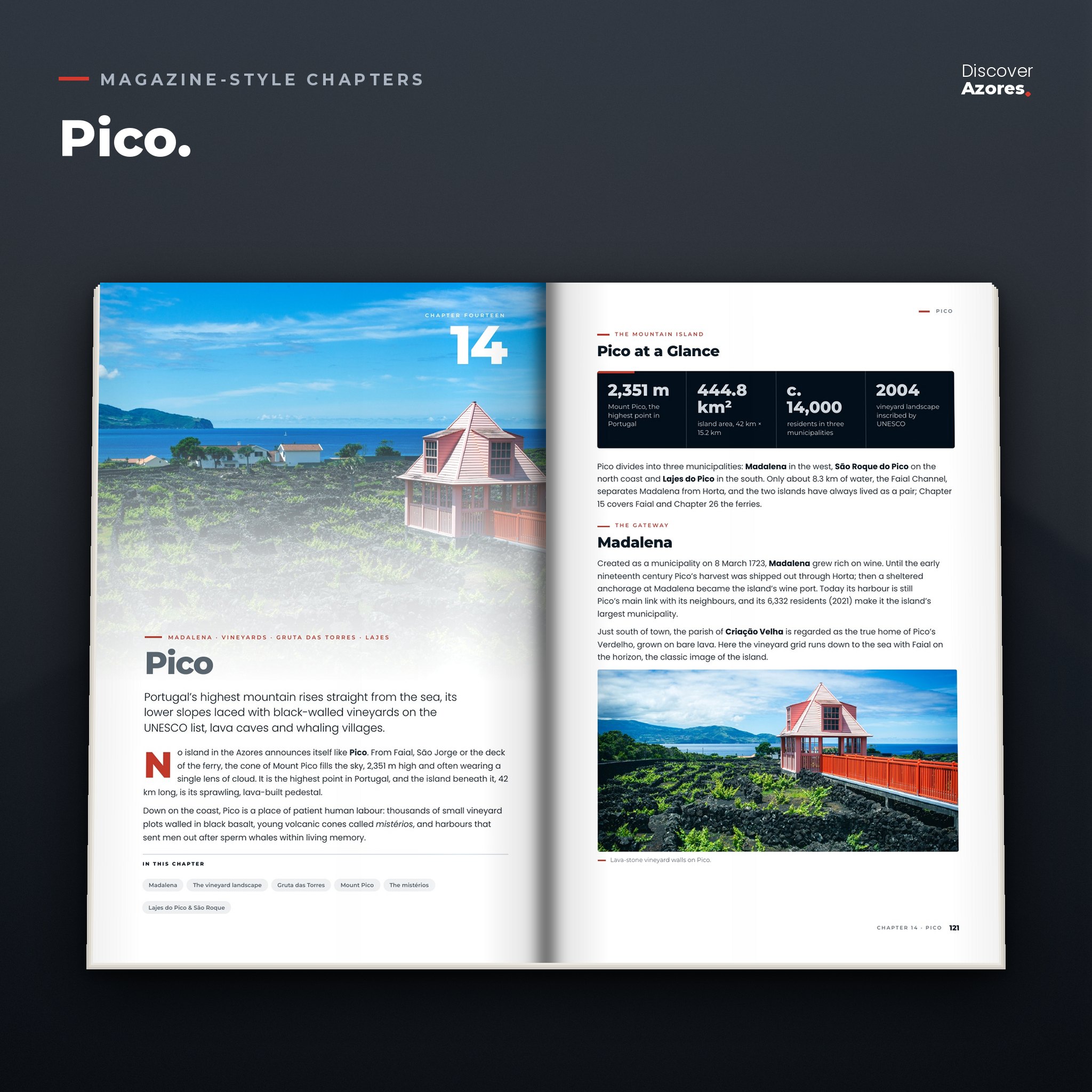
The Discover Azores guide covers all nine islands, the whales and the hot springs, with three itineraries and the island-hopping logistics.
Questions
Is Madeira or the Azores better for hiking?
Madeira, for most walkers: the levadas and the high mountain ridges are among the best walking in Europe. The Azores have gentler crater walks and the big climb of Mount Pico.
Which is warmer, Madeira or the Azores?
Madeira. Funchal averages highs of about 20 to 27°C through the year, against about 17 to 26°C in Ponta Delgada, and gets less rain.
Which is better for whale watching?
The Azores. Sperm whales are present all year, and blue, fin and sei whales pass in spring.
Can you fly between Madeira and the Azores?
Yes. Direct flights between Funchal and Ponta Delgada run on some days of the week, and both have frequent flights to Lisbon. Check current schedules.