At a glance
In Ponta Delgada, average daytime highs run from about 17°C in winter to about 26°C in August. The sea follows, from about 16°C in February and March to about 23°C in August and September. There are no real heatwaves or cold snaps; what changes most through the year is rain, wind and cloud.
Weather changes fast here. A grey morning on one side of São Miguel can be a clear one on the other, and four seasons in a day is a cliché because it is often true. Pack layers and a waterproof whatever the month.
The short answer
- For the warmest, most settled weather: July and August.
- For swimming: July to September, when the sea is at its warmest.
- For blue, fin and sei whales: April to June.
- For hiking with fewer people: May, June and September.
- For empty roads and low prices: November to March, if you can live with rain and wind.
The Azores month by month
Averages for Ponta Delgada on São Miguel: daytime high, rain and sea temperature.
- January: about 17°C, 110 mm, sea 17°C. Wet and windy, quiet everywhere.
- February: about 17°C, 80 mm, sea 16°C. Coolest sea of the year.
- March: about 17°C, 85 mm, sea 16°C. Storms still possible.
- April: about 18°C, 65 mm, sea 17°C. Blue whales start to pass.
- May: about 19°C, 65 mm, sea 18°C. Green islands, long days and migrating whales.
- June: about 22°C, 40 mm, sea 20°C. A good balance of weather and crowds.
- July: about 24°C, 25 mm, sea 22°C. The driest month and peak season.
- August: about 26°C, 50 mm, sea 23°C. The warmest month, the busiest roads.
- September: about 24°C, 95 mm, sea 23°C. Warm sea, fewer visitors.
- October: about 22°C, 110 mm, sea 21°C. Autumn rain returns.
- November: about 19°C, 120 mm, sea 19°C. One of the wettest months.
- December: about 18°C, 120 mm, sea 18°C. Short, grey days and few visitors.
Whale season
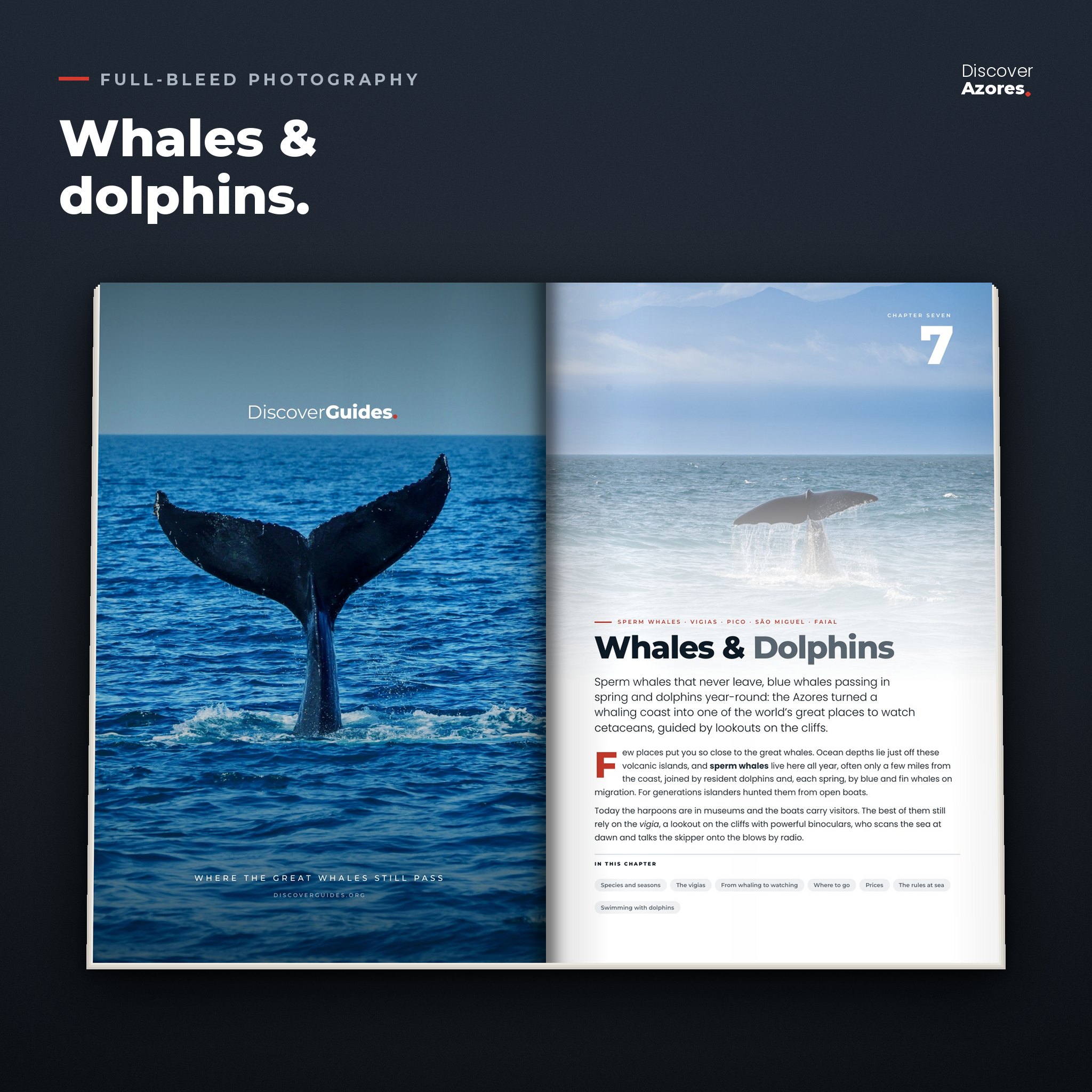
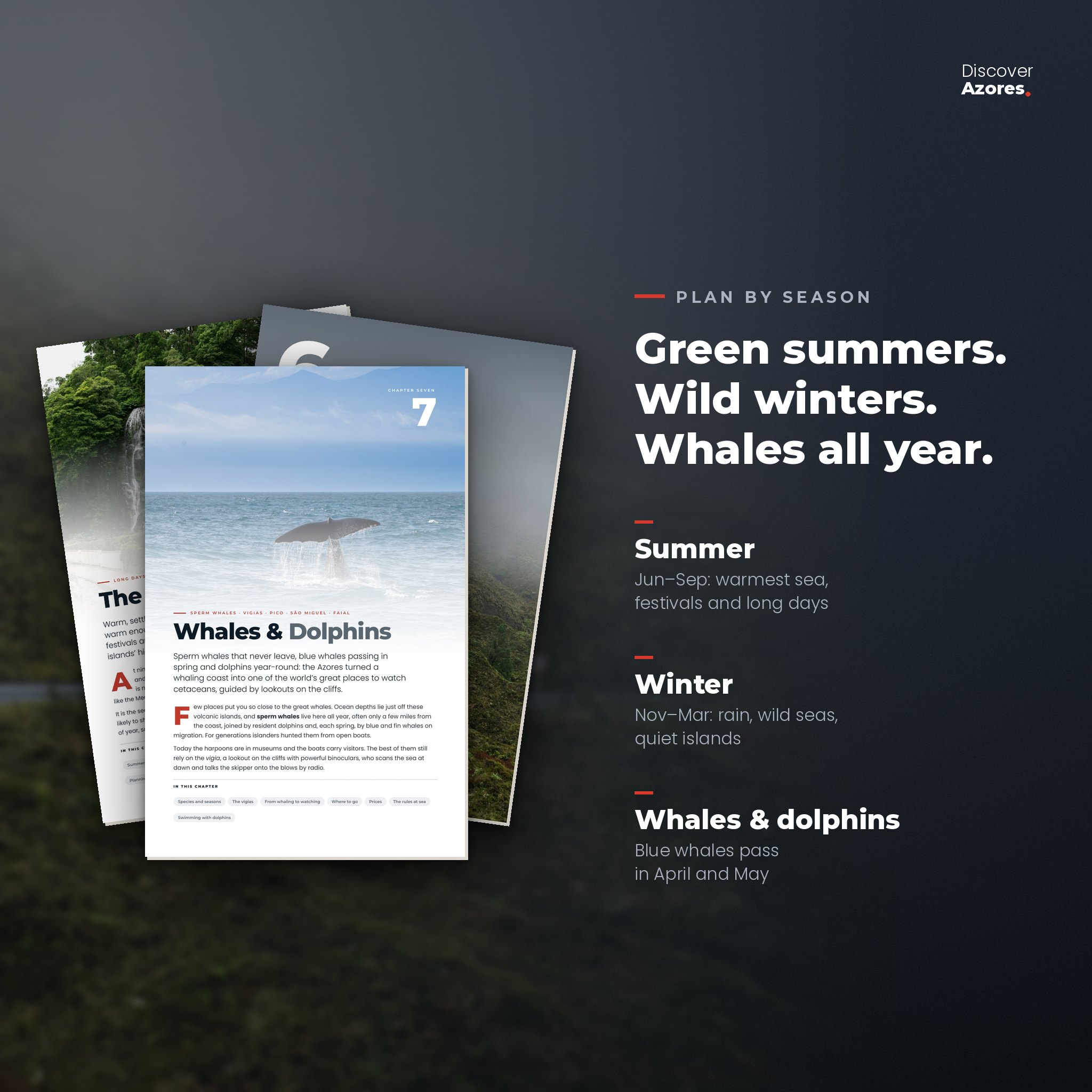
The Azores are one of the best places on Earth to watch whales and dolphins, and you can see them in any month. Sperm whales live around the islands all year. Each spring, roughly April to June, blue, fin and sei whales pass on migration. Pilot whales are seen from spring to autumn, and dolphins are common all year.
In winter, rough seas cancel more trips. If whales are the main reason for your trip, spring is the best season, with São Miguel, Pico and Faial the main bases. Boats work with vigias, lookouts on the cliffs who spot the blows and guide skippers by radio.
Summer: the easiest time
From June to September the islands are at their warmest and most reliable, ferries run more often and every trail and pool is open. It is also when the hydrangeas line the roads. The cost is crowds at Sete Cidades and Furnas and higher prices for cars and beds, so book early. In summer, access to Lagoa do Fogo on São Miguel is by shuttle bus; check the dates and fare before you go.
Spring and autumn: green and quieter
May, June and September are favourites for walkers. Days are long, the hills are green, and the main sights are calmer than in August. September has the warmest sea of the year. Expect showers and some cloudy days, and plan big views such as the crater lakes for the first clear morning.
Winter: wild and wet
From November to March the Azores are mild but wet, with windstorms rolling in from the Atlantic. Some days are glorious; others close viewpoints in cloud and ground boats in port. Hot springs such as Terra Nostra and Poça da Dona Beija are at their best on a cool day, and roads are empty.
SafetyMount Pico's summit can be snow-covered in winter and spring, and wind and cloud on the upper mountain can be dangerous in any month. Only climb with a clear forecast, register at the Casa da Montanha and carry the GPS tracker you are given.
Local tipOn São Miguel, check the webcams before driving to Sete Cidades or Lagoa do Fogo. If the craters are in cloud, go to Furnas or the coast and try again later.
Plan around the islands
Our Azores in 7 days itinerary works from spring to autumn and has flexible days built in for weather. Comparing destinations? See Madeira or the Azores. The Discover Azores guide has full chapters on the seasons, whales and dolphins and every island.
Questions
What is the best month to visit the Azores?
July and August have the warmest, driest weather. June and September are close behind with fewer visitors, and September has the warmest sea.
When is whale season in the Azores?
Sperm whales are seen all year. Blue, fin and sei whales pass on migration in spring, roughly April to June.
Is it worth visiting the Azores in winter?
Yes, if you want empty roads, hot springs and low prices, and accept rain, wind and some cancelled boat trips. Average highs stay around 17 to 18°C in Ponta Delgada.
How warm is the sea in the Azores?
From about 16°C in late winter to about 23°C in August and September, measured off Ponta Delgada.