At a glance
Iceland's winter is not as cold as its name suggests. Reykjavík averages highs around 1 to 2°C from November to March and lows around minus 2 to minus 4°C. The challenge is not the cold but the darkness and the wind. At the December solstice the sun rises after 11:00 and sets around 15:30, and Atlantic storms can close roads for a day at a time.
What winter is like
- Light: about 4 to 5 hours of daylight in December, rising to about 7 hours by the end of January and around 10 by late February.
- Weather: rain, sleet and snow are all common, and conditions change quickly. October to March are the wet, windy months.
- Crowds: quieter than summer, except around Christmas and New Year.
- Prices: car hire and hotels are usually cheaper than in summer.
Driving in winter
Icelandic rules require winter tyres from 1 November to 15 April, and rental cars come fitted with them in winter at no extra cost, often studded. A 2WD can manage the Ring Road around Reykjavík and along the south coast in normal conditions; a 4x4 is the safer choice for Snæfellsnes, the north and the Westfjords. The F-roads into the highlands are closed all winter.
Check road conditions on the Road Administration's live map (umferdin.is), the weather and wind warnings on vedur.is and alerts on safetravel.is every morning. Keep the fuel tank above half, drive well below the limit on ice, and never pass a closed-road barrier.
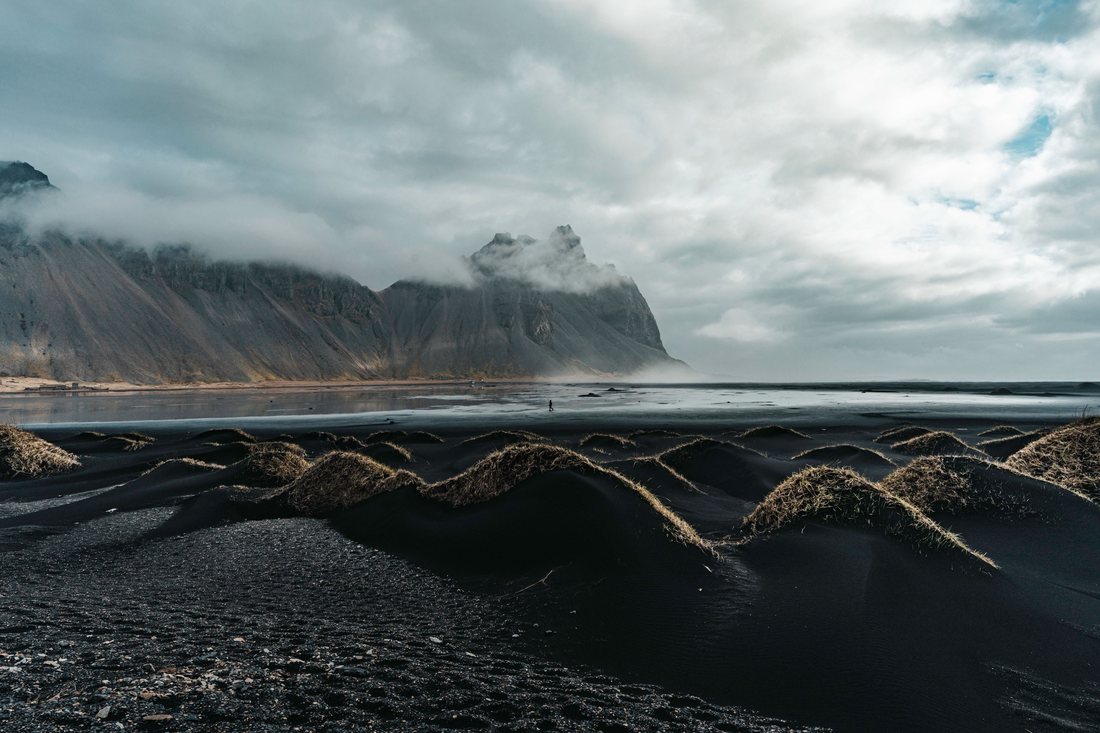
SafetyReynisfjara, the black beach near Vík, is dangerous in every season and worst in winter storms. Sneaker waves can surge far up the sand without warning. Stay well back from the water and never turn your back on the sea.
The best winter experiences
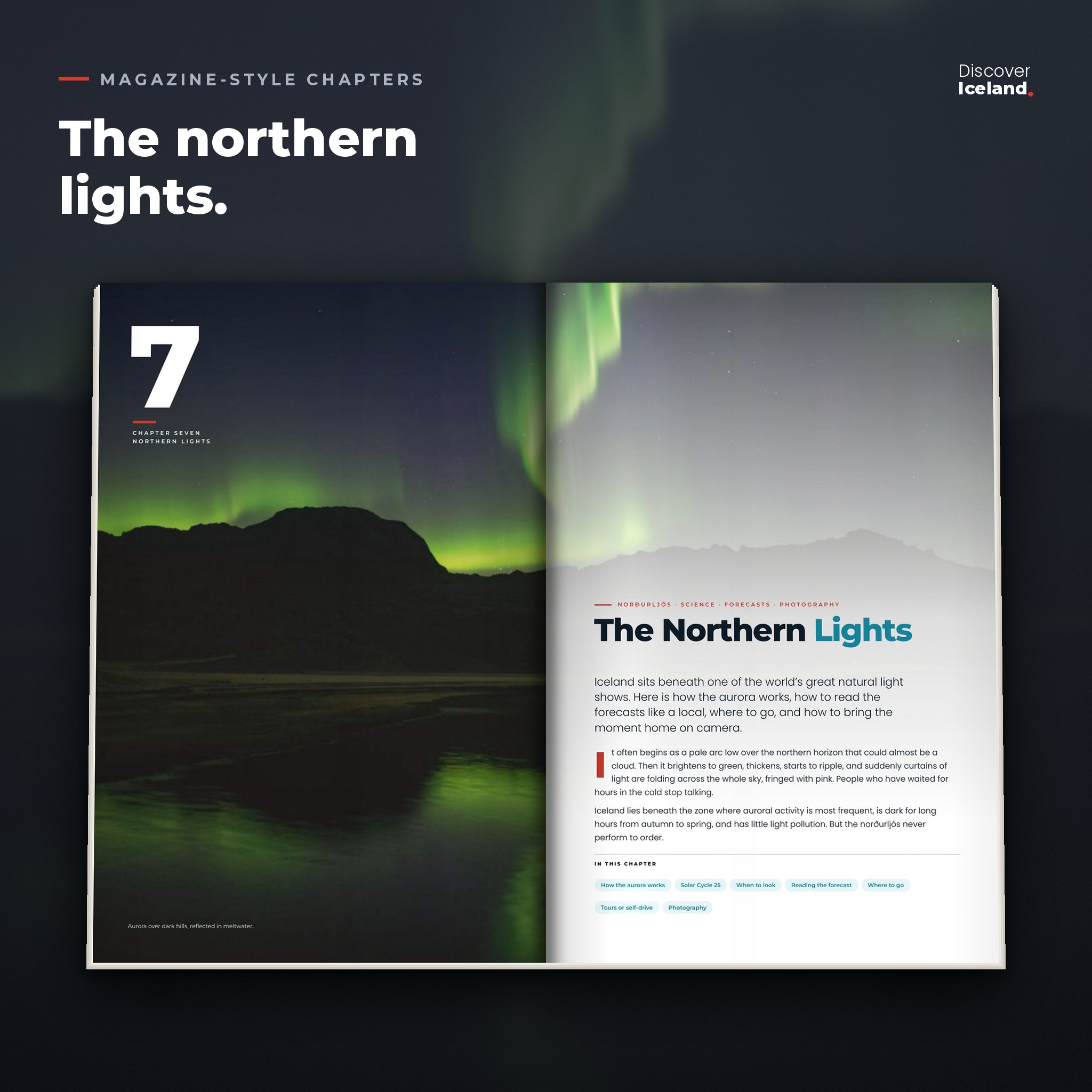
Northern lights. Winter's long nights are the heart of the aurora season, which runs from about September to April. You need clear skies as well as solar activity, so watch the cloud forecast and head away from town lights.
Ice caves. From roughly November to March, blue caves form under the edges of Vatnajökull. They are only safe with a certified glacier guide; tours leave from the area around Jökulsárlón and Skaftafell.
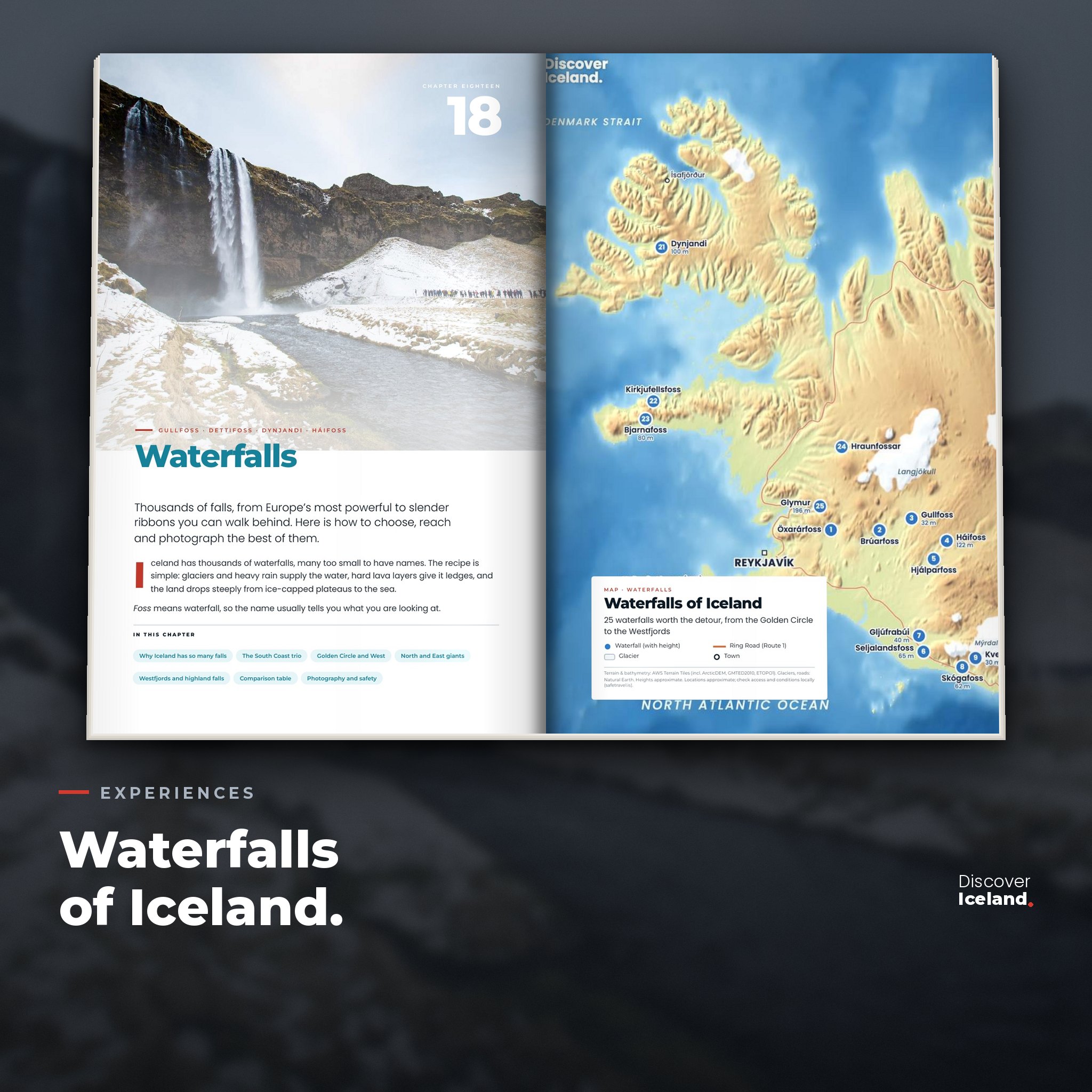
Frozen waterfalls. Seljalandsfoss, Skógafoss and Gullfoss take on curtains of ice. Paths can be glazed: microspikes or ice cleats for your boots are worth packing.
Hot water. A soak in a geothermal pool under falling snow is one of the great Icelandic pleasures, from Reykjavík's public pools to the lagoons around the Golden Circle.
A five-day winter plan
In winter, skip the full Ring Road. Distances are long, daylight is short and the north and east are the most likely to be closed by snow. The south coast gives you the best of winter Iceland with the shortest drives.
- Day 1Reykjavík
Arrive, walk the old harbour and Hallgrímskirkja, and soak in a city pool in the evening.
- Day 2The Golden Circle
Þingvellir, the Geysir area and Gullfoss in the short daylight. Sleep near Selfoss or Hella for dark skies. See our Golden Circle day guide.
- Day 3Waterfalls and Vík
Seljalandsfoss and Skógafoss, then the Dyrhólaey headland and Reynisfjara, keeping well back from the waves. Sleep in or near Vík.
- Day 4Ice cave and Jökulsárlón
A guided ice cave tour from the Jökulsárlón area, then the icebergs in the lagoon and on Diamond Beach. Sleep nearby.
- Day 5Back to Reykjavík
The long drive west in daylight, with a stop at any waterfall you missed.
Local tipPlan drives inside the daylight window, roughly 10:30 to 15:30 in December, and keep a spare night or a flexible day in case a storm closes the road.
What to pack
Winter packing list
- Waterproof, windproof outer layers, top and bottom
- Warm base layers and a fleece or down mid-layer
- Insulated, waterproof boots and ice cleats
- Hat, gloves and a buff for wind
- A swimsuit for the hot pools
- A head torch for dark mornings and aurora nights
Not sure winter is right for you? Compare it with the other seasons in the best time to visit Iceland. Discover Iceland has a full winter chapter, winter driving advice and how to actually see the northern lights; see the Discover Iceland guide.
Questions
Is it worth visiting Iceland in winter?
Yes, for the northern lights, ice caves, frozen waterfalls and quieter roads. Plan for short days, changeable weather and the chance of a road closure.
How many hours of daylight does Iceland have in winter?
In Reykjavík, about 4 to 5 hours around the December solstice, rising to about 7 hours by late January and 7 to 10 hours in February.
Can you drive the Ring Road in winter?
It is possible but not ideal for a first winter trip. Weather can close sections, especially in the north and east, and daylight is short. The south coast is the better winter route.
Do rental cars in Iceland have winter tyres?
Yes. Winter tyres are required from 1 November to 15 April, and rental cars are fitted with them in winter at no extra cost.