At a glance
Reykjavík's climate is cool and changeable rather than extreme. Average highs run from about 1°C in December and January to about 13°C in July, and some rain falls in every month. What changes most is the light: about four to five hours of daylight at the December solstice, and around 21 hours in June.
Iceland is also busier than it used to be, and the seasons shape the crowds as much as the weather. Summer brings the most visitors and the highest prices, winter the fewest outside Christmas and New Year. Whatever the month, pack layers and a waterproof jacket: a sunny morning can turn to sideways rain by lunch, and wind is often the deciding factor on any day out.
The short answer
- For the midnight sun, hiking and the highlands: late June to August.
- For the northern lights: September to April, with the equinox months of September and March especially good.
- For puffins: from the start of May to mid-August.
- For ice caves: roughly November to March, on guided tours only.
- For value and fewer people: the shoulder months of May and September, or winter outside the holidays.
Iceland month by month
Average highs and daylight for Reykjavík. The north is usually colder in winter, and weather everywhere can change in an hour.
- January: about 1°C, 4.5 to 7 hours of daylight. Deep winter, aurora season, ice caves.
- February: about 2°C, 7 to 10 hours of daylight. Days lengthen fast; still good for the aurora.
- March: about 2°C, 10 to 13 hours. The equinox brings strong aurora chances and more light for driving.
- April: about 5°C, 13 to 16 hours. Aurora fades as nights shorten; roads still icy in the north.
- May: about 9°C, 16 to 20 hours. Puffins arrive, the countryside greens, crowds are still moderate.
- June: about 11°C, around 21 hours. Midnight sun; highland roads begin to open from mid to late June.
- July: about 13°C, 18 to 21 hours. The warmest month and the peak of the season.
- August: about 12°C, 14 to 18 hours. Still summer, highlands open; aurora chances return late in the month.
- September: about 9°C, 11 to 14 hours. Autumn colours, fewer visitors, aurora on clear nights.
- October: about 6°C, 8 to 11 hours. The wettest month in Reykjavík, with dark evenings for the aurora.
- November: about 2°C, 5 to 8 hours. Winter returns; ice cave season begins.
- December: about 1°C, 4 to 5 hours. The shortest days, Christmas lights and New Year's Eve fireworks in Reykjavík.
Summer: June to August
Summer is the easiest and busiest season. The days barely end, every road and trail is open, and the F-roads into the highlands usually open from mid to late June until mid-September, depending on snow. It is the season for hiking, the Westfjords and the full Ring Road. Prices for cars and beds peak, and they sell out: book months ahead.
Shoulder seasons: May and September
These are many travellers' favourite months. In May the puffins are back and the light is long; in September the colours turn, the crowds thin and the northern lights return. Both are cheaper than summer, though some highland roads, campsites and rural cafés are closed, and early snow or late storms can close mountain passes.
Winter: November to March
Winter is short days, long nights and a landscape in white. It is the season for the aurora, ice caves under the glaciers and quiet hot springs. Driving is harder and weather closes roads, so a winter trip works best on the south coast and around Reykjavík rather than the full loop. Our guide to Iceland in winter explains how to plan it.
Local tipFor the northern lights you need darkness, clear skies and solar activity. Check the Icelandic Met Office cloud forecast on vedur.is each afternoon, and drive away from town lights.
SafetyIn any season, check safetravel.is and the road conditions before a long drive, and never enter a closed road or an F-road in a car that is not allowed on it. Wind is the most underrated hazard in Iceland.
Planning by season
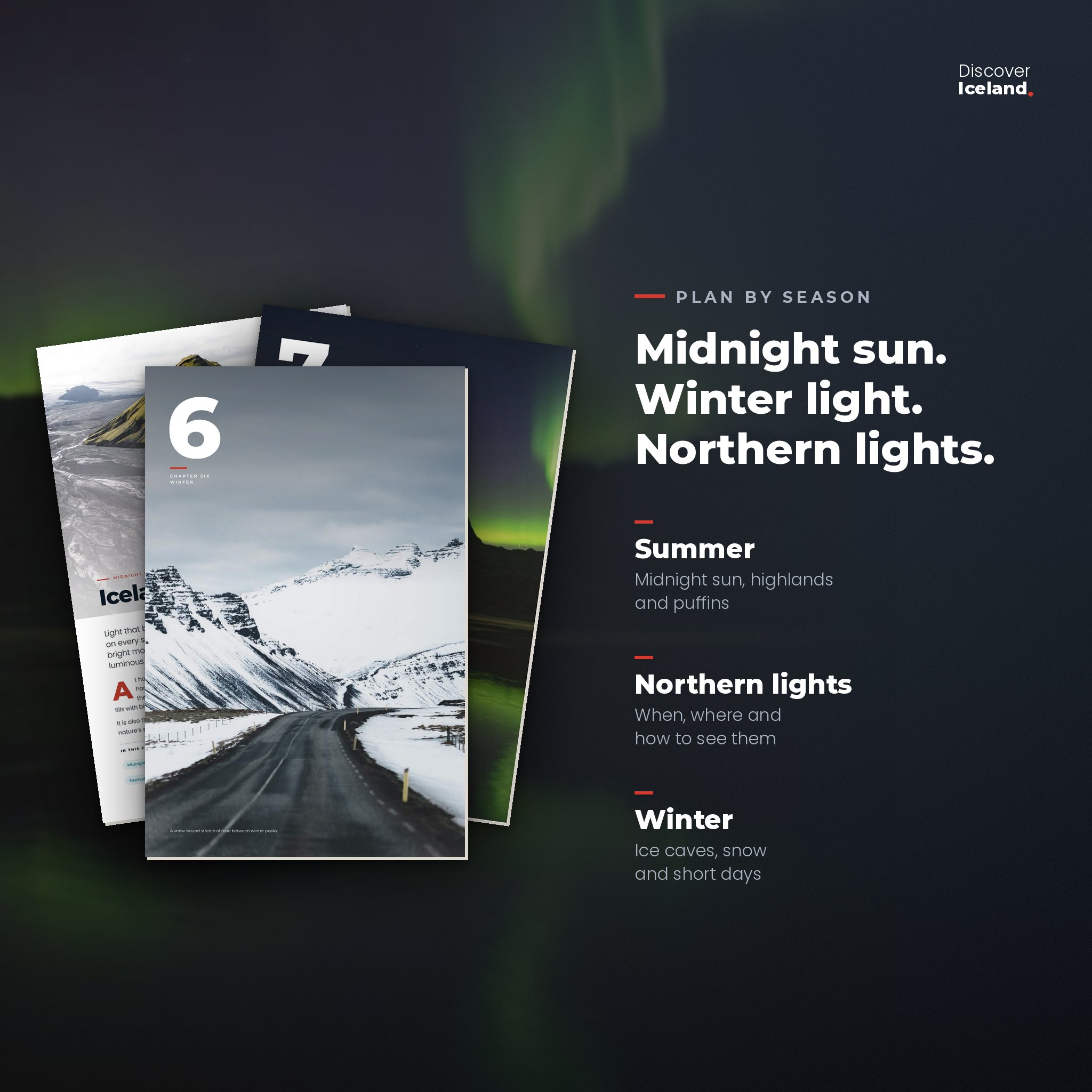
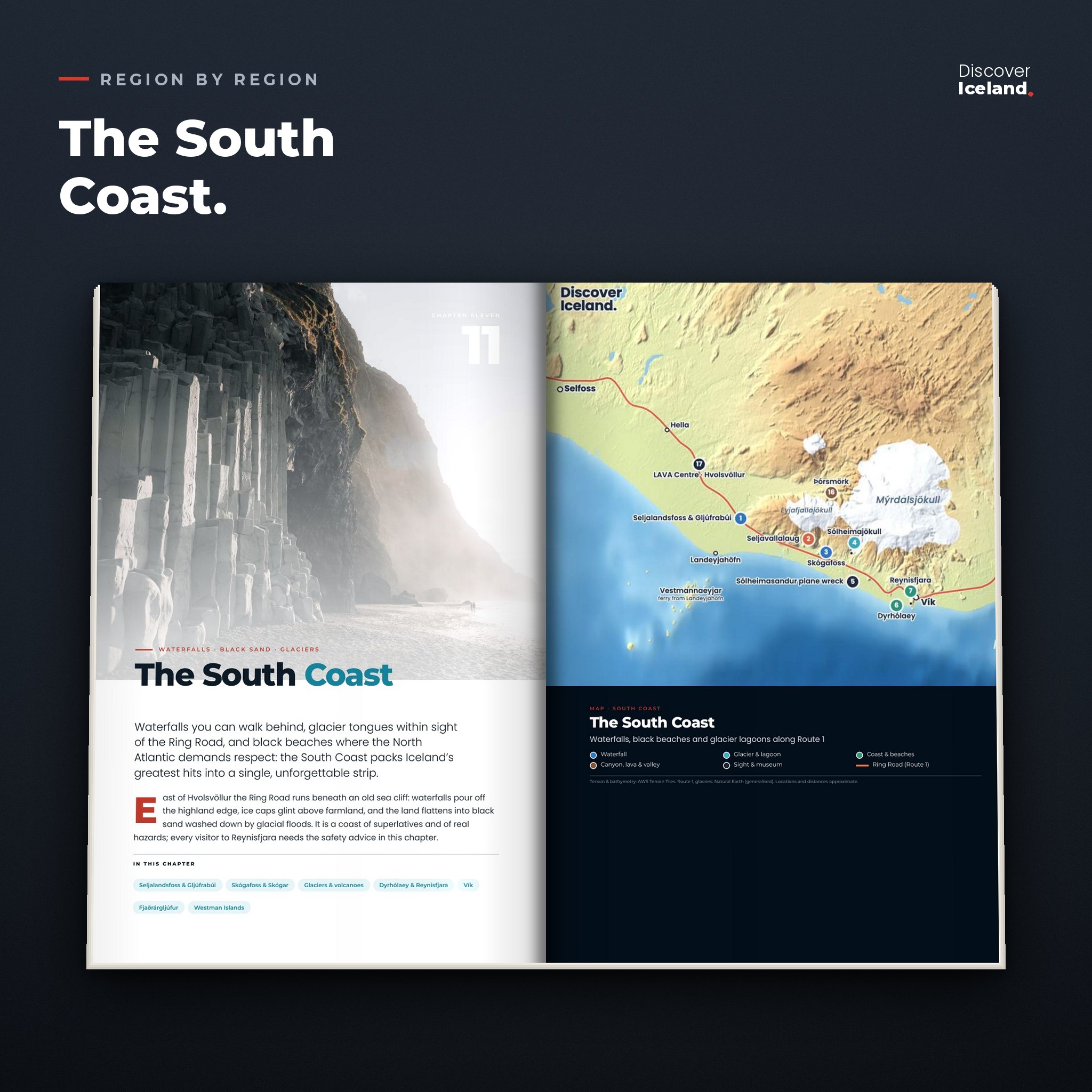
The Golden Circle day guide works in every month and is the best first day out of Reykjavík. Discover Iceland has full chapters on summer, winter and the northern lights, with 13 original maps; see the Discover Iceland guide.
Questions
What is the best month to visit Iceland?
For most first visits, June to August for open roads and long days, or September for fewer crowds, autumn colours and the first northern lights.
When can you see the northern lights in Iceland?
From about September to April, when the nights are dark. Clear skies matter as much as solar activity, so check the cloud forecast.
When are puffins in Iceland?
From the start of May to about mid-August.
When do Iceland's highland roads open?
Usually from mid to late June until mid-September, depending on snow. Opening dates vary by road and year; check safetravel.is.
What is the cheapest time to visit Iceland?
Winter outside Christmas and New Year, and the shoulder months, are usually cheaper than June to August for cars and accommodation.