At a glance
The short answer: come between November and March for beaches, long days and the most reliable access to Table Mountain, and between June and October for whales, empty trails, lower prices and a greener Cape. The shoulder months of March, April, October and November often give the best of both.
Cape Town's seasons at a glance
| Season | Weather | Best for |
|---|---|---|
| Summer: Dec to Feb | Highs around 24 to 25 °C, little rain, up to 11 hours of sun | Beaches, hiking at dawn, outdoor dining |
| Autumn: Mar to May | Highs from 24 °C falling to 19 °C, rain building in May | Calmer winds, harvest in the Winelands |
| Winter: Jun to Aug | Highs around 17 °C, lows around 8 °C, 13 to 14 rainy days a month | Whales, quiet trails, lower prices |
| Spring: Sep to Nov | Highs from 18 °C rising to 22 °C, drying out | Whales at their peak, wildflowers |
The figures above are long-term monthly averages. Summer rainfall is around 31 to 43 mm a month, while June averages about 189 mm and July and August about 163 mm each. A winter week usually still has clear, crisp days between the fronts, and those are often the sharpest views of the year.
Summer: December to February
This is peak season. Days are long and dry, the beaches at Clifton and Camps Bay fill up, and the Waterfront runs late. The festive weeks around Christmas and New Year are the busiest of the year, so book beds, cars and Robben Island early.
Summer's catch is the wind. The south-easterly that locals call the Cape Doctor blows hard on many summer days, pulling the white tablecloth of cloud over Table Mountain and closing the cableway. It also clears the air, which is how it earned its name. Plan the mountain for the first calm morning rather than a fixed date.
The sea is the other surprise. The Atlantic seaboard is washed by the cold Benguela Current, so the water at Camps Bay feels bracing even in January. The False Bay beaches around Muizenberg and Boulders are where most people actually swim.
Autumn: March to May
March and April are many locals' favourite months. The heat softens, the wind drops, the summer crowds go home and the sea is still at its warmest. In the Winelands it is harvest time. By May the first winter fronts arrive and the rain starts to build, but there are plenty of bright days between them.
Winter: June to August
Winter is the wet season, with average highs around 17 °C and nights near 8 °C. Rain comes in bands from the Atlantic, often for a day or two at a time, followed by clear, still weather. The mountain turns green, waterfalls run on the slopes and accommodation prices fall.
It is also when the whales return. Southern right whales arrive along the Cape coast from June to November to calve and mate in sheltered bays. In False Bay, watch from Boyes Drive above Kalk Bay or from Cape Point. Hermanus, about 90 minutes' drive away, is the classic spot, where whales often come within metres of the cliffs.
Local tipIn winter, build flexibility into your plans. Keep Table Mountain, Chapman's Peak Drive and Robben Island for the clear days, and save Kirstenbosch's conservatory, the museums and the wine estates for the wet ones.
Spring: September to November
Spring is the most underrated season in Cape Town. September and October are the peak months for whales at Hermanus, the rain eases, and the fynbos on the mountain flowers. In August and September, the Postberg section of West Coast National Park opens for its wildflower season, a long day trip north of the city.
By November the city is warming up, the long summer evenings are back and the crowds have not yet arrived. It is a good month for the full Cape Town in 4 days itinerary.
Planning around the rest of South Africa
If Cape Town is part of a longer trip, the seasons pull in different directions. The Cape is at its best in summer, but the Kruger's best game viewing comes in the dry winter, from May to September. September is the classic compromise: whales and spring flowers in the Cape, and the last weeks of the dry season in the bush. Our South Africa in 14 days route is built around exactly that.
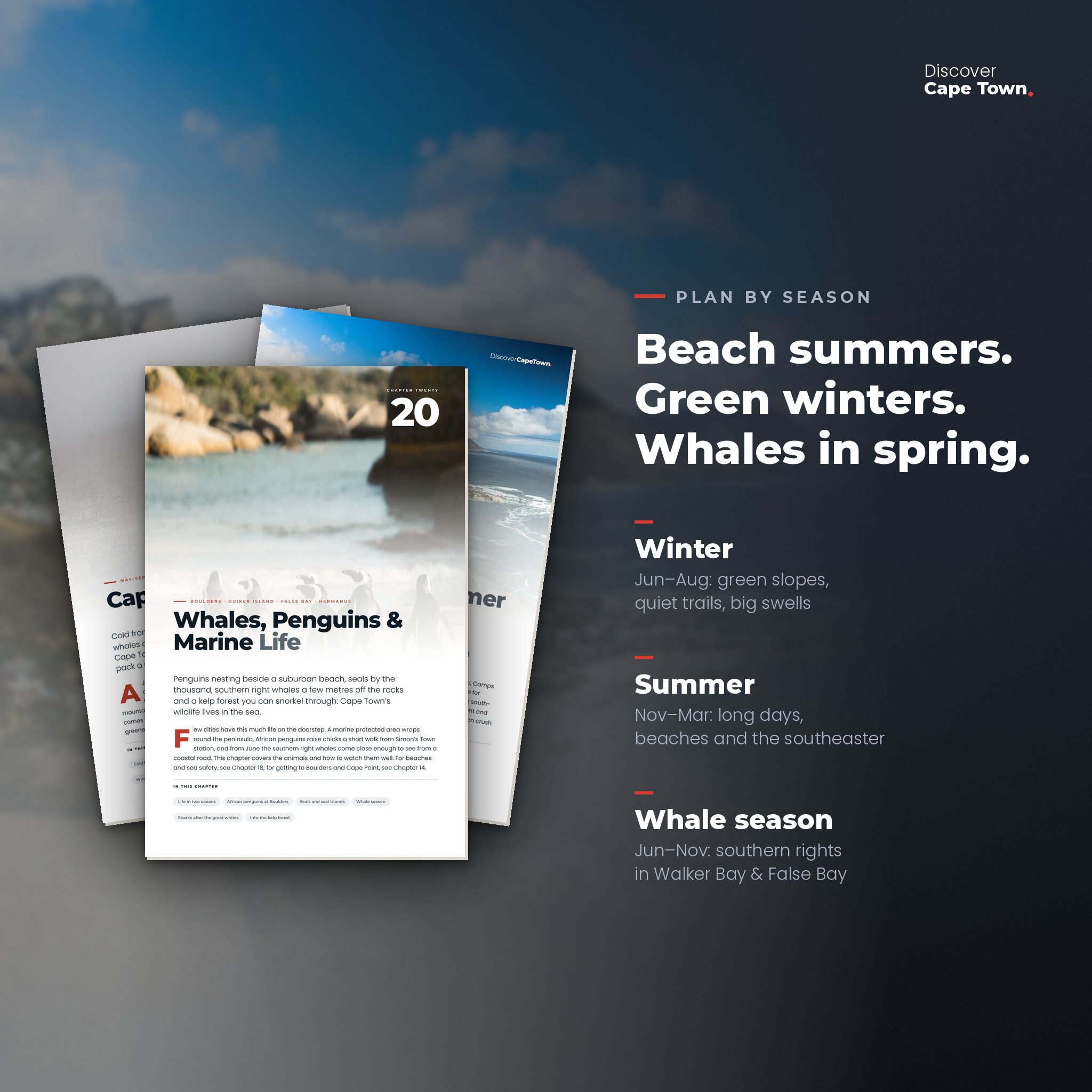
Month-by-month planning, whale season and the winter chapters are in Discover Cape Town.
Questions
What is the best month to visit Cape Town?
For beaches and reliable sunshine, February and March: hot, dry and past the festive rush. For whales and quieter trails, September and October. Both shoulder seasons offer a good balance.
Is Cape Town worth visiting in winter?
Yes. June to August is cooler and wetter, with highs around 17 °C, but prices fall, the mountain is green, and southern right whales are in the bays. Clear days between the fronts are common.
When can you see whales near Cape Town?
Southern right whales are along the Cape coast from June to November, with the peak in September and October. Hermanus and the False Bay coast are the best places to watch from land.
Is the sea warm in Cape Town?
Not on the Atlantic side, where the cold Benguela Current keeps Clifton and Camps Bay cool even in summer. The False Bay beaches around Muizenberg are warmer and better for swimming.