At a glance
Yosemite covers more than 3,000 km² of the Sierra Nevada, but most first visits revolve around one valley about 11 km long. This plan uses the Valley as its centre and adds two drives out: up to Glacier Point and south to the Mariposa Grove. It works from late May to early November, when Glacier Point Road is normally open. In winter and early spring, see the notes below.
In 2026 Yosemite did not require advance reservations to enter, even in peak summer. Rules have changed almost every year since 2020, so check the NPS website before you travel. Camping, lodging and the Half Dome cables still need bookings or permits.
The 3-day itinerary
- Day 1The Valley floor
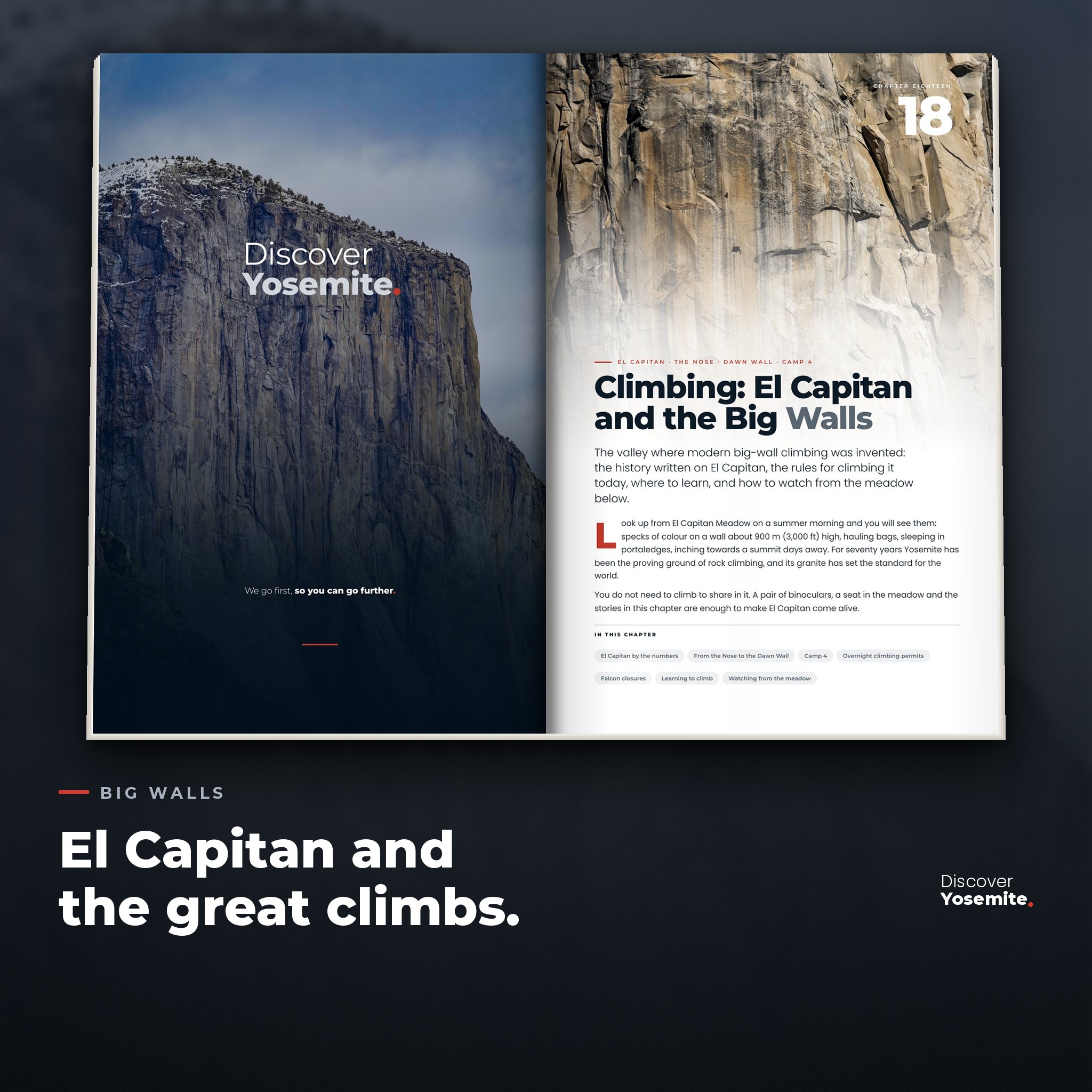
Arrive through the Wawona Tunnel and stop at Tunnel View for the classic frame of El Capitan, Bridalveil Fall and Half Dome. Walk to the base of Bridalveil Fall, then watch climbers on El Capitan from El Capitan Meadow. In the afternoon take the short walk to the foot of Lower Yosemite Fall, and end the day at Sentinel Bridge as the evening light warms Half Dome.
- Day 2The Mist Trail
Start early from Happy Isles. The trail climbs beside the Merced River to the Vernal Fall footbridge, then up granite steps, drenched in spray in spring, to the top of 97 m Vernal Fall. Strong hikers continue to the top of 180 m Nevada Fall and return on the John Muir Trail for the view back over both falls. Rest your legs in the afternoon with a stroll to Mirror Lake or along the Merced.
- Day 3Glacier Point and the sequoias
Drive about an hour up Glacier Point Road. Walk to Sentinel Dome or Taft Point (each a little over 3 km return), then stand at Glacier Point, more than 900 m above the Valley floor, for the view across to Half Dome, Vernal Fall and Nevada Fall. Drive on to the Mariposa Grove near Wawona and walk among giant sequoias, including the Grizzly Giant.
Day 2 in detail: how far is the Mist Trail?
From the Happy Isles trailhead, the Vernal Fall footbridge is an easy first goal, about 2.9 km (1.8 miles) return with around 120 m (400 ft) of climbing. The top of Vernal Fall is about 5.3 km (3.3 miles) return and 300 m (1,000 ft) up, much of it on steep, wet stone steps. The full loop to Nevada Fall and back by the John Muir Trail is around 10 km (6 miles) with nearly 600 m (1,900 ft) of gain. Allow a full morning for Vernal Fall and most of a day for the loop.
Local tipIn spring, wear a rain jacket on the Mist Trail: the name is literal. In May and June the spray from Vernal Fall soaks the steps and everyone on them. Start early to beat the crowds and the summer heat.
Day 3: getting the timing right
Glacier Point is about 48 km (30 miles) and an hour's drive from the Valley. Mariposa Grove is about an hour from the Valley too, so start early, do the walks along Glacier Point Road in the morning light and head south after lunch. The Mariposa Grove Road is usually closed from about December to April. In the warmer months a free shuttle runs from the welcome plaza near the South Entrance to the grove.
Glacier Point Road typically opens in late May and closes in November. If it is closed, swap day 3 for a valley loop by bike or on foot, or the Four Mile Trail up from the Valley floor if conditions allow.
Swap it: Tioga Road and Tuolumne Meadows
From late May or June to around November, Tioga Road crosses the high country for 74 km (46 miles) from Crane Flat to Tioga Pass. It is about an hour and a half from the Valley to Tuolumne Meadows. If you have seen Mariposa Grove before, or if you are travelling on to the Eastern Sierra, spend day 3 here instead: Olmsted Point for its view of Half Dome from behind, the granite shore of Tenaya Lake, and the wide meadows of Tuolumne. Beyond Tioga Pass the road drops to Lee Vining and Mono Lake.
What about Half Dome?
The Half Dome hike is about 22.5 km (14 miles) return with roughly 1,500 m (5,000 ft) of climbing, finishing on steel cables up the final granite slope. The cables are normally up from just before Memorial Day weekend until October, and you need a permit, allocated by lottery. It takes a full long day and does not fit a three-day first visit unless you drop day 2 and hold a permit.
SafetyStay out of the Merced River above Vernal and Nevada falls and well back from wet rock at the edges. The water is faster and colder than it looks, and people have been swept over the falls.
Where to stay
Staying in Yosemite Valley saves hours of driving and puts you on the trails early, but rooms and campsites book out far ahead. Outside the park, El Portal is closest to the Valley on Highway 140, Mariposa and Oakhurst suit the southern side and the sequoias, and Groveland sits on Highway 120 to the west. In summer, Lee Vining is the base for the Tioga Road side.
Choosing your season is the other big decision. Our guide to the best time to visit Yosemite explains when the waterfalls peak and when the high roads open. The full plan, with longer itineraries, the Half Dome lottery and every region of the park, is in Discover Yosemite.
Questions
Is 3 days enough for Yosemite?
Yes, for a first visit. Three days covers the Valley floor, the Mist Trail waterfalls, Glacier Point and the Mariposa Grove sequoias. Add days for Tuolumne Meadows, Hetch Hetchy or Half Dome.
Do you need a reservation to enter Yosemite?
Not in 2026: the NPS did not require advance reservations to enter, even in summer. Rules have changed often in recent years, so check before you go. Lodging, campsites and the Half Dome cables still need bookings or permits.
How long is the Mist Trail?
About 5.3 km (3.3 miles) return to the top of Vernal Fall, with around 300 m (1,000 ft) of climbing. The loop to Nevada Fall and back is around 10 km (6 miles).
How far is Glacier Point from Yosemite Valley?
About 48 km (30 miles), roughly an hour's drive. Glacier Point Road is usually open from late May to November.