At a glance
There is no bad time to see Yosemite Valley, which is open all year. The real question is what you want from the trip. Come in May or June for waterfalls, in July to September for the high country and Tuolumne Meadows, in late September and October for fewer people and settled weather, and in winter for snow on the granite and the February firefall.
If you want one answer: late May to mid-June gives you the waterfalls near their peak and, in most years, Glacier Point Road open. In a heavy snow year the high roads may open later.
Yosemite Valley temperatures by month
Yosemite Valley sits at about 1,200 m (4,000 ft). The NOAA 1991 to 2020 climate normals for the park headquarters give these averages. Tuolumne Meadows, more than 1,300 m higher, is far cooler: the NPS says summer days there are in the 70s °F (low 20s °C) with nights near freezing.
| Month | Average high | Average low |
|---|---|---|
| January | 9°C (48°F) | -2°C (29°F) |
| March | 14°C (57°F) | 1°C (34°F) |
| May | 21°C (71°F) | 7°C (45°F) |
| July | 32°C (89°F) | 14°C (57°F) |
| September | 28°C (83°F) | 11°C (51°F) |
| November | 13°C (56°F) | 0°C (33°F) |
Spring: March to early June
Spring is waterfall season. Snowmelt is heaviest in May and June, when Yosemite Falls, at 740 m (2,425 ft) one of the tallest in North America, and Bridalveil Fall usually peak in May, with Vernal and Nevada falls peaking in late May or June. The Mist Trail is at its wettest and most spectacular.
The high country is still under snow. The NPS puts the snow line at around 1,500 m in March, 1,800 m in April and closer to 2,100 m in May. Glacier Point Road usually opens in late May and Tioga Road in late May or June, depending on the winter's snowpack. Lower meadows are green and the dogwoods bloom in the Valley.
Summer: July to September
Summer is the season for the high country. By early July most trails are largely snow-free, Tioga Road is open across the park to Tuolumne Meadows and Tioga Pass, and the Half Dome cables are up, normally from just before Memorial Day weekend until October. Less than five percent of Yosemite's yearly precipitation falls in summer, mostly as short afternoon thunderstorms.
The Valley gets hot and busy. Average highs reach 32°C (89°F) in July and August, and the NPS notes it can hit 38°C (100°F). Waterfalls shrink: Yosemite Falls often slows to a trickle or dries up by August. Wildfire smoke is the other summer factor. The park says one to three weeks of unhealthy air are common from August to September.
Local tipIn summer, do as the locals do: hike the Valley trails at dawn, then drive up to Tuolumne Meadows or Glacier Point for the afternoon, when the high country is far cooler than the Valley floor.
Autumn: late September to November
Autumn is the quiet season. Crowds fall after Labor Day, the light softens and the black oaks and bigleaf maples on the Valley floor turn gold. Most waterfalls are low or dry until the rains return, but the Merced is calm and clear and the granite walls glow at sunset.
The weather turns quickly. The first significant snow usually comes around October, overnight parking on Tioga and Glacier Point roads is prohibited from 15 October, and Tioga Road has closed as early as 16 October in recent years. The Half Dome cables normally come down the day after the second Monday in October. Plan high-country days for September or early October.
Winter: December to February
Winter is cold and wet, with most of the year's precipitation falling as snow. Valley highs average around 8°C to 9°C (46°F to 48°F), and nights hover below freezing. Tioga Road and most of Glacier Point Road close, but the road is plowed as far as the Badger Pass ski area from mid-December through March, for downhill and cross-country skiing and snowshoeing. Chains may be required on park roads.
The headline event is the firefall. On clear evenings in mid to late February, the setting sun can light up Horsetail Fall on the east face of El Capitan so that it glows orange. It needs water in the fall, a clear sky and the right sun angle, so it is never guaranteed. In 2026 the NPS did not require entry reservations for the firefall period, but check for viewing rules and parking closures before you go.
So when should you go?
- Waterfalls: mid-May to mid-June.
- Hiking the high country and Half Dome: July to mid-September.
- Fewer people and settled weather: late September and early October.
- Snow and solitude: January, or February for the firefall.
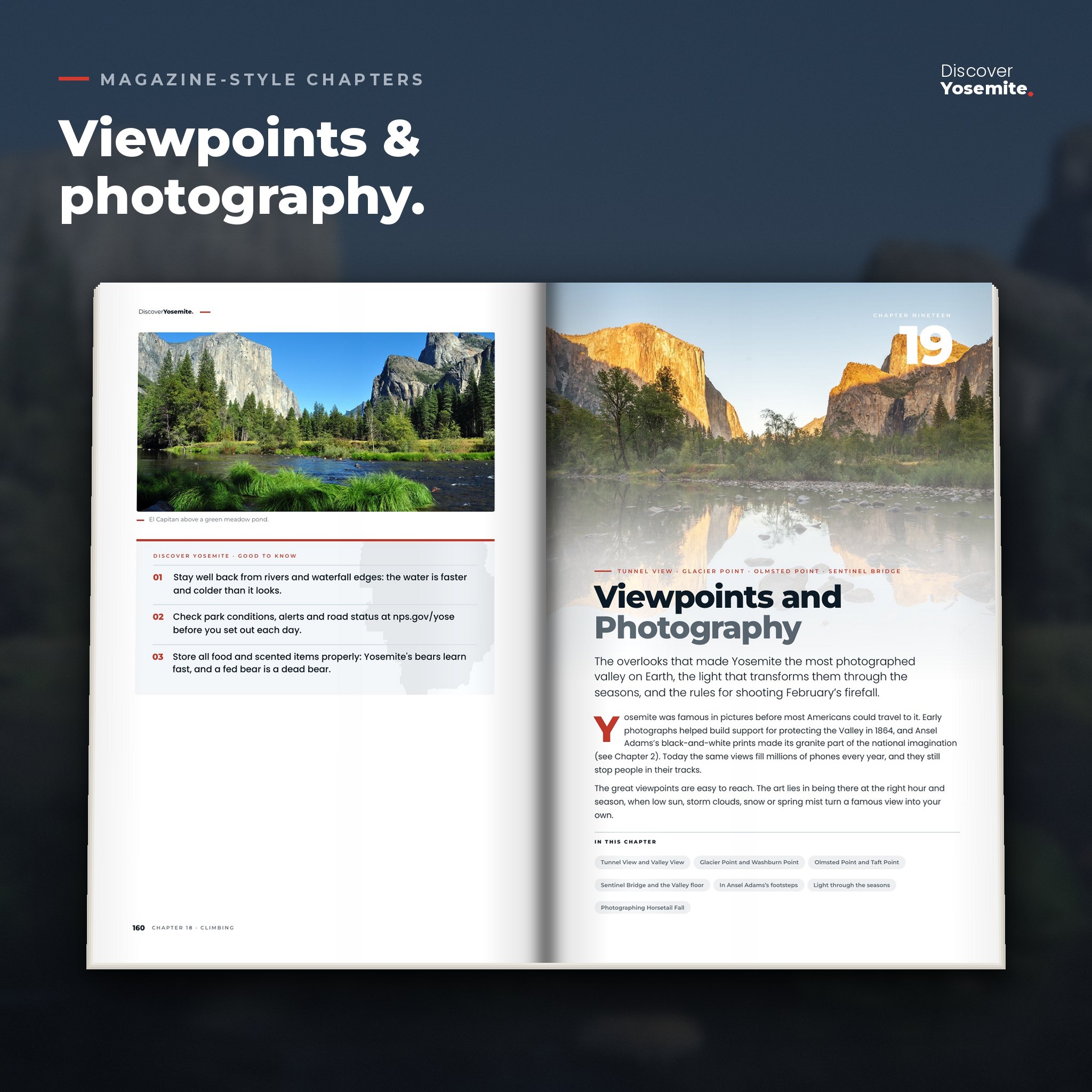
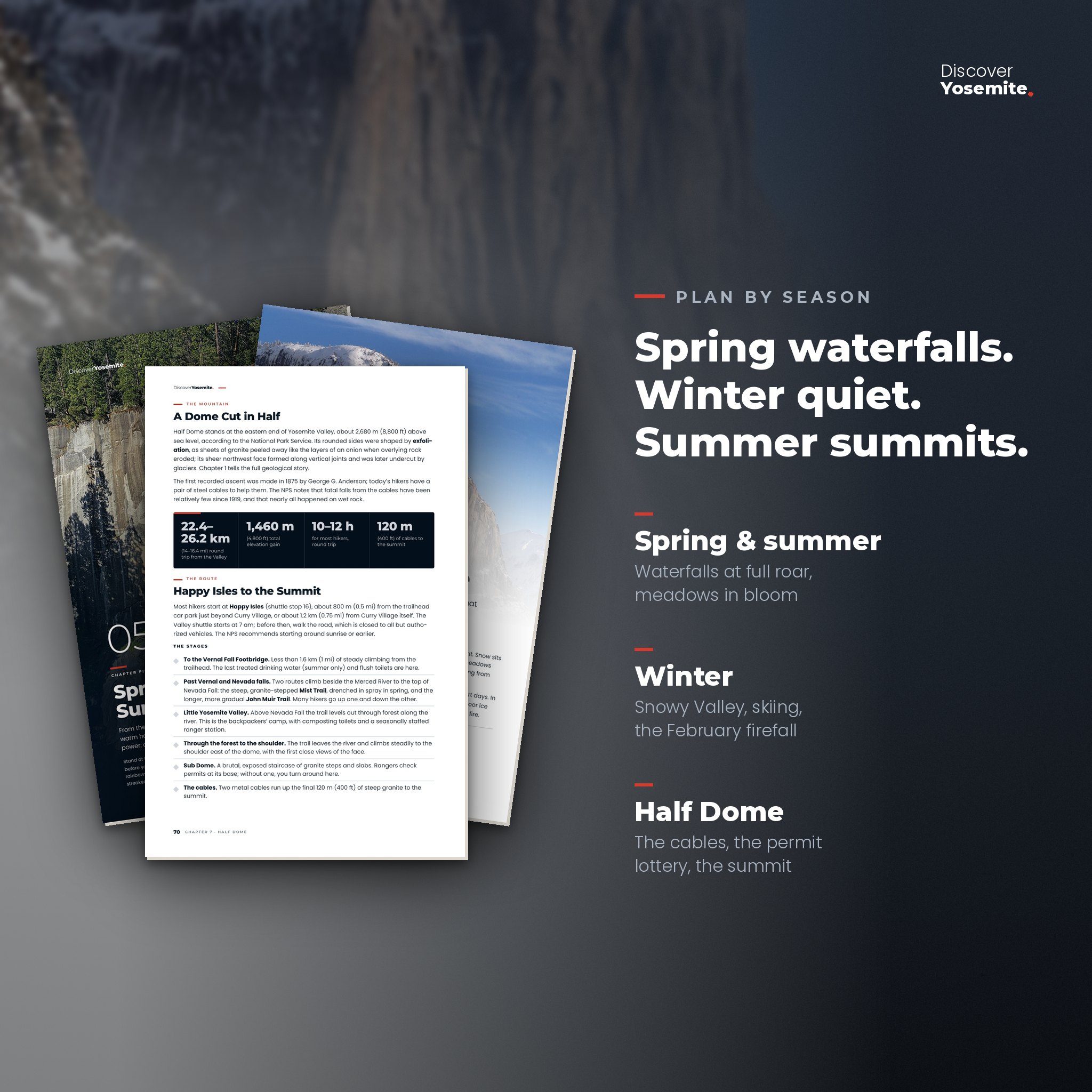
With your season chosen, our three-day Yosemite itinerary shows how to fit in the Valley, the Mist Trail and Glacier Point. Each season, with the road dates, the firefall rules and the Half Dome lottery, has its own chapter in Discover Yosemite.
Questions
What is the best month to visit Yosemite?
Late May to mid-June for waterfalls, July to September for the high country, and late September to early October for fewer people. The Valley is open all year.
When are Yosemite's waterfalls at their best?
In May and June, when snowmelt peaks. Yosemite Falls often slows to a trickle or dries up by August.
When does Tioga Road open?
Usually in late May or June, depending on the snowpack, and it closes around November. It has closed as early as mid-October in recent years.
When is the Yosemite firefall?
On clear evenings in mid to late February, when the setting sun lights up Horsetail Fall on El Capitan. It depends on snowmelt and clear skies, so it is never guaranteed.
Is Yosemite worth visiting in winter?
Yes. The Valley is open all year, quiet and often snowy, and Badger Pass offers skiing and snowshoeing. Tioga Road and most of Glacier Point Road are closed.