At a glance
Tenerife's two halves feel like different islands. The south and south-west coast, from Los Cristianos to Costa Adeje, gets far more sun and far less rain, and that is where most of the resorts are. The north, from Santa Cruz and La Laguna to Puerto de la Cruz and Garachico, is greener, cooler and older, with towns that live for themselves rather than for visitors.
North vs south at a glance
| South and south-west | North | |
|---|---|---|
| Weather | Sunniest, about 132 mm of rain a year at Tenerife Sur | Cloudier, about 520 mm a year at Tenerife Norte |
| Beaches | Many, sheltered and resort-style | Fewer, black sand, rock pools, bigger swell |
| Feel | Holiday resorts and marinas | Historic towns and Canarian life |
| Best for | Winter sun, families, whales | Hiking, culture, food, spring and summer |
| Airport | Tenerife Sur | Tenerife Norte |
If you have a week or more, the best answer is often both: a few nights in the north for Anaga, Teide and the old towns, then the rest in the south for the beaches. Teide sits between the two and is an easy day trip from either.
The south and south-west
Costa Adeje is the most polished part of the south, running from Playa de Fañabé to Playa del Duque, with a long seafront promenade, the widest choice of places to stay and an easy base for families. Playa de las Américas next door is livelier, with more nightlife.
Los Cristianos grew from a fishing port and still has a real town centre, a sheltered beach and the ferry to La Gomera. It is a good all-round choice, especially for anyone planning a day on La Gomera or a whale trip.
El Médano, on the south-east coast near Tenerife Sur airport, is a laid-back town of kitesurfers and windsurfers below the red cone of Montaña Roja. It is windy, which is the point.
Los Gigantes and Puerto de Santiago on the west coast sit beneath the great cliffs. They are quieter than the main resorts, close to Masca and Teno, and good for sunsets over La Gomera.
The north
Puerto de la Cruz was Tenerife's first resort, a real town with a harbour, a botanical garden and the seawater lido of Lago Martiánez, designed by César Manrique. It is the easiest base for the north, with plenty of places to stay and quick access to the Orotava valley and Teide.
La Orotava, just inland, is one of the island's best-preserved old towns, with carved wooden balconies and steep cobbled streets. Stay here for character and quiet evenings.
San Cristóbal de La Laguna is a university town and World Heritage Site, lively in term time, with excellent food and the Anaga mountains on its doorstep. It sits at around 550 to 600 m, so it is cooler and wetter than the coast.
Santa Cruz de Tenerife, the capital, is a working city with museums, shopping, the Auditorio and Las Teresitas beach a short drive north-east. A good choice for Carnival and for anyone who prefers city life.
Garachico, on the north-west coast, is small and beautiful, with its lava pools at El Caletón. It suits a slow stay of a few nights rather than a base for the whole island.
Local tipBook by the map, not by the resort name. The south is long and roads are busy at peak times, so pick a base close to what you will do most: Los Cristianos for La Gomera, Los Gigantes for Masca and Teno, Puerto de la Cruz or La Orotava for Teide and the north.
Which area suits which traveller?
- Winter sun and beaches: Costa Adeje or Los Cristianos.
- Families: Costa Adeje, for the calm beaches and promenade.
- Hikers: La Orotava or La Laguna, near Anaga and Teide.
- Culture and food: La Laguna or Santa Cruz.
- Watersports: El Médano.
- A quiet stay: Garachico, or Los Gigantes in the west.
- Island-hoppers: Los Cristianos, for the La Gomera ferry.
Getting around from your base
From the south, Teide is roughly an hour's drive up through Vilaflor; from the north, the TF-21 climbs from La Orotava. The Titsa bus network links the main towns and both airports, but for mountains and small villages a hire car makes life far easier. Season matters too: our guide to the best time to visit Tenerife shows how north and south change through the year, and the 5-day itinerary uses one base on each side.
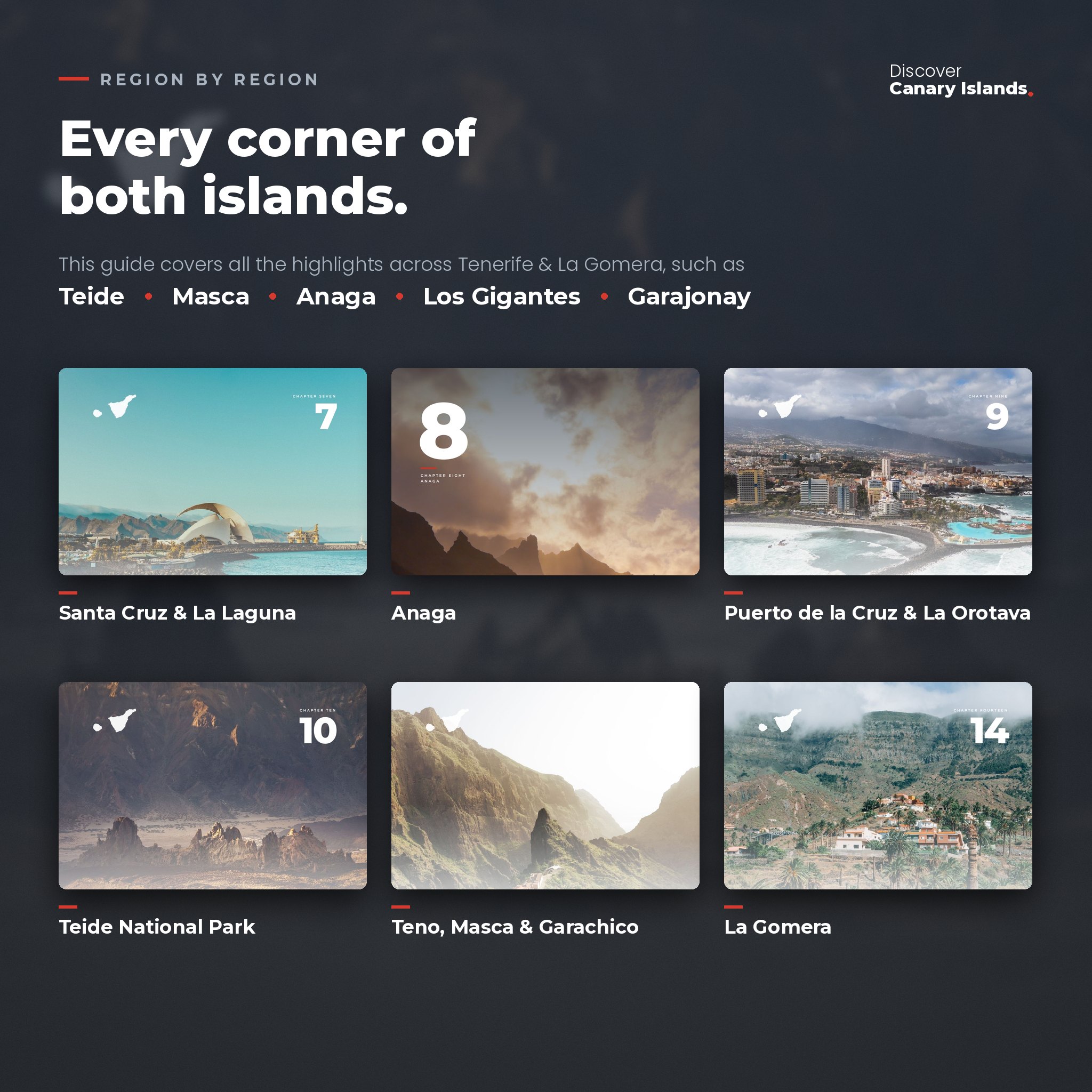
Discover Tenerife & La Gomera maps every region and explains what each town is like to stay in.
Questions
Is it better to stay in the north or south of Tenerife?
For guaranteed sun and beaches, the south. For hiking, history and a more local feel, the north. With a week or more, split your stay between both.
Where is the best area to stay in Tenerife for families?
Costa Adeje, for its calm beaches, long promenade and wide choice of family-friendly places to stay. Los Cristianos is a good alternative.
Where should I stay in Tenerife without a car?
Los Cristianos, Costa Adeje, Puerto de la Cruz or Santa Cruz. All have good Titsa bus links, walkable centres and plenty of tours that pick up there.
Is the north of Tenerife rainy?
Wetter than the south, mostly from October to March. Tenerife Norte airport averages about 520 mm of rain a year, against about 132 mm at Tenerife Sur.