At a glance
Fiji's islands fall into a handful of groups, each with its own character. The Mamanucas and Yasawas fan out to the west of Viti Levu, the main island, and are reached by boat from Port Denarau. Taveuni, Vanua Levu and Kadavu lie further out and are usually reached by small plane. The Lau group in the far east is remote and lightly visited.
The island groups compared
| Group | Best for | Getting there |
|---|---|---|
| Mamanucas | Short trips, families, surf | About an hour by boat from Port Denarau |
| Yasawas | Island hopping, mantas, quiet | Yasawa Flyer, 2 to 5 hours, or seaplane |
| Viti Levu | Coral Coast beaches, shark dives at Beqa | By road from Nadi |
| Taveuni | Waterfalls, rainforest, diving | Domestic flight to Matei |
| Vanua Levu | Savusavu, hot springs, sailing | Domestic flight to Savusavu |
| Kadavu | Eco-resorts, birds, the Great Astrolabe Reef | Flight to Vunisea, then boat |
The Mamanucas: close, easy and sunny
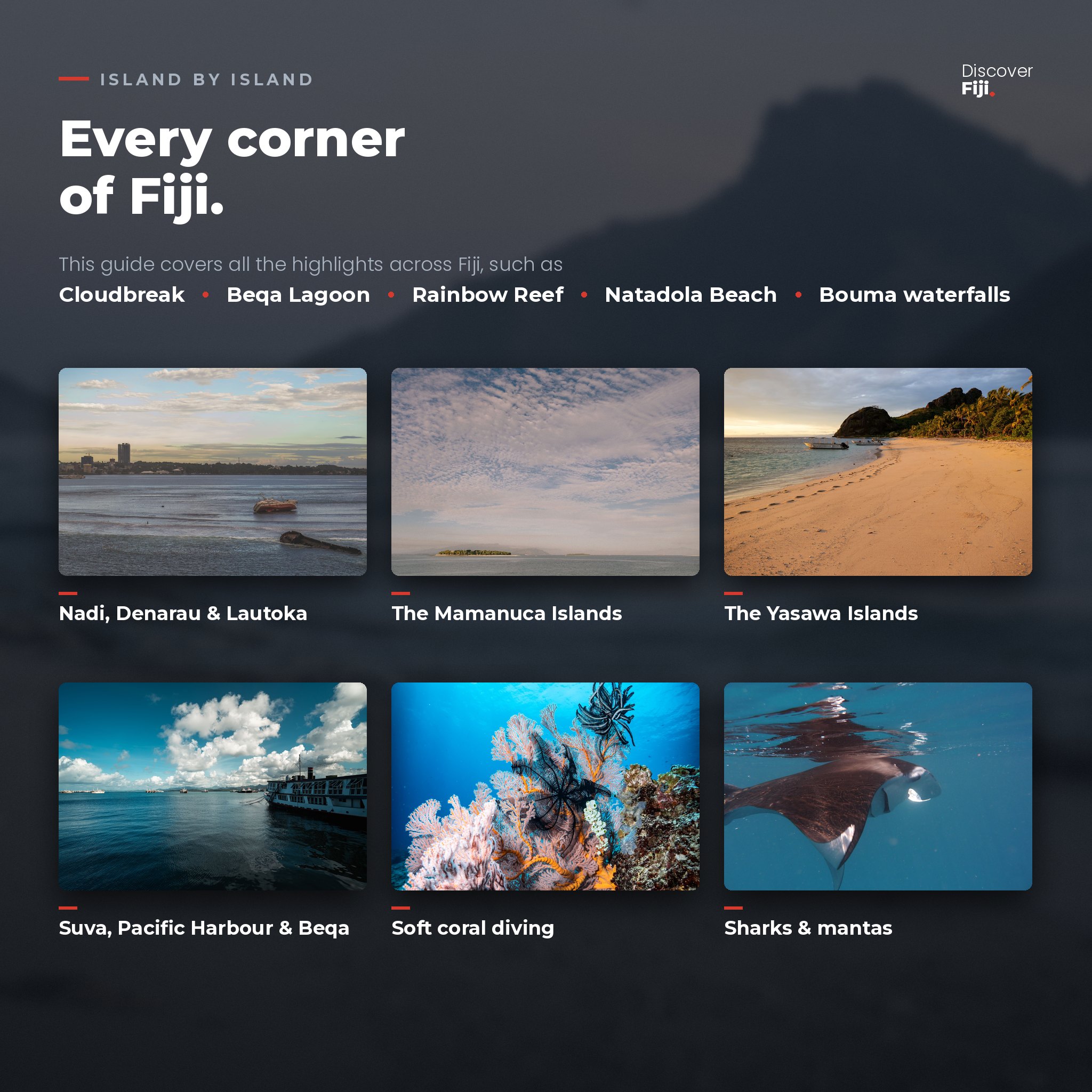
The Mamanuca Islands are the closest group to Nadi, about an hour by boat from Viti Levu, which makes them ideal for a short stay or a family holiday. They have white-sand islands with reliable snorkelling, a wide range of resorts from backpacker spots to upscale retreats, and some of the most famous surf breaks in the Pacific. Cloudbreak, off Tavarua, is a powerful left-hand reef break for experienced surfers only.
If you have a week or less, the Mamanucas give you the classic Fiji island stay without a long transfer. Many visitors combine a few nights here with a few on the mainland.
The Yasawas: the long chain north
The Yasawas are about 20 volcanic islands strung out to the north-west of Viti Levu, wilder, greener and quieter than the Mamanucas. The Yasawa Flyer catamaran leaves Port Denarau daily at 8:45 am and stops at resorts along the chain, taking two to five hours to reach the top. Island-hopping passes let you split your stay between several resorts.
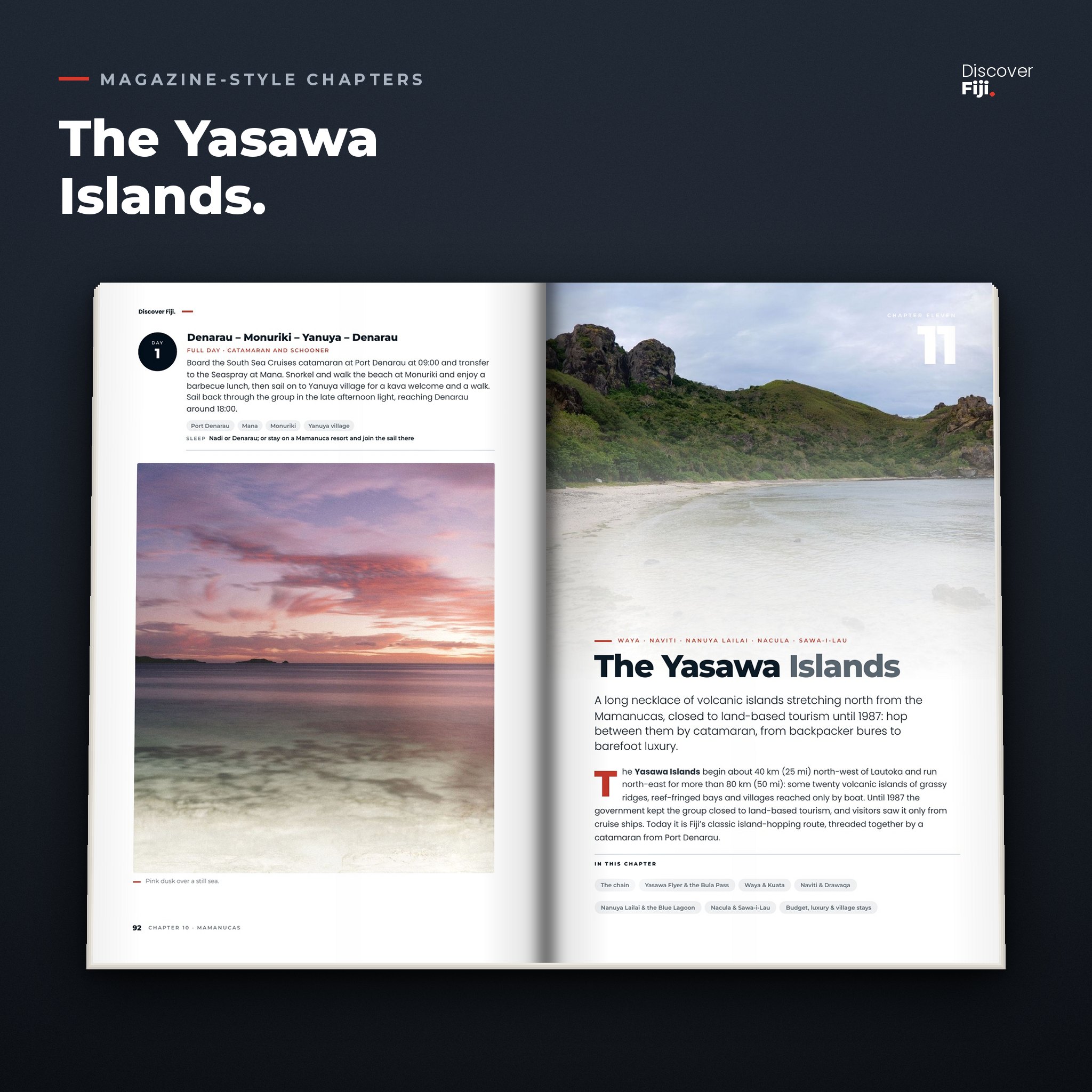
From May to September, manta rays feed in a shallow channel in the middle of the chain, near Drawaqa and Naviti, and snorkelling trips go out to meet them. In the north, the limestone caves of Sawa-i-Lau and the waters of the Blue Lagoon are the classic outings.
Local tipMost Yasawa resorts require a daily meal plan on top of the room rate, and shops are few. Stock up on snacks, sunscreen and cash at Port Denarau before you board, as the only ATM in the islands is in the far north.
SafetyLocal water taxis in the Yasawas may not carry life jackets or radios. Use the resort boats or the Yasawa Flyer where you can, and do not set out in rough weather.
Viti Levu: the Coral Coast and Beqa
Fiji's main island is more than a transit stop. The Coral Coast on its south shore has resorts along a reef-fringed shoreline, an easy drive from Nadi. Further east, Pacific Harbour is the base for diving in Beqa Lagoon, where divers can see bull sharks and tiger sharks. Suva, the capital, is on the wetter south-east coast.
Taveuni: the Garden Island
Taveuni is green, steep and wet, with rainforest running down to the sea. Bouma National Heritage Park covers nearly a third of the island: a 15-minute walk from the visitor centre reaches the Tavoro Falls, and two more falls lie further up on maintained paths. The Lavena Coastal Walk runs through rainforest past a swimming hole and waterfalls, about four hours there and back.
Offshore, the Somosomo Strait between Taveuni and Vanua Levu is one of Fiji's great dive areas, with soft corals fed by strong currents. Near the Wairiki Catholic Mission, a sign marks the 180th meridian, though the international dateline itself is drawn around Fiji. Flights from Nadi land at Matei, on the northern tip, near most of the places to stay.
Vanua Levu, Kadavu and the Lau group
Vanua Levu, Fiji's second island, sees far fewer visitors. Savusavu is its sailing and diving hub, with hot springs in the town and the Namena Marine Reserve offshore. Hire a 4WD to explore, and note that fuel stations are few and most businesses close on Sundays.
Kadavu, south of Viti Levu, is surrounded by the Great Astrolabe Reef, one of the largest fringing reefs in the world. Its small eco-resorts are reached by plane to Vunisea and then by boat. The Lau group in the east is the most remote of all, with few flights and boats and traditional village life.
When to go and how to combine
The dry season, roughly June to September, is peak season, with temperatures around 20 to 30 °C. May and October are quieter shoulder months. November to April is the wet and cyclone season, when the risk peaks in January and February; March is the wettest month at Nadi, averaging about 324 mm.
For a first trip of ten days, a good combination is three nights on Viti Levu or the Coral Coast, then a week split between the Mamanucas and the Yasawas. Divers should add Taveuni or Kadavu. If you are weighing Fiji against Tahiti and its islands, see our guide to which islands to visit in French Polynesia.
Every island group, the reefs, the village etiquette and the island-hopping routes, with 14 original maps, are in Discover Fiji.
Questions
Which Fiji island is best for first-timers?
The Mamanucas are the easiest first choice: about an hour by boat from Nadi, with calm lagoons and a wide range of resorts. Add the Yasawas if you have more than a week.
What is the difference between the Mamanucas and the Yasawas?
The Mamanucas are closer to Nadi, busier and easier for short stays. The Yasawas are a longer chain further north, quieter and more rugged, reached by the Yasawa Flyer in two to five hours.
When can you swim with manta rays in Fiji?
In the Yasawas, manta rays gather in a channel in the middle of the chain from about May to September or October. Kadavu also has manta encounters.
How do you get to Taveuni?
By domestic flight from Nadi to Matei airport on the northern tip of Taveuni, near most of the island's accommodation.