At a glance
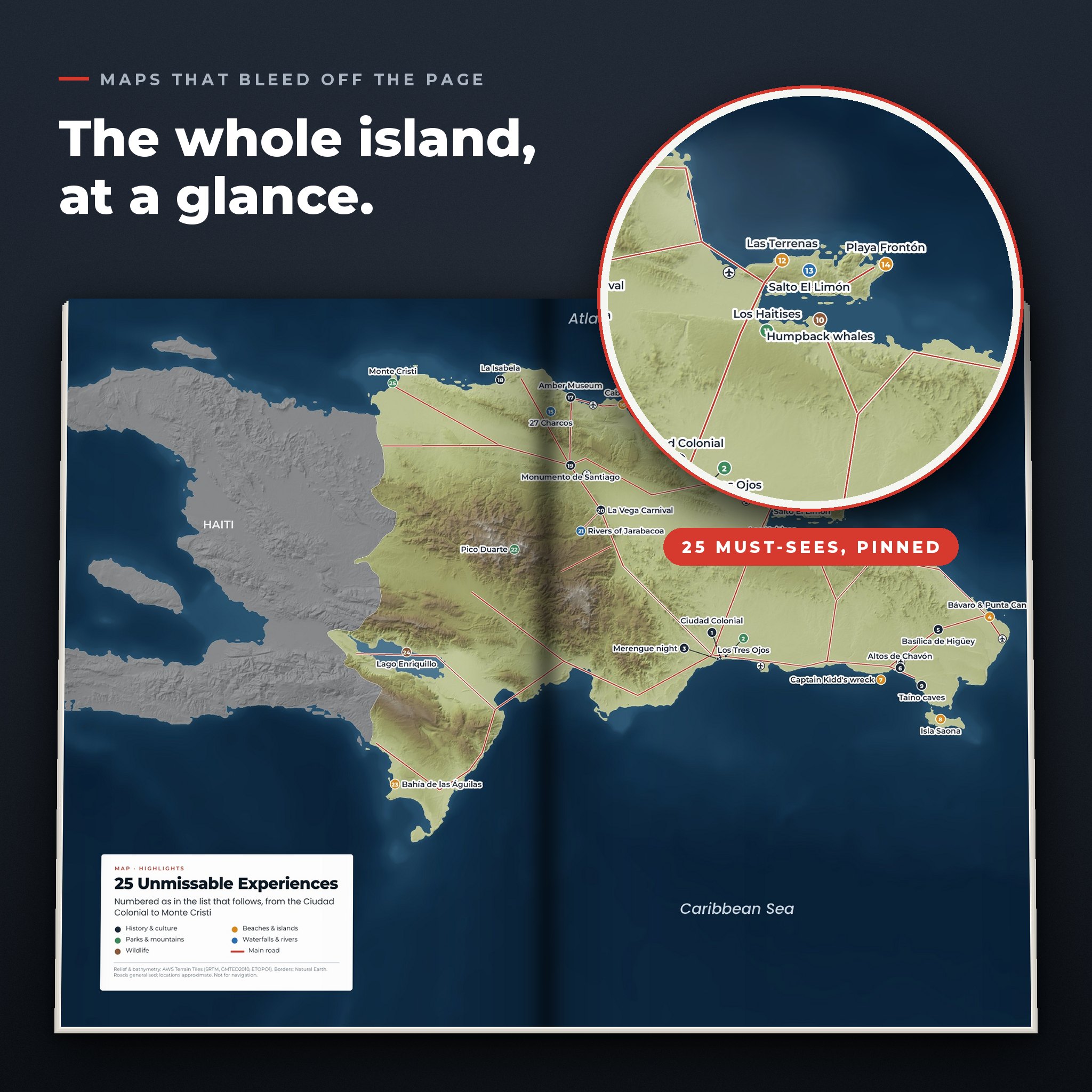
This route links the three regions that give a first trip the most variety. It starts in Santo Domingo, heads east along the Caribbean coast to Bayahíbe and Isla Saona, then turns north to the green Samaná Peninsula, with its waterfalls, beaches and, in winter, whales.
Fly into Las Américas International near Santo Domingo. You can fly out of the same airport, out of Punta Cana, or from Samaná's own international airport, depending on flights. A hire car works well on the main highways; otherwise, use private transfers and tours.
The 7-day itinerary
- Day 1Santo Domingo: the Colonial Zone
Walk the Zona Colonial, founded at the end of the 15th century: the Catedral Primada de América, the Calle Las Damas, the Fortaleza Ozama and the Alcázar de Colón above the river. End in the Plaza de España at sunset.
- Day 2Santo Domingo beyond the old town
The Los Tres Ojos caves and lagoons in the east of the city, the Malecón along the sea, and a night of merengue and bachata in a local bar. Food here is worth slowing down for: try la bandera, the national plate of rice, beans and meat.
- Day 3East to Bayahíbe
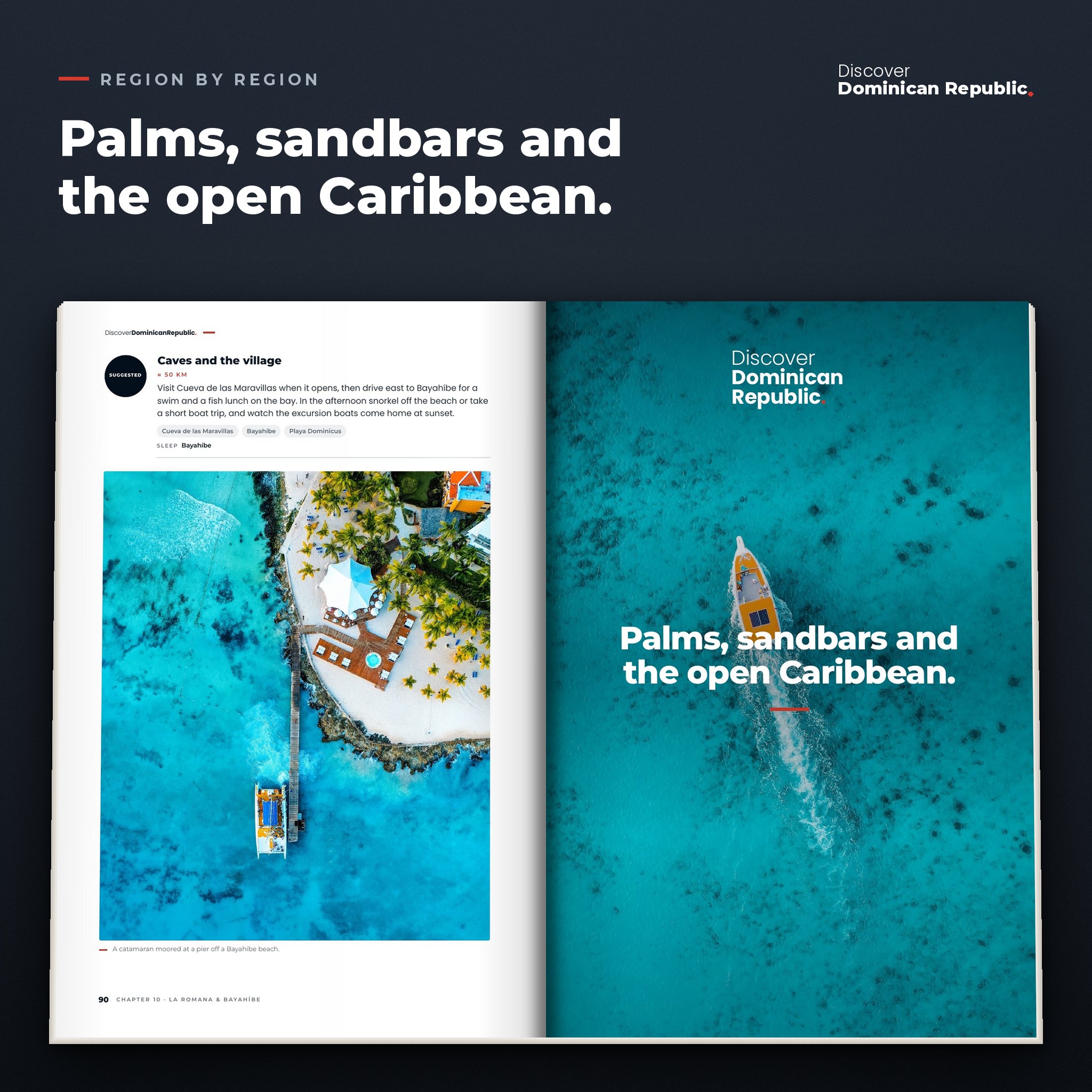
Drive east along the coast to Bayahíbe, a fishing village turned dive base on the edge of the Parque Nacional del Este. Swim at Playa Dominicus and snorkel the reef in the afternoon.
- Day 4Isla Saona
A full day by boat to Isla Saona, inside the national park, with palm-lined beaches and a stop at the shallow sandbar known as the piscina natural, where starfish lie in knee-deep water. Look but do not lift them.
- Day 5North to Samaná
Cross the country to the Samaná Peninsula. Frommer's gives about two hours by car from Santo Domingo to Las Terrenas on the new highway. Base yourself in Las Terrenas for beaches and restaurants, or in Samaná town for the whale boats.
- Day 6Whales or Los Haitises, and El Limón
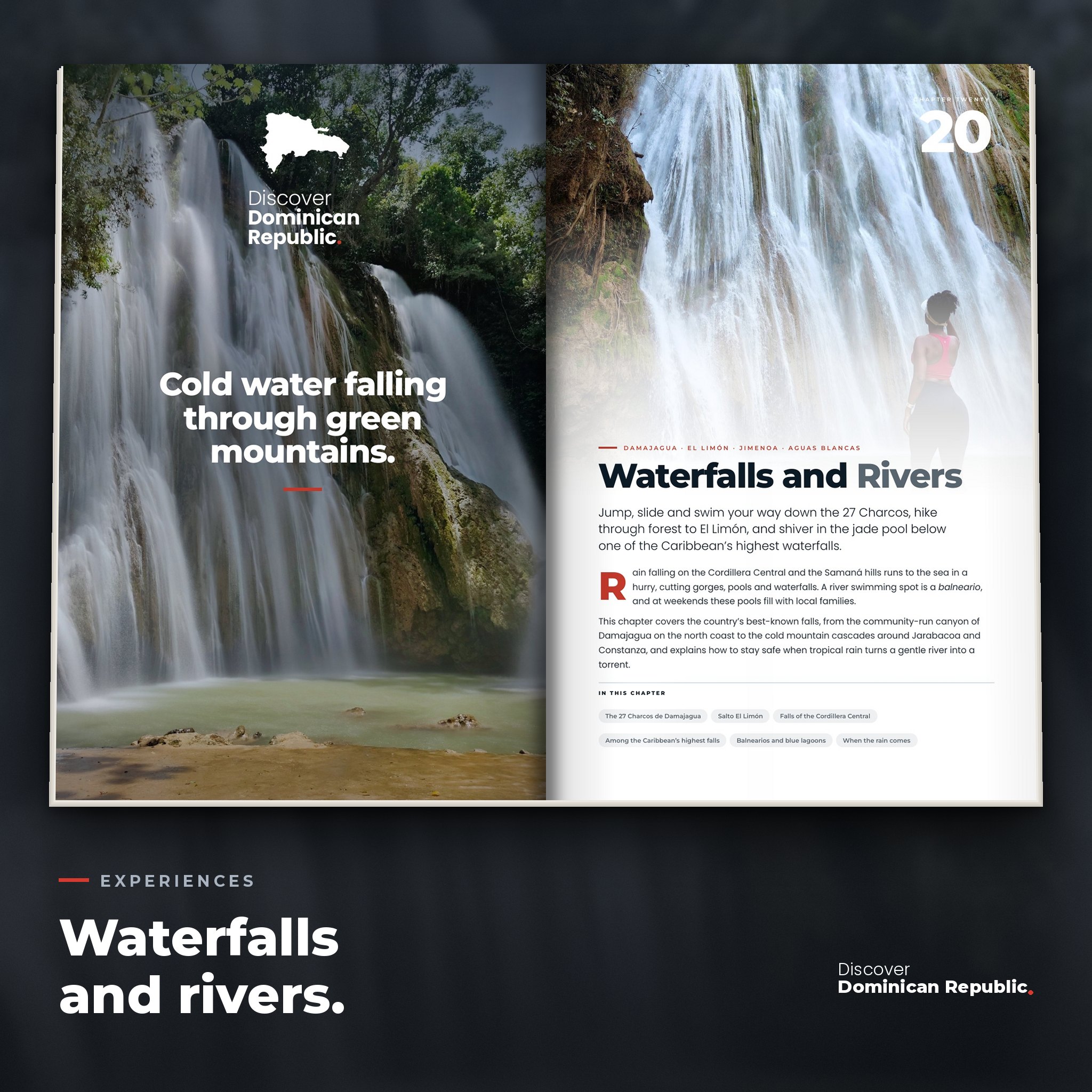
In season, take a licensed whale-watching boat from Samaná into the bay in the morning. Out of season, take a boat to Los Haitises National Park, with its mangroves, karst islets and caves. In the afternoon, ride or hike to Salto El Limón, a waterfall dropping into a jungle pool.
- Day 7Playa Rincón or Cayo Levantado
A last beach day: Playa Rincón, a long, wild beach near Las Galeras, or the small island of Cayo Levantado in Samaná Bay. Then travel back for your flight.
Isla Saona and the south-east
Isla Saona is the most popular day trip in the country, and it shows: boats leave Bayahíbe by the dozen every morning. Go with a smaller operator if you can, and ask exactly where they stop. The best trips combine the island's beaches with snorkelling on the reef and the sandbar, and travel by speedboat one way and catamaran the other.
Bayahíbe is a better base than the big resorts of Punta Cana for this part of the trip. It is closer to the national park, quieter and still a working village.
Samaná: whales, waterfalls and beaches
Every winter, thousands of North Atlantic humpback whales come to the warm waters off the Dominican Republic to mate and give birth. Samaná Bay is the easiest place to see them. The official season in 2026 ran from 15 January to 31 March, and it is regulated, with licensed boats and rules on how close they can approach.
Salto El Limón is reached on foot or on horseback from the village of El Limón, through forest and river crossings. If you ride, choose an operator that treats its horses well. The trail is muddy after rain, so bring shoes that can get wet.
Local tipIf whales are the reason for your trip, plan for late January to mid-March, when sightings in Samaná Bay are most reliable. Book the boat for your first full day in Samaná so you have a spare day if the sea is too rough.
Seven days, other ways
- Mountains: swap Samaná for Jarabacoa and Constanza in the Cordillera Central, about three hours from Santo Domingo, for rivers, waterfalls and Pico Duarte, the highest peak in the Caribbean.
- North coast: add Puerto Plata, Cabarete for kitesurfing and the 27 Charcos de Damajagua.
- Beach-first: stay longer in Bayahíbe or Las Terrenas and skip the second Santo Domingo day.
Before you go
Every traveller must complete the free electronic entry and exit form, the e-ticket, on the official migration site before check-in. Use only the official government page, not paid look-alike sites. Many nationalities, including US, Canadian, UK and EU citizens, do not need a visa for a tourist stay.
For timing, see our guide to the best time to visit the Dominican Republic, which covers the dry season, hurricane season and the whales.
The full route, with 12 custom maps and three ready-made itineraries, is in Discover Dominican Republic.
Questions
Is 7 days enough for the Dominican Republic?
Yes, for a first trip. A week covers Santo Domingo's Colonial Zone, Bayahíbe and Isla Saona in the south-east, and the Samaná Peninsula with its waterfalls, beaches and, in winter, whales.
When can you see whales in Samaná?
The official humpback whale season runs from mid-January to the end of March. In 2026 it ran from 15 January to 31 March.
How do you get from Santo Domingo to Samaná?
By car or bus on the highway north-east. Frommer's gives about two hours by car from Santo Domingo to Las Terrenas.
Do you need a visa for the Dominican Republic?
Many nationalities, including US, Canadian, UK and EU citizens, do not need a visa for a tourist stay, but every traveller must complete the free e-ticket entry and exit form online.