At a glance
On the coast the Dominican Republic is hot all year. Highs in Santo Domingo, Punta Cana and Barahona reach about 30°C even in winter, and the sea ranges from about 26.5°C in winter to about 29°C in September and October. What changes through the year is the rain, the risk of storms and, on the Samaná Peninsula, the whales.
The short answer
- Best overall: December to mid-April, the dry season on the south and east coasts.
- Whales: mid-January to the end of March in Samaná Bay.
- Value: May to July, before the peak of the hurricane season.
- Quietest: September and October, the wettest and stormiest months.
Season by season
| Dec to Apr | May to Jul | Aug to Nov | |
|---|---|---|---|
| South and east | Dry, sunny | Showers, humid | Wettest, storm risk |
| North coast | Rain from trade winds | Variable | Showers |
| Highlights | Whales, Carnival | Lower prices | Warmest sea |
| Crowds | Peak season | Quieter | Quietest |
December to April: the dry season
This is the classic time to visit. On the south and east coasts, including Santo Domingo, Bayahíbe and Punta Cana, the months from December to mid-April are the driest and sunniest, and the heat is a little milder than in summer. It is also high season, so book flights and hotels well ahead, especially around Christmas, New Year and Easter.
February brings Carnival, celebrated on the Sundays of the month in towns across the country, with masked devils, music and parades. It builds towards Independence Day on 27 February. La Vega's Carnival is among the best known.
Whale season in Samaná
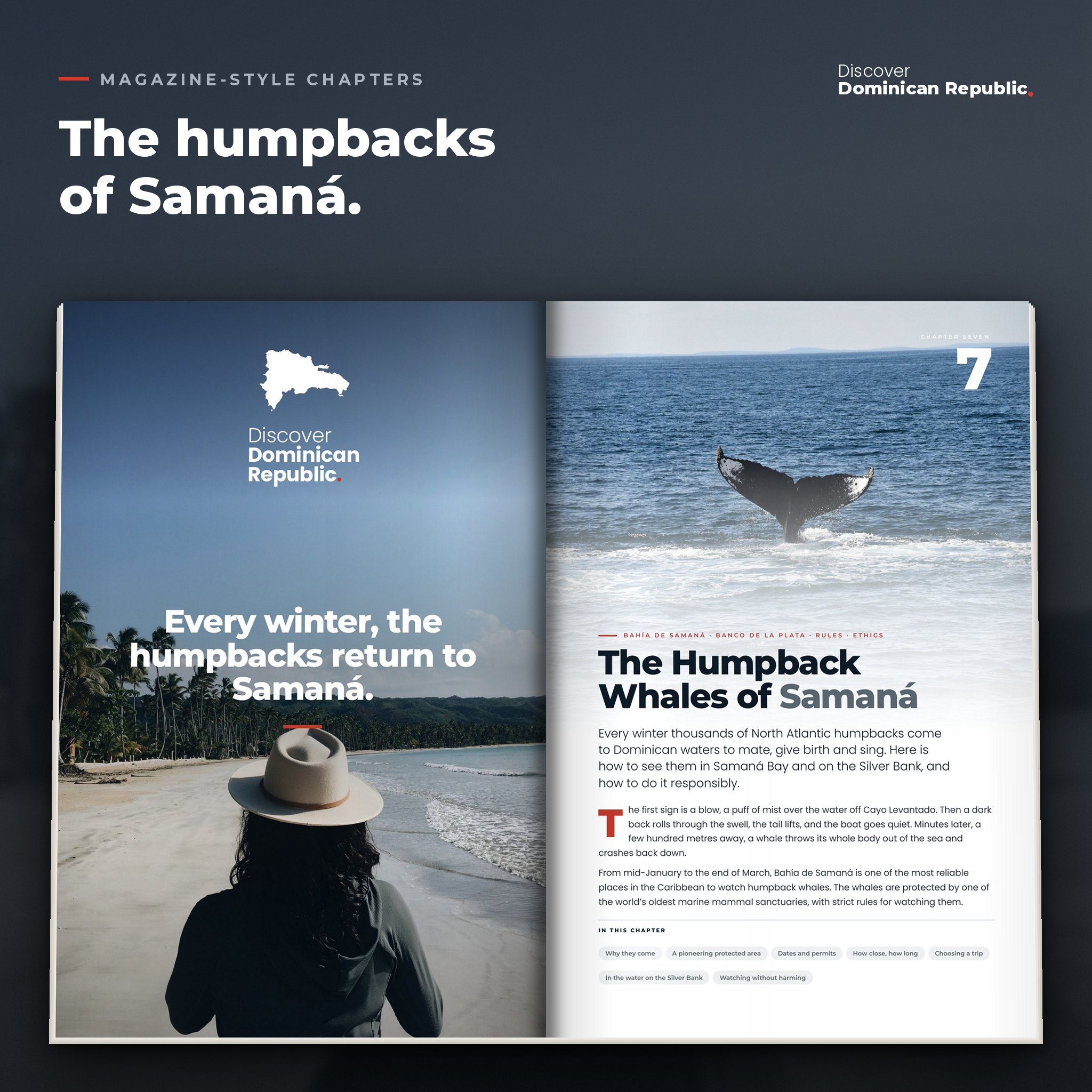
Each winter, thousands of humpback whales travel south from the North Atlantic to breed and give birth in Dominican waters. The official whale-watching season in Samaná Bay ran from 15 January to 31 March in 2026, with licensed boats and rules on approach distances. The protected Silver Bank, far offshore, is another breeding ground, reached on multi-day boat trips.
One catch: winter is the north coast's rainier time of year. The north-east trade winds bring showers to Samaná and the Atlantic coast through much of the year, and February and March are usually the least rainy months there. That makes them the sweet spot for combining whales and beaches.
May to July: the green season
From late April the rainy season starts on the south and east coasts, but it rarely ruins a trip. Rain mostly comes as short, heavy showers and thunderstorms, often in the afternoon, and sunshine hours stay high. Prices fall after Easter, the hills turn green and the risk of hurricanes in June and July is lower than later in the season.
August to November: hurricane season
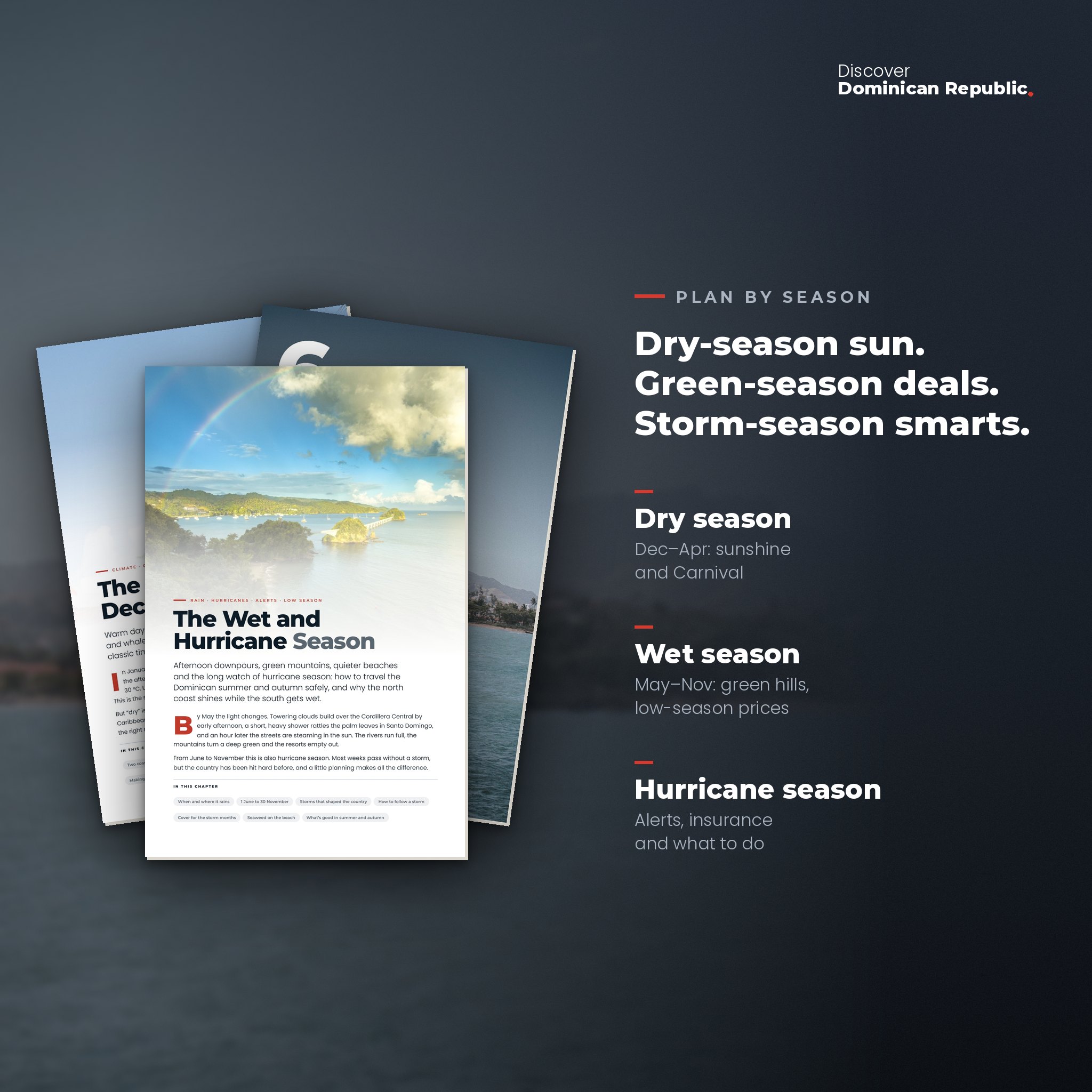
The Atlantic hurricane season runs from June to November, with the highest risk from August to October. Strong hurricanes are rare in any one place, but tropical storms are more common and can bring flooding and landslides, especially in the mountains. If you travel in these months, take insurance that covers storms, watch the forecasts and keep plans flexible.
SafetyDuring heavy rain, rivers in the mountains can rise fast. Do not swim in rivers or visit canyons like the 27 Charcos de Damajagua when storms are forecast, and follow your guide's call on closures.
Holidays and busy weeks
Dominicans travel too. Christmas and New Year, Carnival weekends in February and above all Semana Santa, the Holy Week before Easter, fill beaches, rivers and mountain towns with local holidaymakers. It is a lively time to be there, but book accommodation and transport early and expect busy roads out of Santo Domingo.
For the quietest beaches at good prices, aim for the weeks after Easter, in May and June, when the dry season has only just ended on the south coast and the summer holidays have not yet begun.
The mountains: a different climate
Inland, altitude changes everything. Constanza, at about 1,200 m, has January lows around 9°C and daytime highs near 23°C, so pack a warm layer for Jarabacoa and Constanza, and more for Pico Duarte, where nights at the top can be close to freezing. The dry months from December to April are the best for hiking.

Local tipPlanning a combined trip? Do the south and Santo Domingo in the dry season, add Samaná in February or March for whales with less rain, and save the mountains for clear winter mornings. In summer, favour the south-east coast between Santo Domingo and Punta Cana, where rain is lighter.
To turn your dates into a route, follow our Dominican Republic 7-day itinerary.
The full seasonal planning chapters, with the whales, the hurricane season and region-by-region advice, are in Discover Dominican Republic.
Questions
What is the best month to visit the Dominican Republic?
February and March are the best all-round months: dry on the south and east coasts, the least rainy months on the north coast and in the middle of the whale season in Samaná.
When is the rainy season in the Dominican Republic?
On the south and east coasts, from late April to October, usually as short, heavy showers. The north coast gets rain through much of the year from the trade winds.
When is hurricane season in the Dominican Republic?
June to November, with the highest risk from August to October.
When is whale season in Samaná?
From mid-January to the end of March. The 2026 season ran from 15 January to 31 March.