At a glance
Funchal's averages barely move: daytime highs sit around 20°C from January to March and climb to about 26 to 27°C in July and August. The sea follows slowly, from about 18°C in late winter to around 23 to 24°C from August to October.
Those numbers describe the sunny south coast. Madeira is a mountain island, and the trade winds pile cloud and rain onto the north side and the high peaks. Above about 1,500 m, frost and even snow are possible in winter, and the interior is often wrapped in fog. Pack for two climates on the same day.
The short answer
- For swimming and long sunny days: July to September.
- For walking the levadas and peaks: April to June and September to October, when days are long and paths are drier.
- For flowers: spring, with the Flower Festival in Funchal in May.
- For festivals and winter sun: December, for the Christmas lights and the New Year's Eve fireworks over Funchal Bay.
- For fewer visitors and lower prices: November and late January to March, outside the holidays.
Madeira month by month
Averages for Funchal: daytime high, rain and sea temperature. The mountains are cooler and wetter in every month.
- January: about 20°C, around 105 mm of rain, sea 19°C. Green, quiet and one of the wettest months.
- February: about 20°C, 85 mm, sea 18°C. Carnival brings parades to Funchal.
- March: about 20°C, 65 mm, sea 18°C. Rain eases and the walking season starts.
- April: about 21°C, 40 mm, sea 18°C. A strong month for the levadas.
- May: about 22°C, 20 mm, sea 19°C. The Flower Festival fills Funchal's streets.
- June: about 24°C, 10 mm, sea 21°C. Dry and long-lit, though the coast can be hazy.
- July: about 26°C, 5 mm, sea 22°C. Peak summer and the easiest swimming.
- August: about 27°C, 5 mm, sea 23°C. The warmest month, with the Madeira Wine Festival.
- September: about 26°C, 35 mm, sea 24°C. The warmest sea and the grape harvest festival in Câmara de Lobos.
- October: about 25°C, 75 mm, sea 23°C. Still warm, with the first autumn rain.
- November: about 23°C, 100 mm, sea 21°C. Wetter, quieter and good value.
- December: about 21°C, 100 mm, sea 20°C. Christmas lights, then the New Year fireworks.
Summer: sea, pools and long days
From June to September the south coast is dry and warm, and the sea is at its best for swimming in the lava pools of Porto Moniz and Seixal, snorkelling and boat trips. It is also the busiest time, with the highest prices for flights and cars in July and August. Book early, and do your mountain walks at dawn, before cloud and heat build.
Spring and autumn: the walking seasons
April to June and September to October are the sweet spot for most visitors. Paths are drier than in winter, daylight is long, and the coast is warm without being hot. Spring has the flowers; autumn has the warmer sea. These are the months to plan the best levada walks on Madeira and the Arieiro to Ruivo ridge.
Winter: mild coast, wild mountains
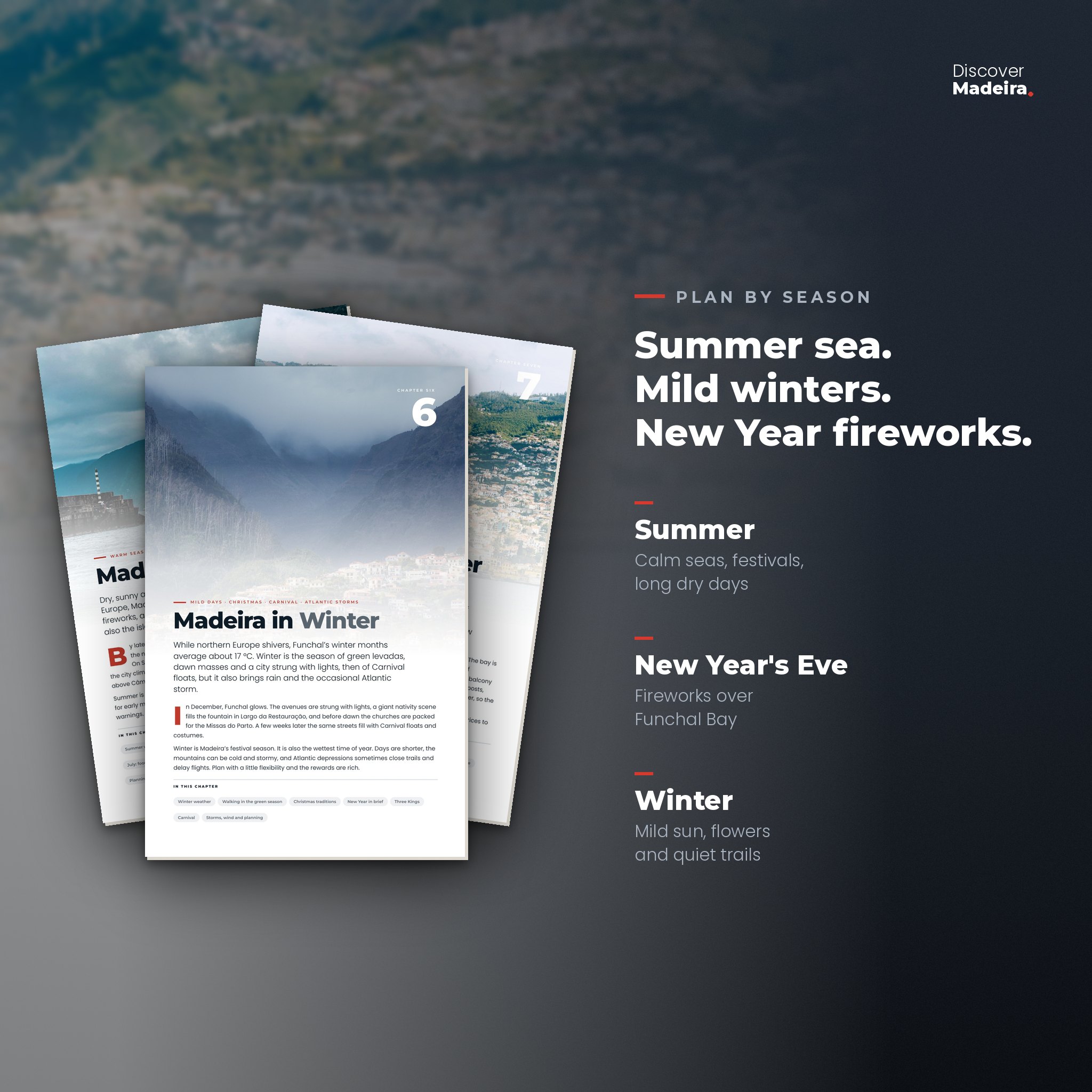
While northern Europe shivers, Funchal stays mild, with highs around 20°C. Winter is the festival season too: the city is lit for Christmas, and the New Year's Eve fireworks over Funchal Bay are the island's biggest night. The trade-off is rain. From mid-October to mid-April, Atlantic storms can close trails, bring strong winds and occasionally delay flights at the airport.
Local tipIn winter, keep one flexible day in your plan. If a storm closes the mountain roads or trails, swap in Funchal's gardens, museums and wine lodges and move the walk.
SafetyAfter heavy rain, levada paths and mountain trails can suffer rockfall and landslides, and the authorities close routes at short notice. Check the IFCN trail status before you set out, and never walk a closed trail.
When to book
For July, August, Christmas and New Year, book flights, cars and beds months ahead, as Funchal fills up for the fireworks. For walking trips, remember that classified trails need a slot on the SIMplifica portal, which opens up to 30 days in advance.
Whatever the month, a five-day plan covers the island well. Our Madeira in 5 days itinerary works in every season, and the full seasonal chapters are in the Discover Madeira guide.
Questions
What is the best month to visit Madeira?
September is a strong all-round choice: warm air, the warmest sea and less rain than autumn. April to June is best for walkers who prefer cooler days and spring flowers.
Is Madeira warm in winter?
Mild rather than hot. Funchal averages daytime highs of about 20 to 21°C from December to March, but the mountains are much colder and the winter months are the wettest.
When is the rainy season in Madeira?
Most rain falls from about mid-October to mid-April. The north coast and the mountains get far more rain than Funchal and the south.
Can you swim in Madeira in winter?
Some people do. The sea is around 18 to 20°C in winter, cool but not cold. July to October is far more comfortable, with sea temperatures around 22 to 24°C.