At a glance
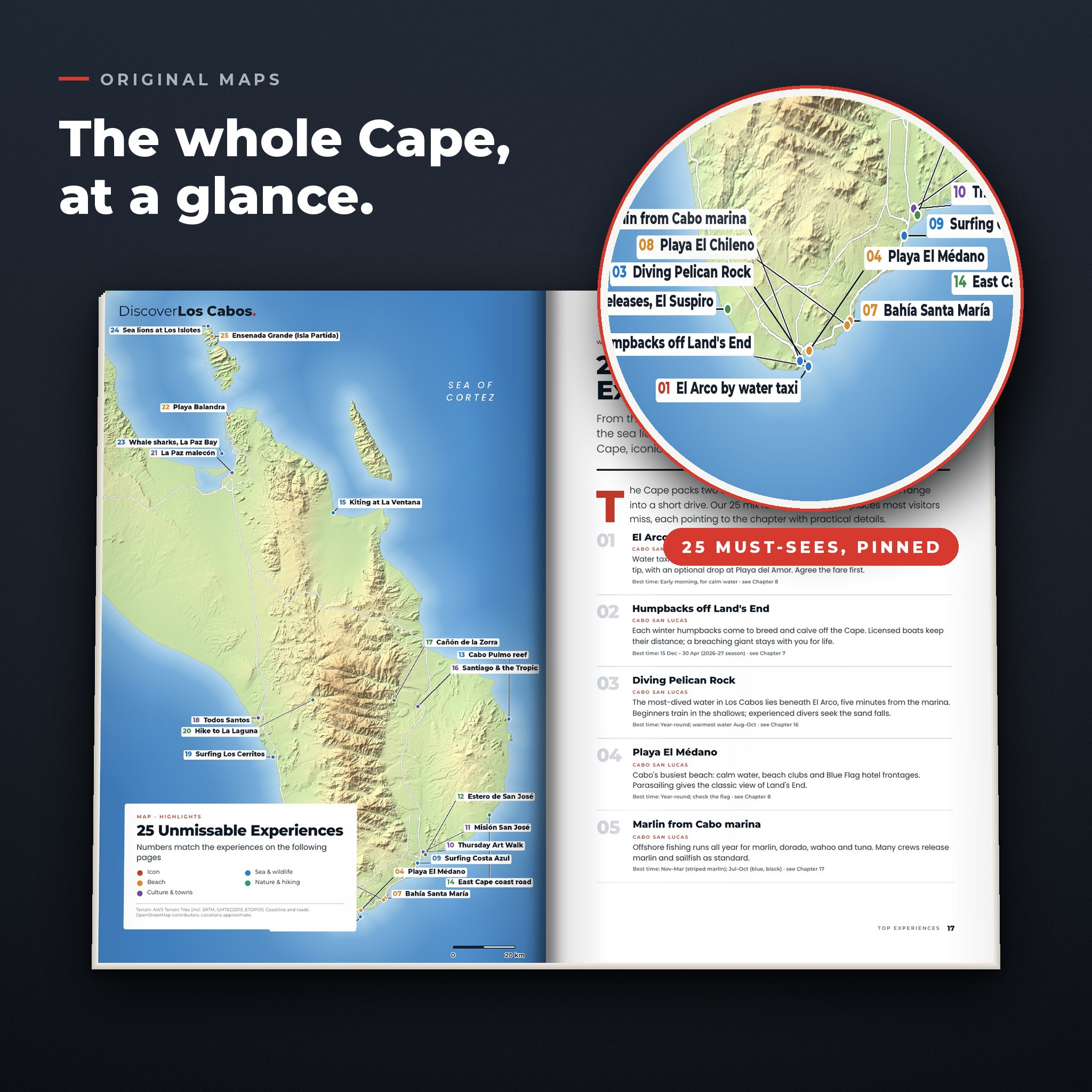
Los Cabos is two towns joined by a 30-odd kilometre stretch of coast. Cabo San Lucas sits at Land's End, with the marina, the famous arch and the nightlife. San José del Cabo to the east is older and calmer, with a historic centre of galleries. Between them runs the Tourist Corridor, lined with resorts and rocky bays.
This plan uses one base in either town and a hire car for the two longer days. The most important rule on this coast comes first: many beaches are not safe for swimming, so choose where you swim with care.
The 4-day itinerary
- Day 1Cabo San Lucas and El Arco
Take a water taxi or glass-bottom boat from the marina to El Arco, the rock arch at Land's End, and Lover's Beach (Playa del Amor). Swim only on the Sea of Cortez side of Lover's Beach, never on the Pacific side. Spend the afternoon on Playa El Médano, the town's long, calm swimming beach. In whale season, take a whale-watching boat instead of the water taxi.
- Day 2Snorkelling the Corridor and San José
Drive out to Bahía Santa María and Bahía Chileno, two sheltered coves on the Corridor with calm water and fish over the rocks. Go in the morning, when the water is clearest. In the evening, walk the historic centre of San José del Cabo. On Thursdays from November to June, its galleries open late for the Art Walk.
- Day 3Cabo Pulmo
A full day trip up the East Cape to Cabo Pulmo National Park, about two to two and a half hours from Cabo San Lucas, with the last stretch on a rough dirt road. Snorkel or dive the reef with one of the local operators in the village, and bring everything you need, as services are limited.
- Day 4Todos Santos and the Pacific
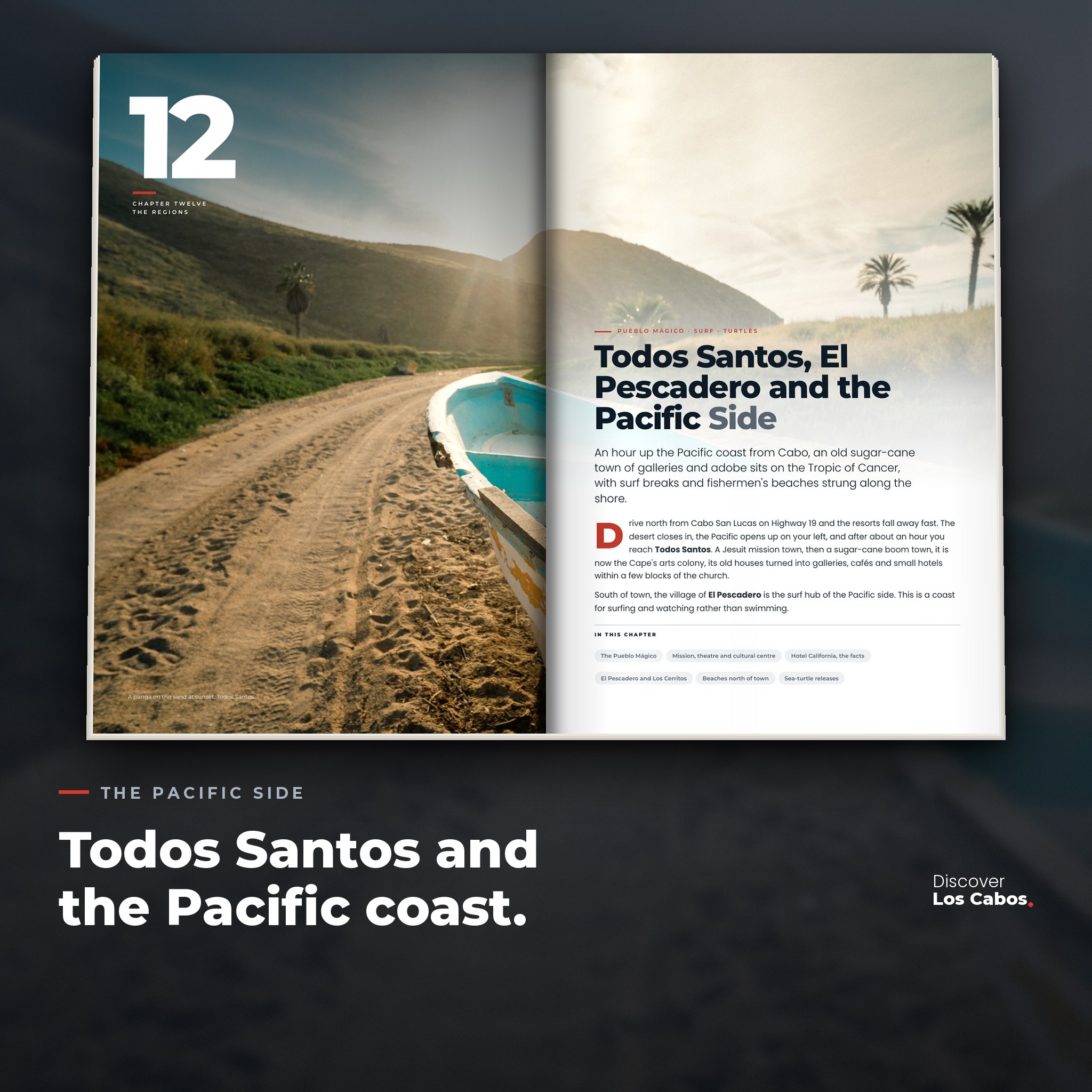
Drive north on Highway 19 to Todos Santos, about an hour from Cabo San Lucas, an old sugar-cane and mission town of adobe houses, galleries and cafés. Watch the surfers on the Pacific beaches near El Pescadero, and stay for sunset over the ocean before driving back.
Where you can swim
This is the single most useful thing to know about Los Cabos. The Pacific side and parts of the Corridor have heavy surf, steep shore breaks and strong currents, and many beaches there are never safe for swimming, however calm they look. Watch for the warning flags and signs and take them seriously.
The safest swimming is on the Sea of Cortez side: Médano Beach in Cabo San Lucas, the Sea of Cortez side of Lover's Beach, and the coves of Santa María and Chileno on the Corridor.
SafetyDo not swim at Divorce Beach, the Pacific side of Lover's Beach, or on the open Pacific beaches around Cabo San Lucas and Todos Santos. The surf and currents there are dangerous, and drownings happen every year.
Whale season
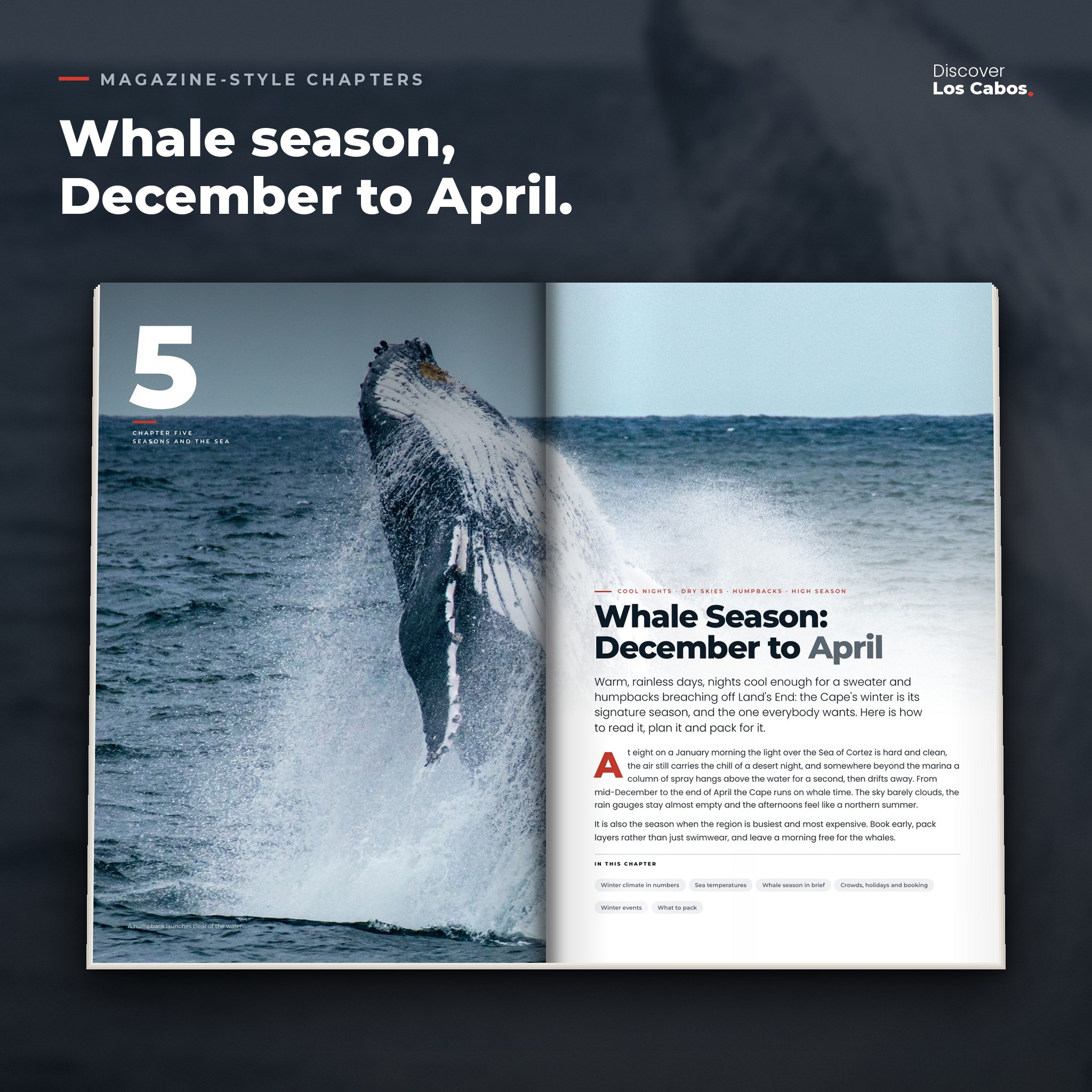
The official whale-watching season runs from 15 December to 15 April, the period when licensed boats may run trips, and January to March is the peak. Humpback whales are the most common, though grey, blue and fin whales are also seen. Permitted boats keep their distance, usually about 60 to 80 m depending on their size. Whales often arrive before the season opens, so you may see them from the shore in November.
Cabo Pulmo: why it is worth the drive
Cabo Pulmo was declared a protected area in 1995 after the local community backed a ban on fishing. The recovery has been remarkable: a study found that the total weight of fish on the reef rose by more than 460% between 1999 and 2009, one of the largest recoveries recorded in any marine reserve. Today it is part of the UNESCO-listed islands and protected areas of the Gulf of California.
Snorkelling and diving happen with local operators, who know the rules of the park. Go with a full tank, cash and water, and do not drive the dirt road after dark.
More days, more coast
With a fifth day, continue from Todos Santos to La Paz, about two hours from Cabo San Lucas, and take a boat to Isla Espíritu Santo for the sea lion colony at Los Islotes. With a car and more time, the full loop round the Cape via the East Cape is one of the great drives in Mexico.
Local tipBook the El Arco boat for early morning, when the sea is calmer and the light is softer on the rocks. It is also the best time for snorkelling at Santa María and Chileno.
Every region, beach and dive site is mapped in Discover Los Cabos, with whale season, beach safety and the La Paz chapters.
Questions
Is 4 days enough for Los Cabos?
Yes. Four days covers El Arco and Médano Beach, snorkelling at Santa María and Chileno, San José del Cabo, a day at Cabo Pulmo and a day in Todos Santos.
Can you swim at Lover's Beach in Cabo?
Yes, on the Sea of Cortez side, which is usually calm. Do not swim on the Pacific side, known as Divorce Beach, where the surf and currents are dangerous.
When is whale season in Los Cabos?
The official whale-watching season runs from 15 December to 15 April, with the best sightings from January to March. Humpbacks are the most common.
How far is Cabo Pulmo from Cabo San Lucas?
About two to two and a half hours by car, with the last part on a rough dirt road.