At a glance
Most of Yellowstone sits at 1,829 m (6,000 ft) or higher, and that altitude shapes everything. The National Park Service warns that it can rain or snow in any month, and temperatures swing hard between day and night. So the question is less about finding perfect weather and more about choosing what you want to see: geysers under blue skies, wolves in the snow, or a valley full of bison calves.
The short answer: September is the best all-round month for most visitors. Every road is still open for most of it, the summer crowds thin out after Labor Day, and the elk rut fills the air at Mammoth Hot Springs. If wildlife is your priority, aim for late May and early June. If you want every service open and the longest days, come in July or August and start early.
Yellowstone month by month
| Season | Roads | Wildlife | Crowds |
|---|---|---|---|
| Dec to Feb | North road only for cars; oversnow tours inside | Wolves in Lamar Valley, frosted bison | Low |
| Mar to Apr | Interior closed for plowing; first roads open the third Friday of April | Grizzlies emerge, bison calving begins | Low to moderate |
| May to June | All roads open by Memorial Day weekend | Calves of every species, wolf pups | Moderate, rising fast |
| July to Aug | Everything open | Bison rut in Lamar and Hayden valleys | High |
| Sept to Oct | Open until 31 October; Dunraven Pass closes mid-October | Elk rut, bears at lower elevations | Moderate, then low |
Summer: June to August
Summer is when Yellowstone works like a normal national park. All roads, lodges, campgrounds and visitor centres are open, and you can drive the whole Grand Loop. Daytime highs are around 21°C (70°F), occasionally 27°C (80°F) at lower elevations, but nights are cool and can drop below freezing higher up. Afternoon thunderstorms are common, so plan long walks for the morning.
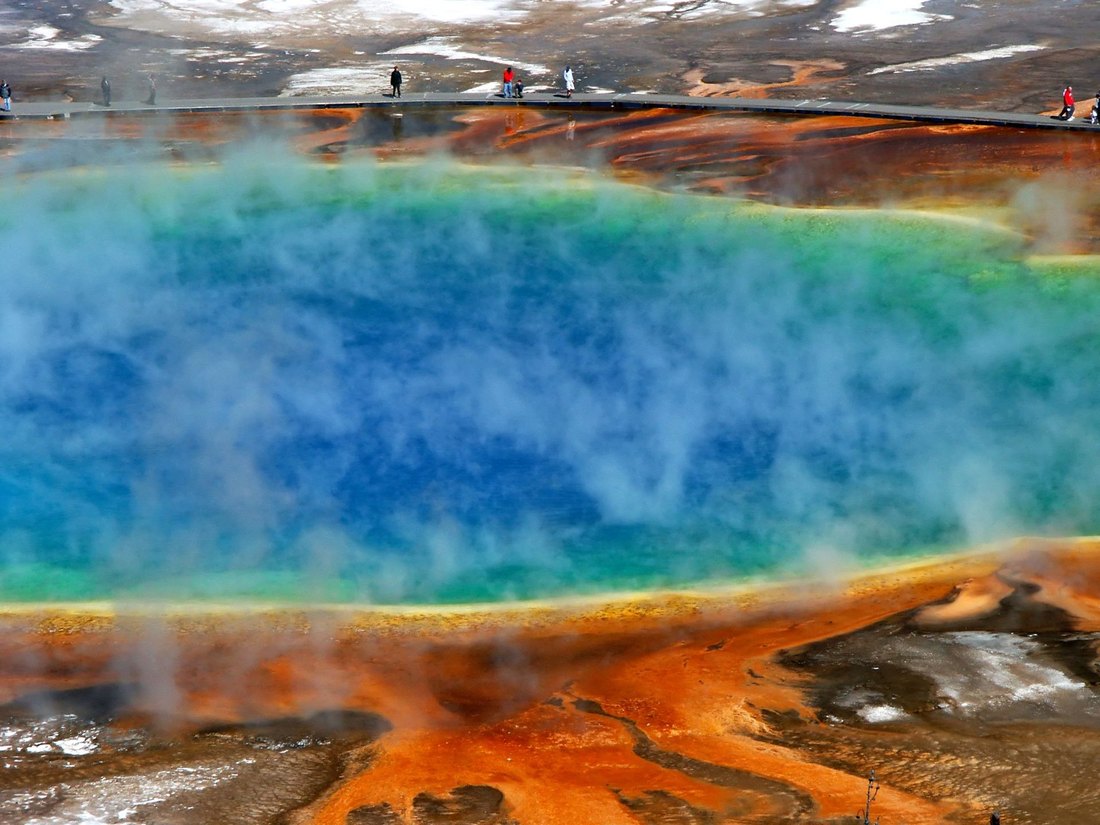
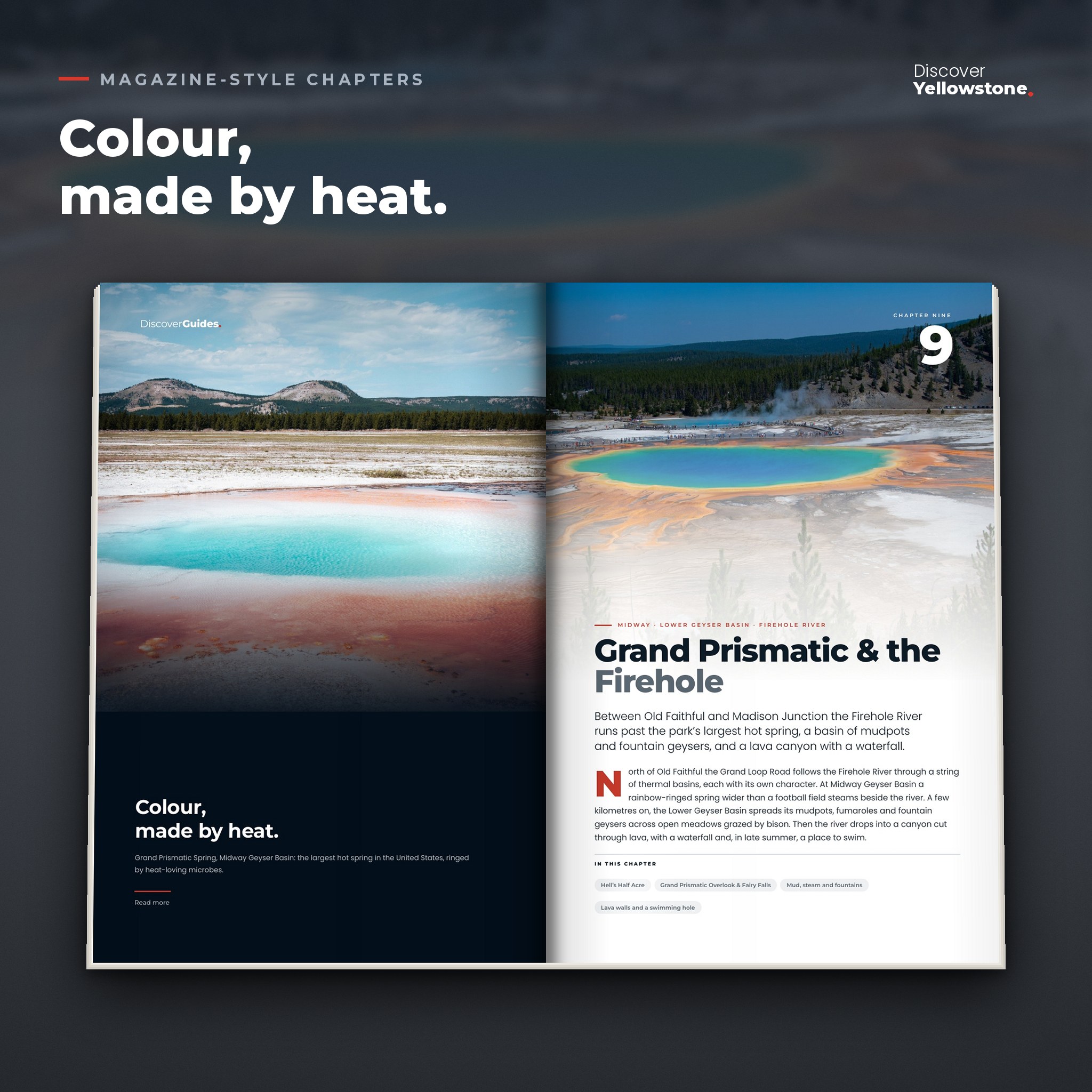
The catch is people. More than half of the park's annual visits come in June, July and August. Parking at Old Faithful, Grand Prismatic Spring and the Canyon overlooks fills by mid-morning. July also brings mosquitoes, and wildfire smoke can soften the views in August. In return you get the bison rut, with bulls bellowing and wallowing across Lamar and Hayden valleys, and the whole park within reach. Our three-day Grand Loop itinerary is built for exactly this season.
Autumn: September and October
September is the sweet spot. The park is still busy in the first half of the month, then crowds fall away. Days are crisp and clear, and the elk rut runs through September and October, with bulls bugling on the lawns of Mammoth Hot Springs and around Grant Village. In October, bears feed at lower elevations and are often easier to see from the road.
The trade-off is that the park starts to close around you. Campgrounds begin shutting in September, boat services on Yellowstone Lake stop in mid-September, and Dunraven Pass (the road between Tower Fall and Canyon) and the Beartooth Highway close in mid-October. In 2026, 31 October was the last day to drive most park roads. Spring and autumn days range from about -1°C to 16°C (30°F to 60°F), nights fall well below freezing, and a 30 cm (12 in) snowfall in 24 hours is not unusual.
Local tipIn autumn, keep the Northern Range for last. The road from Gardiner through Mammoth and Tower to Lamar Valley and Cooke City stays open to cars all year, weather permitting, so a late-season trip can still end with wolves at dawn.
Spring: April to early June
Spring is for wildlife watchers who do not mind cold mornings. Grizzlies emerge from their dens in March and feed in roadside meadows in April. Bison calving starts in Lamar Valley in April, and in May the valleys fill with newborn bison, elk, moose and pronghorn. Wolf pups appear at dens in Lamar Valley in May.
Roads open in stages. The first sections, West Entrance to Old Faithful and Canyon, and Mammoth to Norris, open on the third Friday of April (17 April in 2026). The rest open through May, weather permitting, and all roads are normally open by Memorial Day weekend. Snow lingers on the high ground well into June, and rivers run high, which can limit backcountry campsites. Many lodges and campgrounds open from May, so check dates before you book.
Winter: mid-December to mid-March
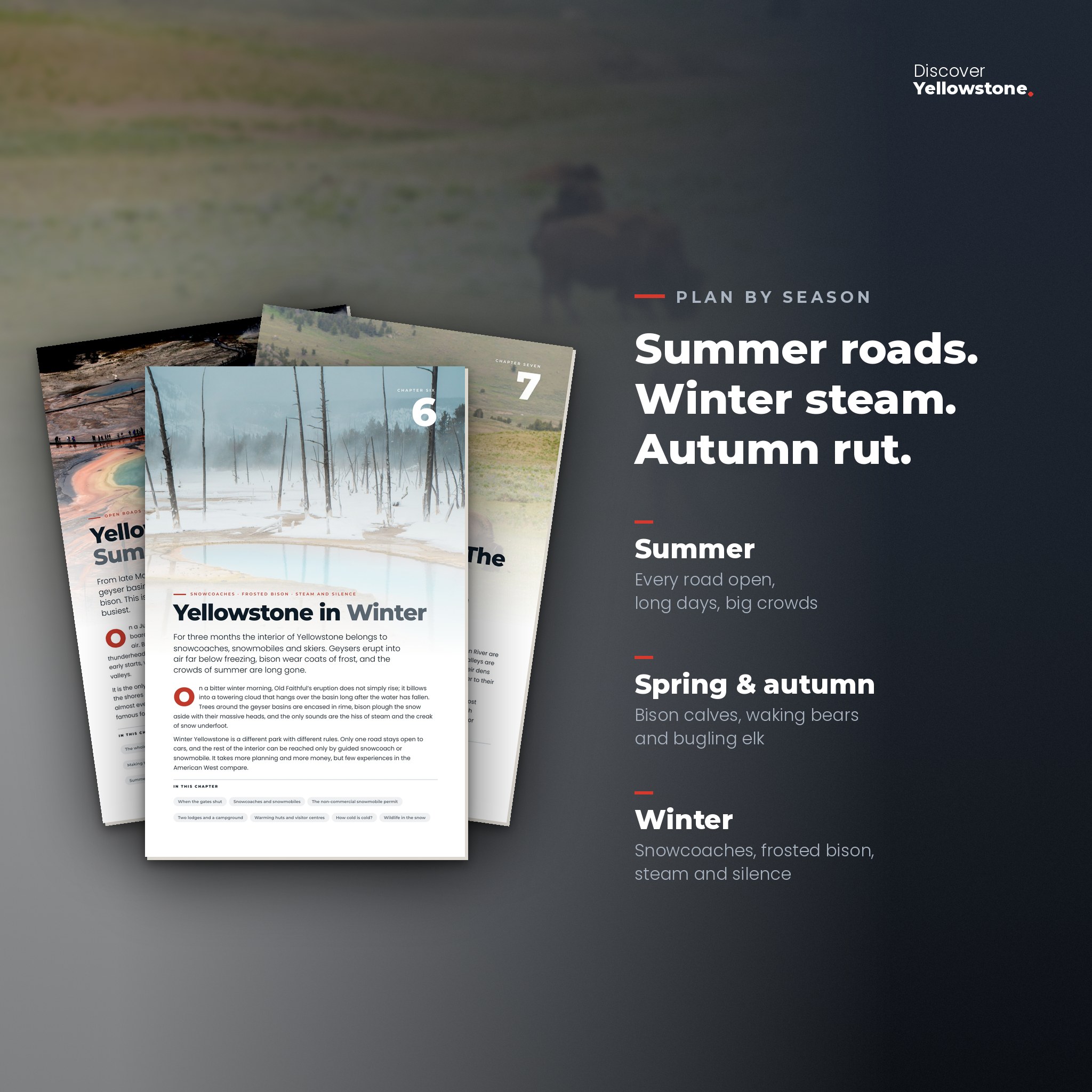
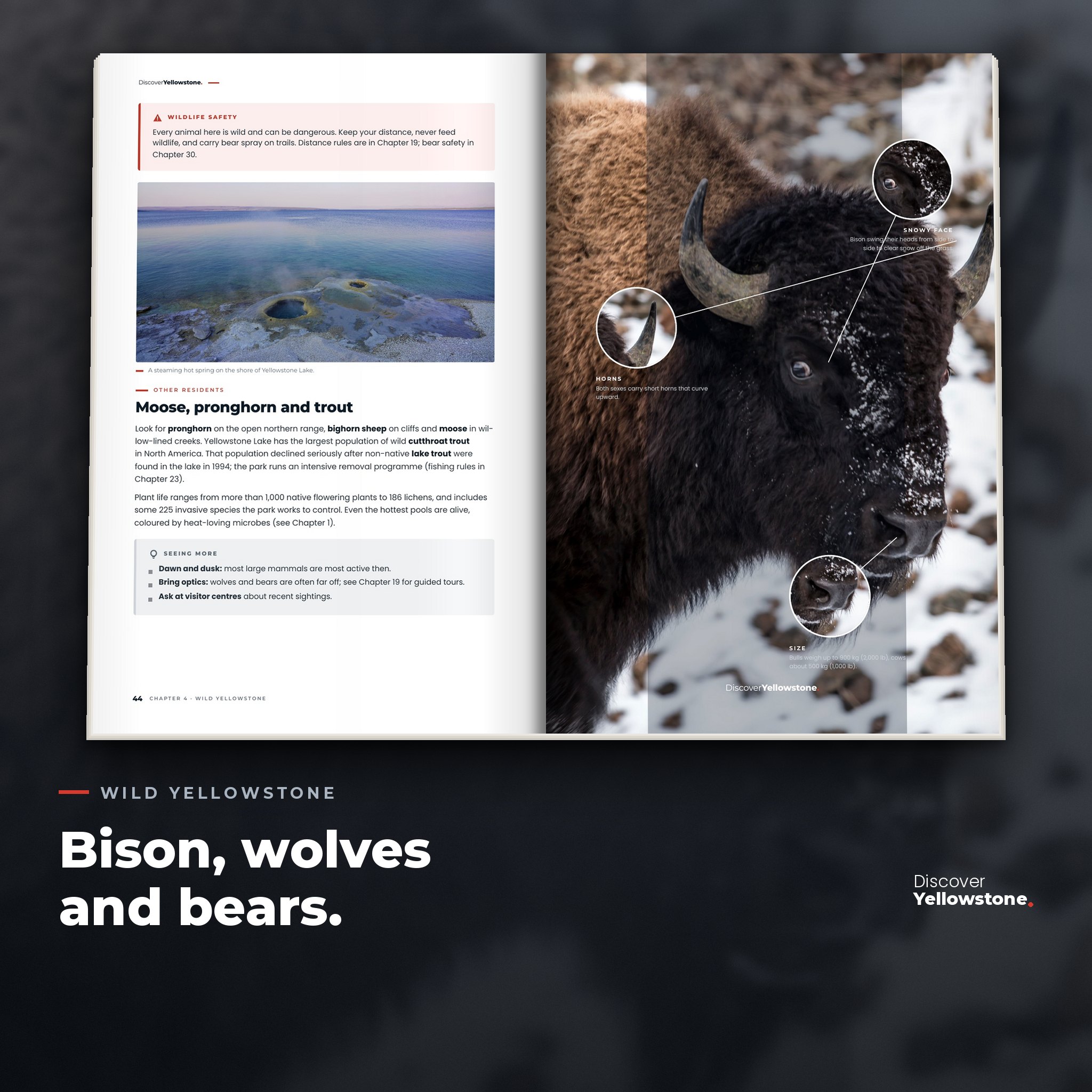
Winter Yellowstone is a different park with different rules. Only the road from the North Entrance at Gardiner to the Northeast Entrance at Cooke City is open to cars. Everything else, including Old Faithful and the Grand Canyon of the Yellowstone, is reached by commercially guided snowcoach or snowmobile from 15 December to mid-March.
It is properly cold. Daytime temperatures run from about -18°C to -7°C (0°F to 20°F), subzero nights are normal, and the park averages 381 cm (150 in) of snow a year, with twice that on higher ground. The record low is -54°C (-66°F). The reward is steam: geysers erupting into frozen air, trees coated in rime ice, bison ploughing snow with their heads, and wolves in Lamar Valley with almost nobody else watching.
Only two lodges open in winter. For the 2026 to 2027 season, Mammoth Hot Springs Hotel runs until 7 March 2027 and Old Faithful Snow Lodge, reached only by oversnow transport, from 16 December 2026 to 6 March 2027. Mammoth Campground stays open all year. Dates change, so check the park's operating dates page.
So when should you go?
- First visit, want it all: mid-June to mid-September. Book months ahead.
- Best balance: the second half of September, when roads are open, crowds have dropped and the elk are rutting.
- Wildlife first: late May to early June for calves and bears, or January and February for wolves.
- Photographers: winter for steam and frost, or September mornings for mist over the Firehole and Madison rivers.
Wherever you land in the calendar, where you sleep matters as much as when you go. Our guide to where to stay in and around Yellowstone matches the bases to the seasons.
SafetyWhatever the month, stay on boardwalks in thermal areas and keep at least 23 m (25 yards) from bison and elk and 91 m (100 yards) from bears and wolves. Bison have injured more people in Yellowstone than any other animal.
Fees changed in 2026: visitors who are not US residents now pay a $100 per person surcharge on top of the standard entrance fee at Yellowstone, and the nonresident annual pass costs $250. Check the NPS fees page before you travel. The full seasonal chapters, from snowcoach routes to the best wolf-watching pullouts, are in Discover Yellowstone.
Questions
What is the best month to visit Yellowstone?
September for most people. Roads are still open for most of the month, crowds fall after Labor Day and the elk rut begins. July and August have everything open but are the busiest months.
When do Yellowstone's roads open and close?
The first interior roads open to cars on the third Friday of April, and all roads are normally open by Memorial Day weekend. Most close to cars on 1 November. Only the road from Gardiner to Cooke City stays open all year.
Can you visit Yellowstone in winter?
Yes. From mid-December to mid-March you can drive the northern road to Lamar Valley, and guided snowcoach and snowmobile tours reach Old Faithful and the Canyon.
When is the best time to see wildlife in Yellowstone?
Late spring for newborn animals and bears, September and October for the elk rut, and winter for wolves in Lamar Valley. Dawn and dusk are best in any season.
How cold is Yellowstone in summer?
Daytime highs are around 21°C (70°F), sometimes 27°C (80°F) at lower elevations, but nights are cool and can fall below freezing at higher elevations.