At a glance
There is no bad month for a beach in Turks and Caicos. The islands sit at the edge of the Bahamas bank, low and dry, with a steady trade wind. Air temperatures average about 27°C, and the difference between the cooler months and the hot ones is only about 5°C.
The short answer: come between December and April for the most settled weather and the humpback whales, or in May, June or early November for warm water, fewer people and lower prices. Late August to mid-September is the time to be cautious.
The seasons compared
| Dec to Apr | May to Jul | Aug to Nov | |
|---|---|---|---|
| Weather | Cooler, breezy, little rain | Hot, the most showers | Hot, humid, storm risk |
| Sea | About 26°C | Warming up | Up to about 29°C |
| Crowds and prices | Highest | Lower | Lowest |
| Best for | Whales, easy weather | Value, calm seas | Deals, flexible travellers |
Winter: December to April
This is high season, and it earns it. The air is a little cooler, the humidity drops and rain is light. Expect the highest prices of the year, especially over Christmas, New Year and the North American spring breaks, and book flights and rooms early.
The sea is at its coolest, about 26°C, which is still warm enough to swim all day. Grace Bay, which is flushed by the tide, feels cooler than the shallow bays on the south-west side of Provo such as Sapodilla Bay and Taylor Bay.
Whale season
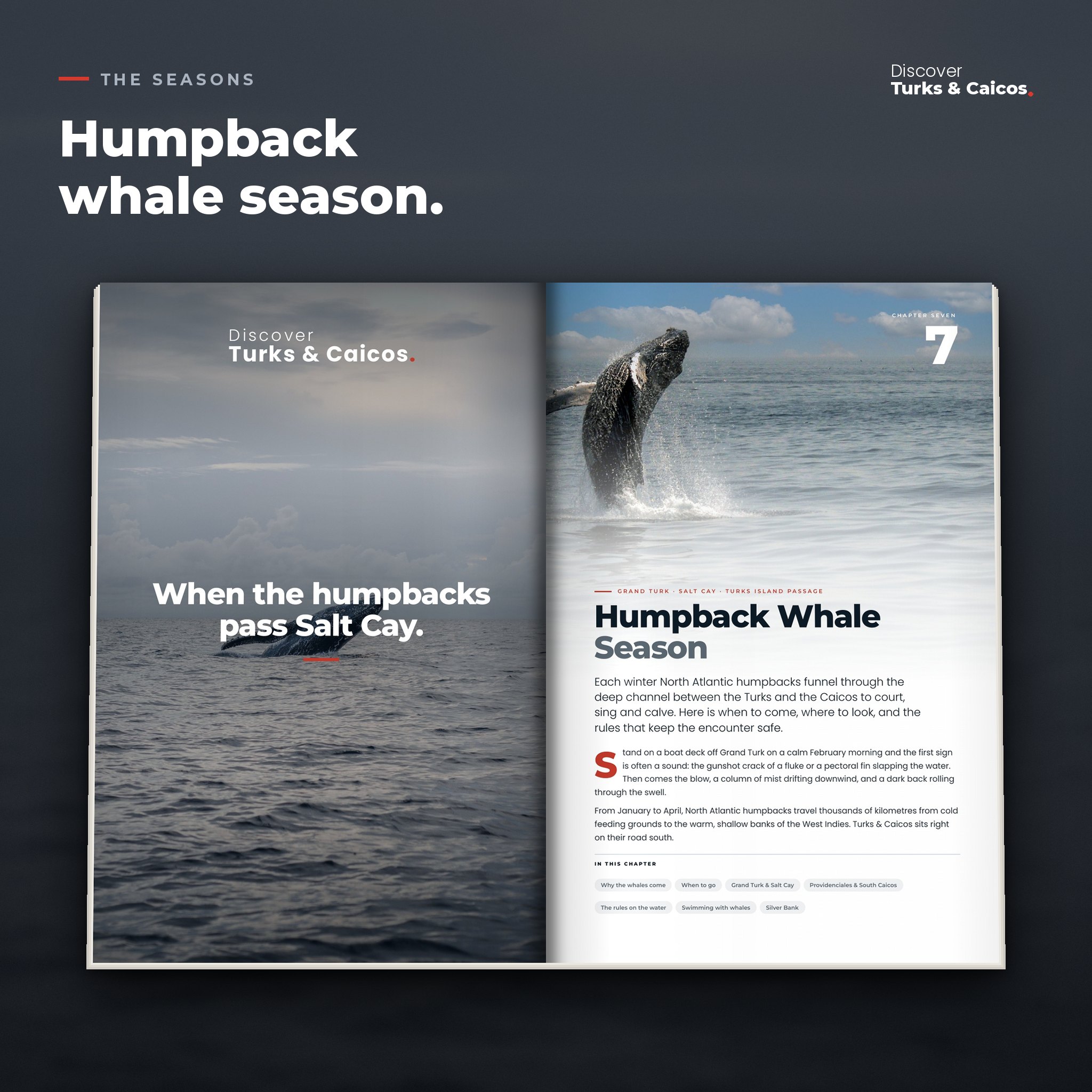
Every winter North Atlantic humpback whales pass through the islands on their way to and from their breeding grounds. The season runs from about late December to mid-March, and boat tours run from January into April. The best place to see them is the deep Turks Island Passage between Grand Turk and Salt Cay, though whales are also seen in deep water off the Caicos Islands.
Some operators offer in-water encounters. The islands' environment department asks swimmers to wear a snorkel vest, keep splashing to a minimum, never approach or touch a whale and let it choose whether to come close. No operator can promise a sighting.
Early summer: May to July
The months from April to July bring the most showers of the year, but showers here are usually short, often over in ten minutes. The sea warms, the wind often eases, and prices fall after Easter. For families on a budget, June is one of the best value months in the Caribbean.
Hurricane season: June to November
The Atlantic hurricane season officially runs from 1 June to 30 November, and most of the islands' annual rain falls during it, often from one or two tropical storms. Serious hurricane strikes are rare, but most have come between late August and mid-September, and the local tourism guide suggests avoiding roughly 31 August to 15 September if you can.
Flight changes are more common than direct hits. If you travel in this period, take travel insurance that covers storms, keep your plans flexible and watch the forecasts from the US National Hurricane Center in the week before you fly. November is often a good compromise: the risk is falling, the sea is still warm and prices have not yet jumped for winter.
Rain, wind and the sea
With about 84 cm of rain a year, Turks and Caicos is one of the driest destinations in the Caribbean. Even in the wetter months, heavy rain usually comes only once or twice a month, and most days bring nothing more than a passing shower. Flooding is almost always tied to a tropical storm, and flooded roads usually clear within a few days.
The trade wind blows from the east for much of the year and keeps the heat comfortable. It also shapes the sea: on breezy days the north shore, including Grace Bay, can be choppy beyond the reef, while the south-west bays of Provo stay calm. If one coast is rough, the other is usually fine for swimming, so a hire car is useful in any season.
Whatever the month, book the busy dates early. Christmas, New Year, the spring breaks and Easter fill the hotels on Grace Bay months ahead, and the small planes to Grand Turk and Salt Cay sell out in whale season.
Local tipFor the best mix of weather, whales and price, aim for the second half of April. The whale tours are winding down, but spring breaks are over and rates start to drop.
Month by month in brief
- January to March: dry and breezy, peak whale season, peak prices.
- April: last of the whale tours, prices start to ease after Easter.
- May to July: hot, short showers, warm and calm seas, good value.
- August to October: the hottest and quietest months, highest storm risk, the biggest discounts.
- November: the season turns, storms become less likely, a good shoulder month.
- December: the dry season returns, with holiday crowds from the middle of the month.
Whichever month you choose, our 5-day Turks and Caicos itinerary works all year. The full seasons chapter, whale-watching guidance and island-by-island planning are in Discover Turks & Caicos.
Questions
What is the best month to visit Turks and Caicos?
For weather, January to April, when the air is cooler and drier and the humpback whales pass through. For value with good weather, May, June and November.
When is whale season in Turks and Caicos?
Humpback whales pass through from about late December to mid-March, and boat tours run from January into April. The best area is the Turks Island Passage between Grand Turk and Salt Cay.
When is hurricane season in Turks and Caicos?
From 1 June to 30 November. Most hurricane strikes have come between late August and mid-September, which is the period to avoid if you can.
How warm is the sea in Turks and Caicos?
About 26°C in winter, rising to about 29°C in late summer. The shallow bays on the south-west side of Providenciales are warmer than Grace Bay.