At a glance
For most first visits, the best time to visit Banff is from late June to mid-September. The lakes have thawed, the Moraine Lake shuttle is running, the boat cruises and the Icefields Parkway attractions are open and the long days leave time for evening walks. If you can, aim for the first half of September: the summer holiday crowds have gone, the weather is often settled, and the larches start to turn.
Banff weather by month
Banff town sits at about 1,380 m, and Lake Louise is higher still. Environment Canada's 1981 to 2010 climate normals for Banff give these averages. Expect cooler temperatures at the high lakes and passes, and snow in the mountains in any month.
| Month | Average high | Average low |
|---|---|---|
| January | -3°C (26°F) | -12°C (10°F) |
| March | 5°C (41°F) | -7°C (20°F) |
| May | 15°C (59°F) | 2°C (35°F) |
| July | 22°C (71°F) | 7°C (45°F) |
| September | 16°C (61°F) | 3°C (37°F) |
| November | 0°C (32°F) | -8°C (17°F) |
Summer: late June to August
Summer is Banff's peak season, and for good reason. Days are warm, around 22°C, nights are cool, and the whole park is open. The Parks Canada shuttles run to Lake Louise from mid-May and to Moraine Lake from 1 June (both until 12 October in 2026), and the Lake Minnewanka cruise, the Columbia Icefield and the Maligne Lake cruise in Jasper all operate through the summer.
The catch is demand. Lake Louise and Moraine Lake are among the busiest places in Canada's national parks, the lakeshore car park at Lake Louise often fills before sunrise, and hotels in Banff, Lake Louise and Jasper book out months ahead. Snow can linger on the highest trails and passes into July, and afternoon thunderstorms are common. Our seven-day Banff and Jasper itinerary is built around this season.
Local tipBook the Moraine Lake shuttle the day reservations open in spring, or try for the seats released at 8 a.m. Mountain Time two days before each departure. Without one, the only way in is a licensed tour.
Autumn: September and October
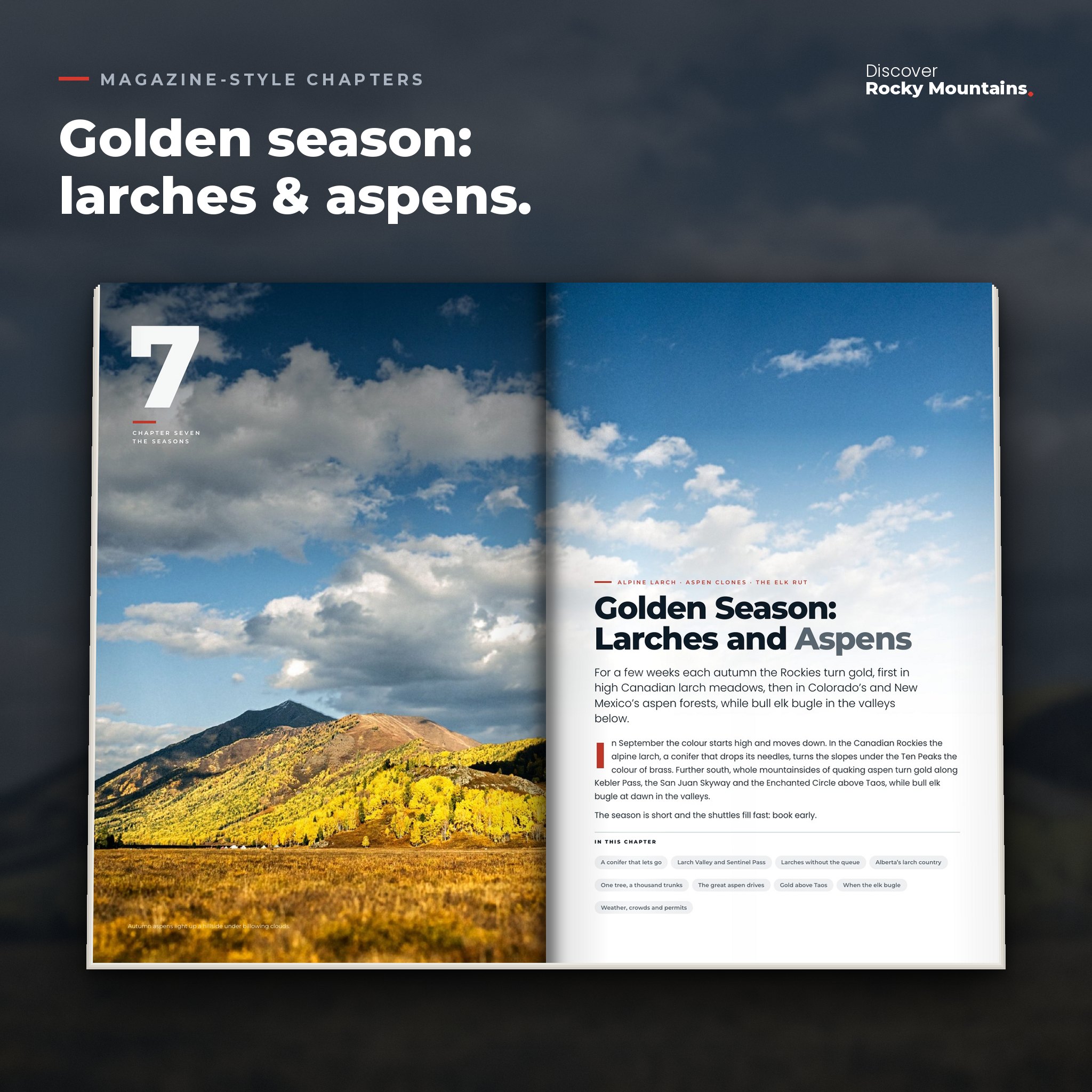
September is many locals' favourite month. The crowds thin after Labor Day, mornings are crisp, and from mid-September to early October the alpine larches turn gold. Larches are conifers that drop their needles, and for a few weeks whole slopes glow. The most famous walk is Larch Valley, 4.3 km from Moraine Lake, with Sentinel Pass about 2.5 km beyond. It is extremely busy in larch season, so go on the first shuttle.
From 30 August to 30 September the eastern 17 km of the Bow Valley Parkway are closed to vehicles for Parks Canada's cycling pilot, and the shuttles stop after mid-October. Autumn is also the season of the elk rut, and October brings the first lasting snow to the peaks. Temperatures drop fast: average highs fall from about 16°C in September to 10°C in October.
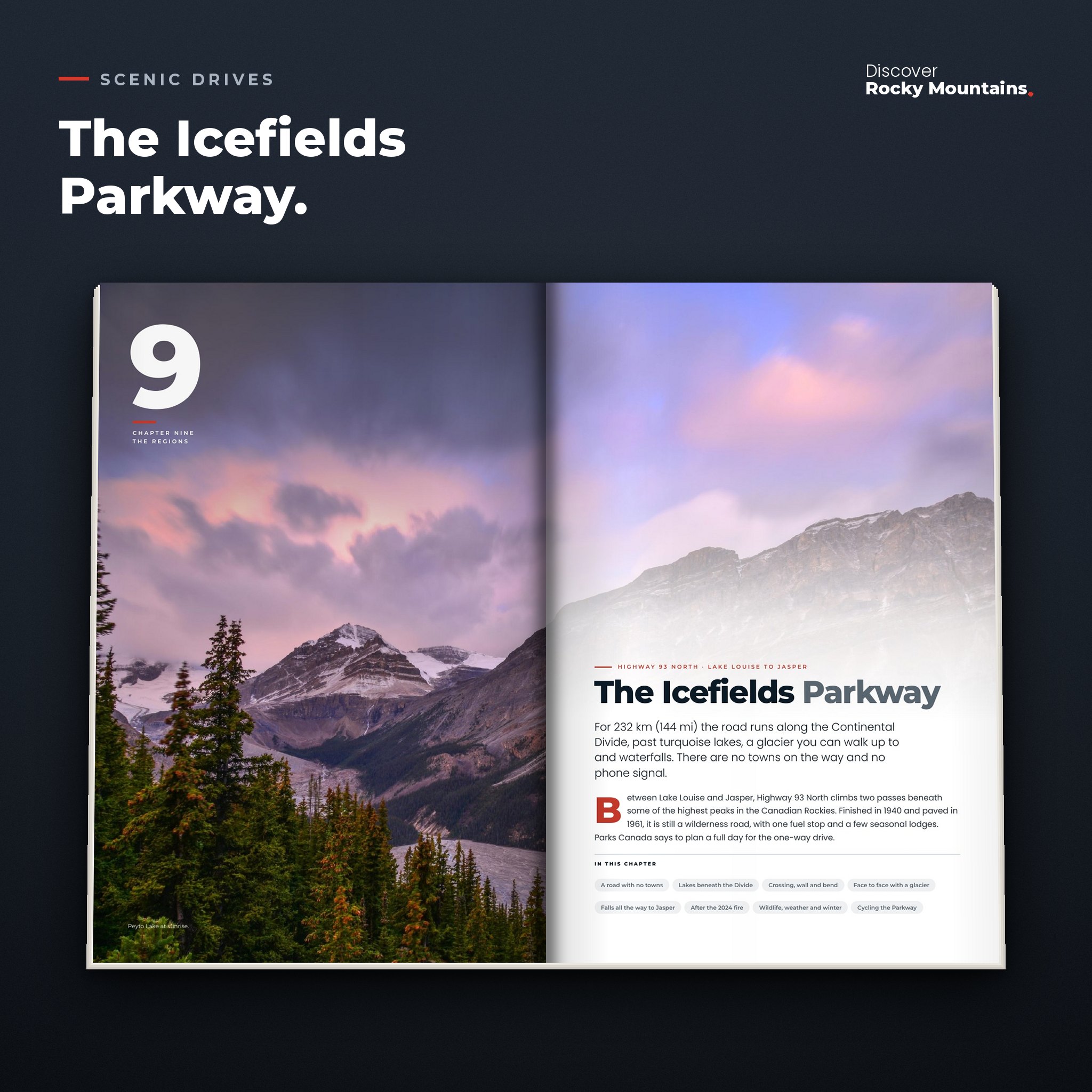
Winter: December to March
Winter turns Banff into a ski town. Banff Sunshine Village, Lake Louise and Mt Norquay make up the local ski areas, and the season usually runs from late autumn into spring. Lake Louise freezes and is cleared for skating, Johnston Canyon becomes a walk past frozen waterfalls, and the Banff Gondola runs all year. It is cold: average January highs are around -3°C with lows near -12°C, and cold snaps can drop much lower.
Winter driving needs care. On the Icefields Parkway, snow tyres or chains are required from 1 November to 31 March, there are no services along the road and no mobile signal between Lake Louise and Jasper. Check 511 Alberta before you set off. Our Icefields Parkway guide has more on driving it in winter.
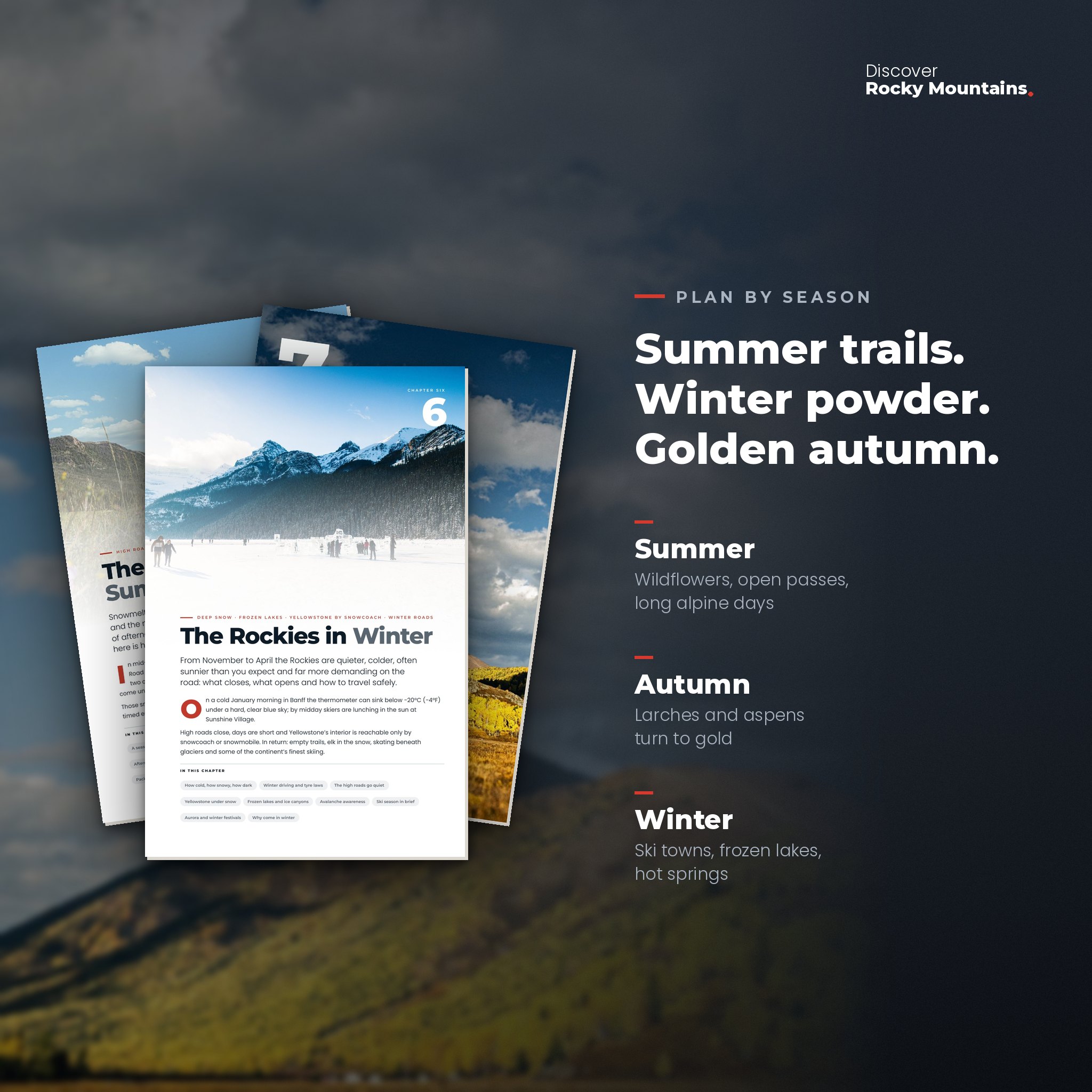
Spring: April to mid-June
Spring is the quietest and least predictable season. Snow lingers in the mountains, the high lakes are still frozen, many trails are muddy or under avalanche risk, and attractions reopen in stages through May. From 1 May to 25 June the eastern Bow Valley Parkway is closed to vehicles under the cycling pilot. The upside: low prices, bears feeding on green roadsides at lower elevations and late-season skiing at the resorts.
So when should you go?
- First visit: late June to mid-September, booked early.
- Fewer crowds, good weather: the first half of September.
- Golden larches: mid-September to early October, with the timing set by each year's weather.
- Skiing and snow: December to March.
- Lowest prices: April, May and early November, if you accept closures.
Wherever you are coming from, remember the Parks Canada pass: every visitor needs one, and in 2026 daily admission to Banff was about CAD 12.25 per adult. The seasons of the whole range, from Banff and Jasper south to Glacier and Colorado, have their own chapters in Discover Rocky Mountains.
Questions
What is the best month to visit Banff?
September for the best balance of weather, open roads and smaller crowds, with larches turning gold from mid-month. July and August are warmest and busiest.
When do the larches turn in Banff?
Usually from mid-September to early October, for a few weeks. Larch Valley, reached from Moraine Lake, is the most famous place to see them.
When can you visit Moraine Lake?
When the Parks Canada shuttle runs. In 2026 it operated from 1 June to 12 October, weather permitting. The road is closed to personal vehicles all year.
How cold is Banff in winter?
Average January highs are about -3°C and lows about -12°C, according to Environment Canada's 1981 to 2010 normals. Cold snaps can go much lower.
Do you need winter tyres in Banff?
On the Icefields Parkway, snow tyres or chains are required from 1 November to 31 March and whenever the road is snowy or icy.