At a glance
The Bahamas lies farther north than most of the Caribbean, and that shapes its weather. Winters are mild rather than hot, with cold fronts from North America bringing cool, windy spells. Summers are hot, humid and showery, and the islands sit in the path of Atlantic hurricanes.
The short answer: December to April is the most comfortable and the most expensive time. May and November are the best balance of weather and price. August to October is the cheapest and the riskiest.
The seasons compared
| Dec to Apr | May to Jul | Aug to Oct | |
|---|---|---|---|
| Weather | Dry, mild, cold fronts | Hot, rain increasing | Hot, wettest, storms |
| Nassau highs | About 26 to 29°C | About 30 to 33°C | About 31 to 33°C |
| Sea | About 24 to 25°C | About 26 to 29°C | About 28 to 30°C |
| Crowds and prices | Highest | Falling | Lowest |
Dry season: November to April
According to the Bahamas Department of Meteorology, the dry season runs from November to April, and January is the driest month in New Providence, with about 47 mm of rain. Days are sunny and warm, nights are cool, and humidity is low.
From late October to early May, cold fronts sweep down from North America roughly every five days. They bring a day or two of strong northerly winds, choppy seas and a drop in temperature: in Nassau, nights can fall below 10°C on rare occasions. Boat trips to the cays may be cancelled on those days, so leave some slack in your plans.
Pack for it. A light jacket or sweater is worth having in winter for evenings, early starts and speedboat rides, when the wind on the water feels far cooler than the air on the beach. If a front is forecast, plan a town day in Nassau or a walk ashore and save the boat trip for when the wind drops.
The sea is at its coolest from January to March, about 24 to 25°C. The southern islands, such as Inagua and the far end of the Exumas chain, stay a little warmer in winter than Nassau and the north.
Junkanoo
The great street festival of the Bahamas takes over Bay Street in Nassau in the early hours of Boxing Day (26 December) and New Year's Day. Groups parade in huge handmade costumes to the sound of goatskin drums, cowbells and horns. Hotels in Nassau fill up for both dates, so book well ahead if you want to be there.

Wet season: late May to October
The rains build from late May. August is the wettest month in New Providence, with about 235 mm, and daytime highs across the islands reach about 32°C. Rain usually comes in afternoon showers and thunderstorms rather than all-day downpours, and there is plenty of sunshine in between.
Early summer has real advantages. The winds drop, the sea is calm and warm, and visibility for diving and snorkelling is often excellent. Prices fall after Easter, and the Out Islands are at their quietest.
Hurricane season
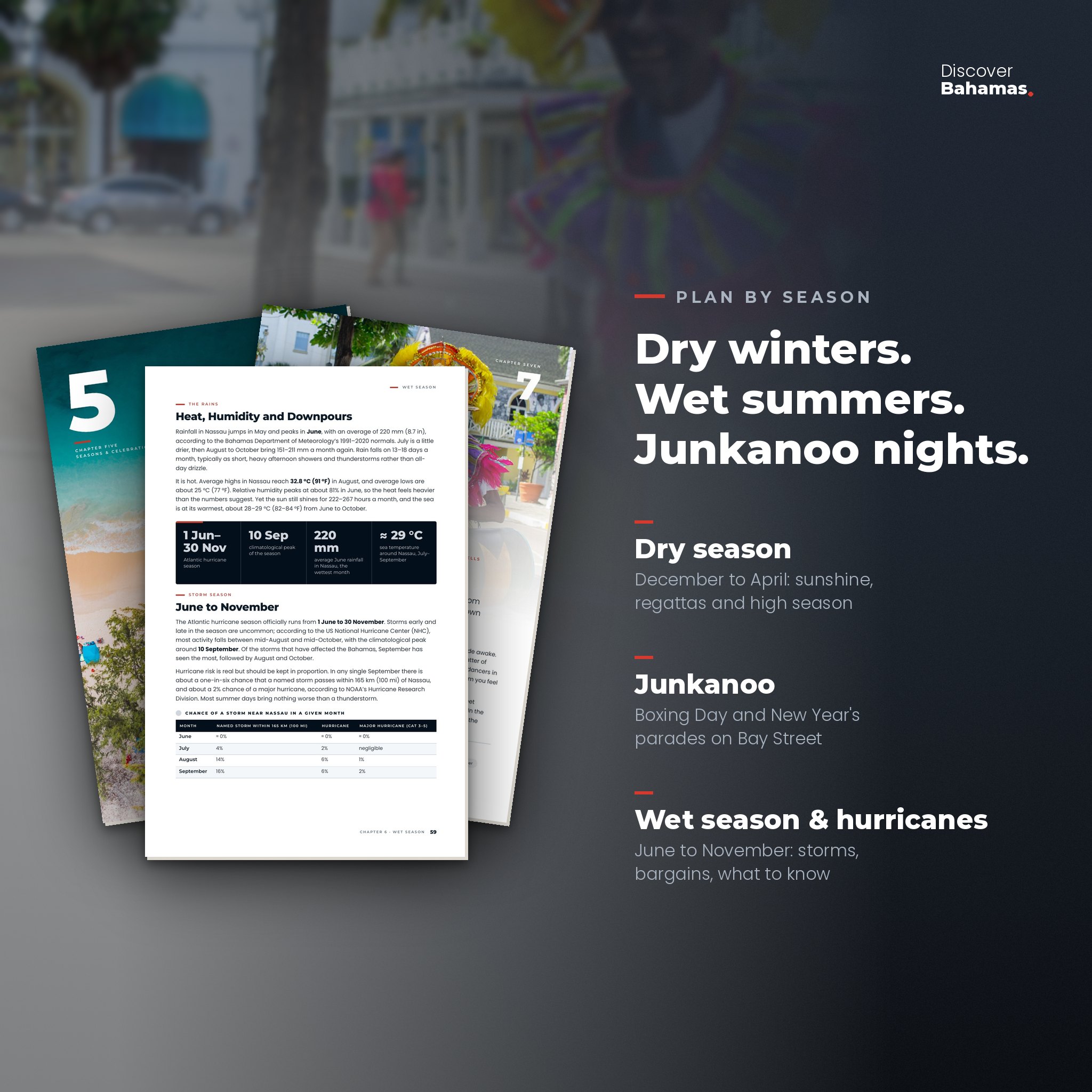
The Atlantic hurricane season officially runs from 1 June to 30 November. For the Bahamas, the period that matters most is mid-July to October, and August, September and October see the most storms passing close to the islands. Hurricane Dorian, which struck Abaco and Grand Bahama in September 2019, is a reminder of how serious a direct hit can be.
Most trips in this period go ahead without trouble, but plan for the risk: buy travel insurance that covers storms, choose flexible bookings and follow the forecasts from the US National Hurricane Center in the days before you fly.
Rain north and south
The islands stretch a long way, and the climate changes along them. Abaco in the north-west gets about 150 cm of rain a year, while Inagua in the south-east gets less than half that. If you want the driest weather, the southern islands are your best bet.
The best time for...
- Beaches and sunshine: December to April, when rain is scarce and the air is comfortable.
- Diving and snorkelling: May to early July, when the sea is warm and calm and visibility is often at its best.
- Boat days in the Exumas: spring, when the cold fronts become less frequent and the water warms up.
- Festivals: late December, for Junkanoo in Nassau.
- The lowest prices: August to October, if you can travel flexibly and accept the storm risk.
Local tipFor the best balance of weather, sea and price, look at late April, May and November. Winter crowds have gone or not yet arrived, the sea is warm, and the main hurricane months are behind you or still ahead.
Month by month in brief
- December to February: dry and mild, occasional cold fronts, Junkanoo on 26 December and 1 January, peak prices.
- March and April: warming up, still dry, spring breaks and Easter keep Nassau busy.
- May and June: hot and calm, rain increasing, good value.
- July to October: hottest and wettest, main hurricane risk, the lowest prices.
- November: the dry season returns, storms become rarer, a strong shoulder month.
Once you know when, our guide to which Bahamas island to choose helps with where. The full seasons chapter and every island are in Discover Bahamas.
Questions
What is the best month to visit the Bahamas?
For weather, December to April, the dry season. For a balance of good weather and lower prices, late April, May and November.
When is hurricane season in the Bahamas?
Officially from 1 June to 30 November. The highest risk is from mid-July to October, especially August to October.
Is the Bahamas cold in winter?
It is mild, not cold. Highs in Nassau are usually in the mid to upper 20s °C, but cold fronts can bring a few cool, windy days, and nights can occasionally fall below 10°C.
When is Junkanoo?
The main Junkanoo parades take place on Bay Street in Nassau on Boxing Day (26 December) and New Year's Day, starting in the early hours of the morning.