At a glance
A cenote is a sinkhole where the limestone roof of an underground river has collapsed, opening a window onto clear, cool fresh water. To the ancient Maya they were sources of water and doorways to the underworld. Today they are the best swimming on the coast, and a welcome break from the heat and the sea.
Open cenotes are pools under the sky, the easiest for children and nervous swimmers. Semi-open cenotes sit partly under a rock roof. Cave cenotes lie almost entirely underground, reached by stairs or ladders, with light falling through a gap in the ceiling.
The four main areas
| Ruta de los Cenotes | Riviera Maya | Tulum | Valladolid | |
|---|---|---|---|---|
| Where | Inland from Puerto Morelos | Highway 307, Playa to Akumal | Around Tulum and the Cobá road | Inland, near Chichén Itzá |
| From Cancún | Closest | Middle of the coast | Furthest south | Day trip inland |
| Best known | Siete Bocas, Verde Lucero | Azul, Jardín del Edén | Gran Cenote, Dos Ojos | Ik Kil, Suytun, Zací |
| Best for | Quiet, rustic swims | Families, snorkelling | Turtles, caverns | Pairing with the ruins |
Ruta de los Cenotes, Puerto Morelos
The closest cenotes to Cancún lie along a road that runs inland from Puerto Morelos towards Leona Vicario. Dozens of open, semi-open and cave cenotes sit along it, many run by local families. Siete Bocas has seven openings into one underground pool and feels wild and little developed. Verde Lucero, with its green water, Las Mojarras, La Noria and Zapote are others on the route. Facilities are simpler than further south, and that is much of the appeal.
Riviera Maya: Playa del Carmen to Akumal
South of Playa del Carmen, several open cenotes sit just off Highway 307. Cenote Azul has several pools and a shallow section for children. Jardín del Edén is a long open cenote full of fish, with natural ledges for jumping, and Cristalino is close by. These are the easiest cenotes for families, and they combine well with a morning swimming with turtles at Akumal.
Tulum and the road to Cobá
Dos Ojos, about 22 km north of Tulum, is two linked sinkholes and an entry into one of the longest flooded cave systems on Earth. In 2018 divers connected Sistema Sac Actun with Sistema Dos Ojos, giving a combined length reported at about 347 km. Snorkellers stay in the lit areas; divers can explore the cavern with a certified guide.
On the road from Tulum towards Cobá, Gran Cenote has an open pool joined by a tunnel to a cave chamber, with freshwater turtles that are easiest to see early in the morning. Life jackets are compulsory here. Cenote Calavera, nearby, is a small cenote with holes in its roof that swimmers jump through. On the coast north of Tulum, Casa Cenote at Tankah mixes fresh and salt water among mangrove roots.
Valladolid and Chichén Itzá
Ik Kil, about 3 km from Chichén Itzá, is a deep, round sinkhole hung with vines, with steps down to the water. It is very busy from late morning when the tours arrive, so go early or late. Near Valladolid, Suytun is a cave cenote with a stone platform in the middle of the water, and around midday a beam of light falls through the roof onto it. In the centre of Valladolid itself, Cenote Zací is a short walk from the main square.
Prices and rules
Most cenotes are run privately or by local communities and set their own fees. In 2026 they ranged from about 50 pesos at Zací to about 500 pesos at Gran Cenote, with most charging somewhere in between. Bring cash in small notes, as many do not take cards.
- Shower before you swim. Most cenotes require it.
- No sunscreen, repellent or lotion. Many ban them completely, because they pollute the water. Wear a rash vest instead.
- Wear the life jacket where it is required, even if you swim well.
- Do not touch the stalactites, roots or fish.
- Arrive early. The first hour after opening is the quietest and the light is often best.
What to bring
Pack a mask and snorkel, a towel, water shoes for slippery steps and rocks, and a rash vest to replace sunscreen. Bring cash for entry, lockers and life jacket hire, and a dry bag for your phone. Some of the bigger cenotes, such as Ik Kil, have lockers and showers; the small family-run ones on the Ruta de los Cenotes may have little more than a ladder and a changing hut. The water is noticeably cooler than the sea, so a thin wetsuit helps if you plan to stay in for long.
SafetyNever swim into cave passages beyond the lit, open areas. Cave and cavern diving need proper training and a certified local guide, and divers have died after getting lost in these systems. Stay where the staff tell you.
Local tipPair cenotes with the sights around them: Ik Kil or Suytun with Chichén Itzá, Gran Cenote with the Tulum ruins, Cenote Azul with Akumal. Our Cancún and Riviera Maya in 5 days itinerary does exactly that.
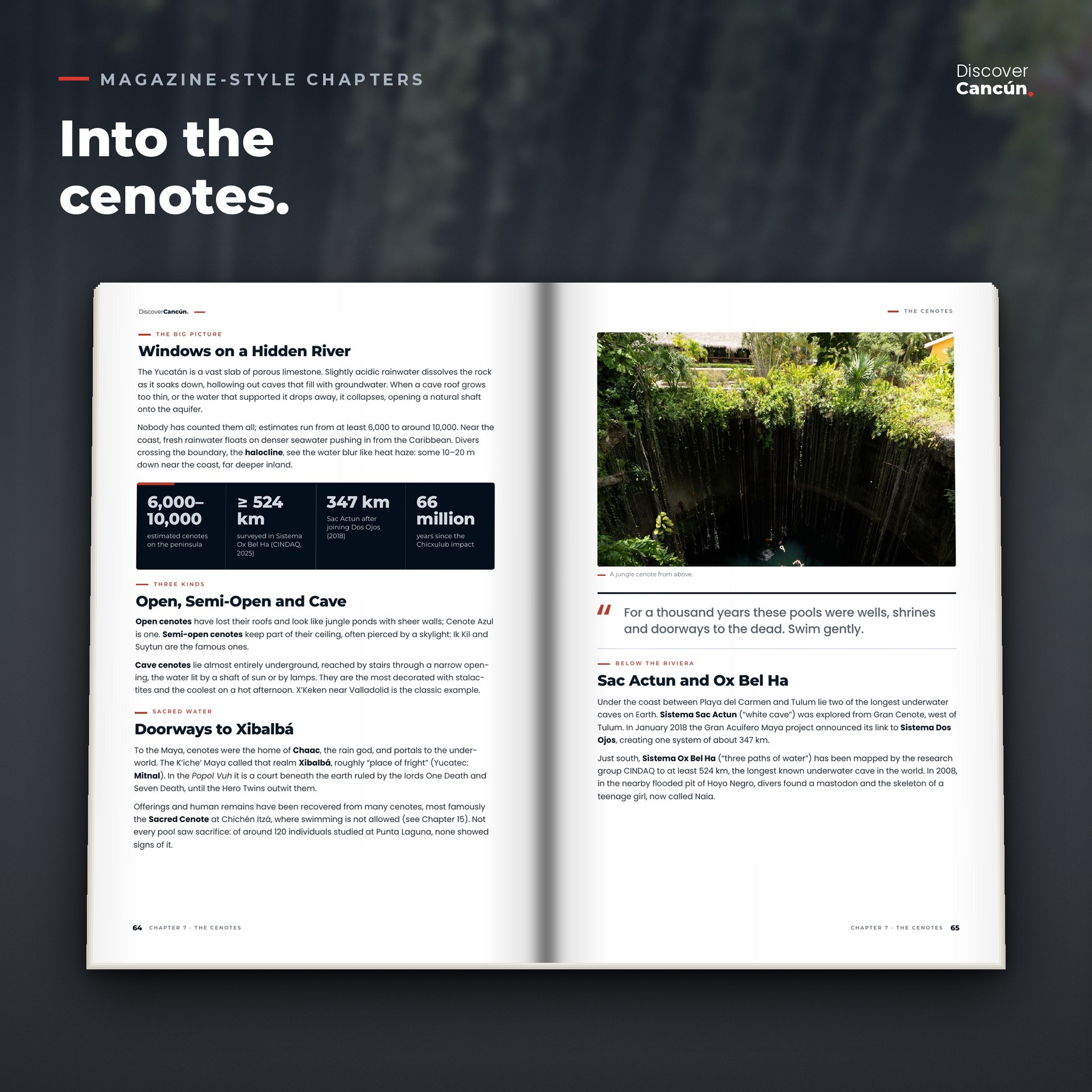
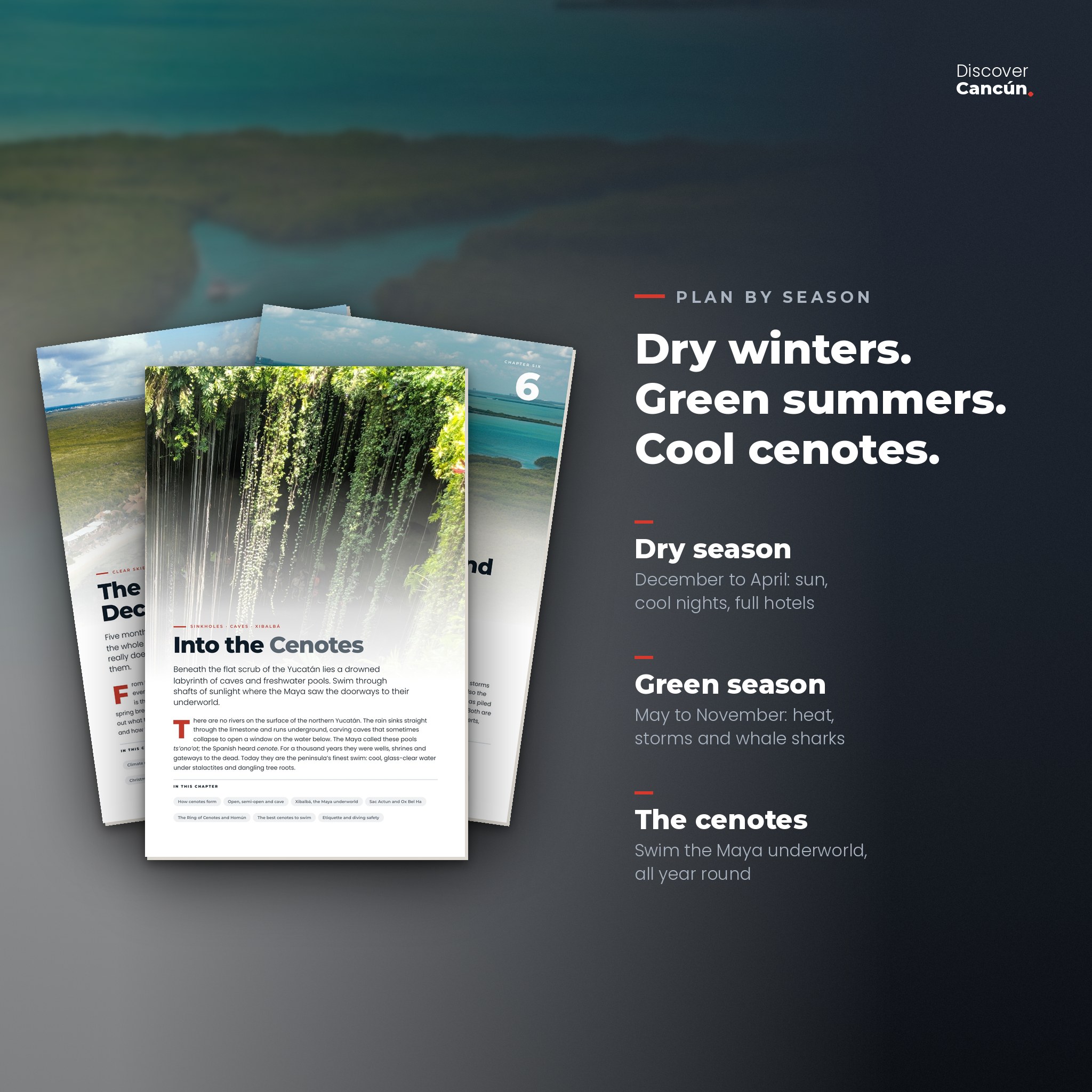
The cenotes chapter in Discover Cancún maps every area, explains how the underground rivers formed, and covers swimming, snorkelling and diving safely.
Questions
What is the best cenote near Cancún?
For a short trip from Cancún, the cenotes on the Ruta de los Cenotes inland from Puerto Morelos are the closest. Gran Cenote and Dos Ojos near Tulum, and Ik Kil and Suytun near Valladolid, are the best known.
Can you wear sunscreen in cenotes?
Usually not. Most cenotes ask you to shower first and ban sunscreen, repellent and lotions to protect the water. Wear a rash vest instead.
How much does it cost to swim in a cenote?
In 2026, from about 50 pesos at Cenote Zací in Valladolid to about 500 pesos at Gran Cenote near Tulum. Most cenotes take cash only.
Are cenotes safe for children?
Open cenotes with shallow areas, such as Cenote Azul and Casa Cenote, suit children well. Use life jackets and stay in the open, lit areas.