At a glance
Both islands are dry, warm and breezy all year, with little rain outside the short wet season at the end of the year. Both have calm, clear water on their sheltered coasts and wild surf on the windward side. And both are small enough that a hire car turns the whole island into a day trip.
The difference is in the details. Aruba is the beach island: long, open stretches of white sand and a resort strip that makes everything easy. Curaçao is the island for coves, reefs and a real city, with more variety and a little more effort.
Aruba and Curaçao compared
| Aruba | Curaçao | |
|---|---|---|
| Beaches | Long, wide, white sand | Small coves on the west coast |
| Snorkelling and diving | Good, with the Antilla wreck | Excellent shore diving |
| Main town | Oranjestad, compact | Willemstad, UNESCO-listed |
| Nature | Arikok National Park | Christoffel and Shete Boka |
| Feel | Polished, resort-focused | Local, varied, lived-in |
| Getting around | Easy, short distances | Car needed for the west |
| Currency | Aruban florin | Caribbean guilder |
Beaches: wide strands or hidden coves
If the beach is the trip, Aruba wins. Eagle Beach and Palm Beach are long, wide and soft, with calm water and space even in high season. Baby Beach in the south is a shallow lagoon made for children.
Curaçao's beaches are smaller and more varied. Kenepa Grandi, Playa Lagun and Cas Abao are coves set in limestone, many with a reef close to shore. They are beautiful, but you drive to them, and some charge for entry or chairs. Our guide to the best beaches in Curaçao goes through them one by one.
Underwater: shore diving versus wrecks
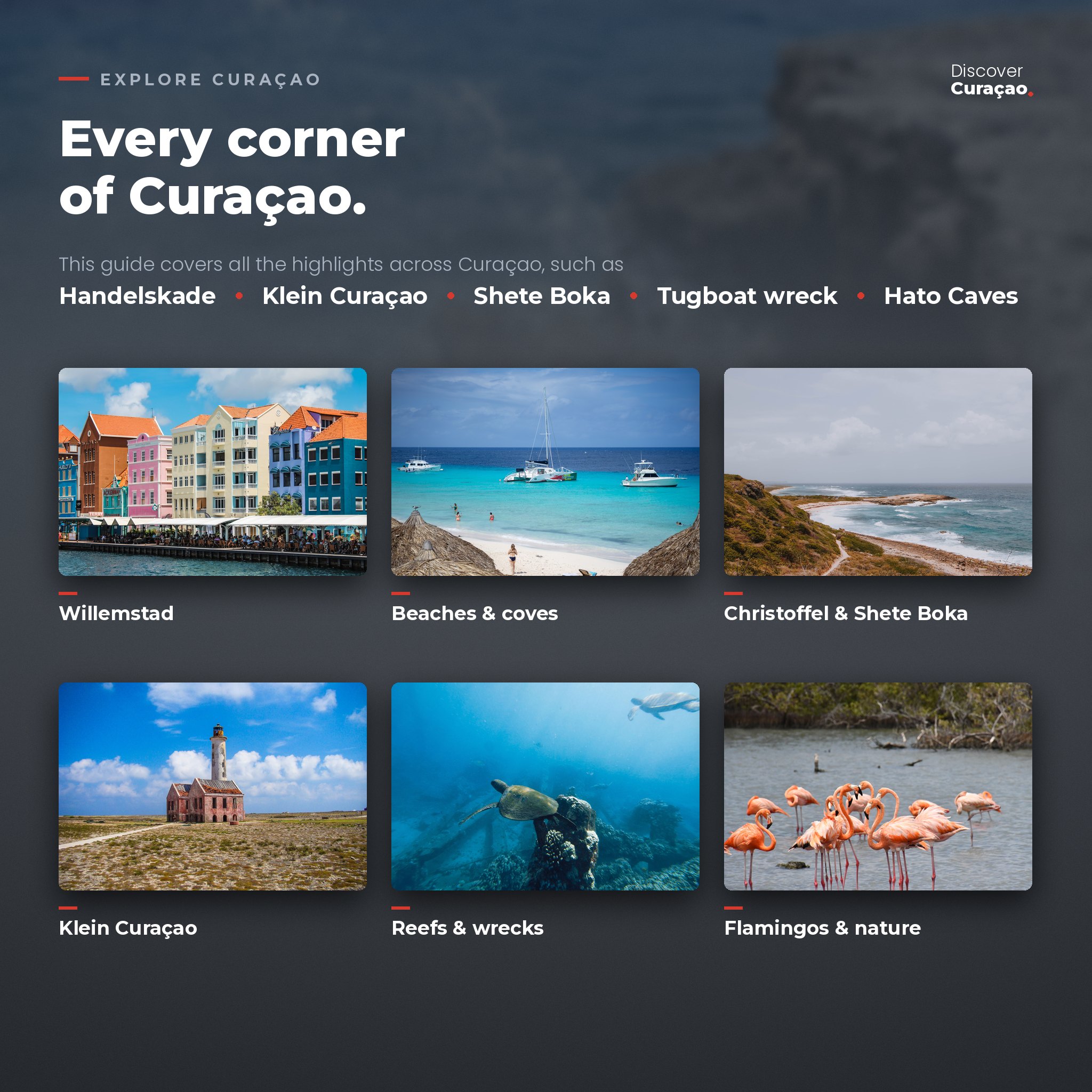
Curaçao is one of the Caribbean's great shore-diving islands. A fringing reef runs along much of the sheltered coast, and dozens of sites can be reached by simply walking in from the beach. Snorkellers find fish and turtles at Playa Lagun, Playa Grandi and the Tugboat wreck at Caracasbaai.
Aruba is no slouch: the Antilla, a large wartime freighter off Malmok, is one of the region's best-known wrecks, and Boca Catalina, Arashi and Mangel Halto have good snorkelling from shore. But for variety of reef, Curaçao has the edge.
Towns and culture
Willemstad is the most striking town in the Dutch Caribbean: the coloured merchant houses of the Handelskade, the swinging Queen Emma Bridge, the old synagogue and the murals of Otrobanda. Its historic centre has been on the UNESCO World Heritage list since 1997, and the city has real life beyond tourism.
Oranjestad, in Aruba, is smaller and neater, built around the harbour, the shops and Fort Zoutman. For culture, Aruba's best surprise is San Nicolas in the south, with its large murals.
Nature and the wild side
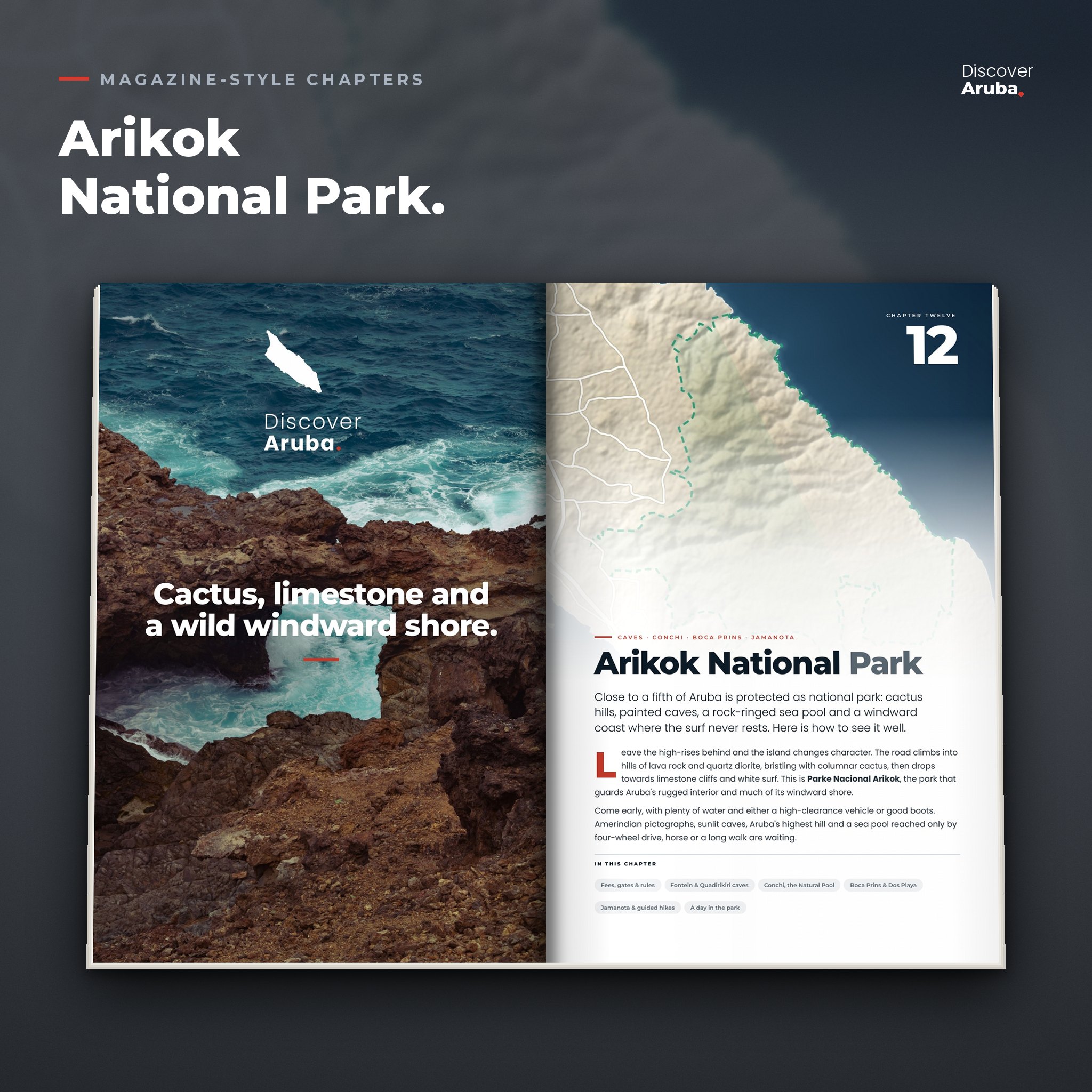
Both islands have a rugged national park. Aruba's Arikok covers close to a fifth of the island, with caves, dunes, cactus hills and the Natural Pool. Curaçao's Christoffel National Park has the island's highest point, the Christoffelberg, with a short, steep summit climb, while Shete Boka has the dramatic surf inlets of the north coast. Curaçao also has an uninhabited island offshore, Klein Curaçao, for a day trip.
Practicalities
Aruba is more compact and easier to get around, and its main hotel areas are close to the airport and town. Curaçao's best beaches are about an hour west of Willemstad, so you will want a car.
Both have entry formalities online. Aruba requires an ED card for air arrivals and has charged a $20 sustainability fee per person since July 2024. Curaçao requires a free Digital Immigration Card, completed on the official government site before you fly. US dollars are widely accepted on both islands, and cards work in most hotels and restaurants.
Weather and wind
The climates are close cousins. Both islands are hot all year, with daytime highs around 30°C or a little above, and both get most of their rain from October to December or January as short showers. Aruba is a touch drier, averaging about 450 mm of rain a year in Oranjestad, against roughly 500 to 600 mm in Curaçao.
Both sit south of the usual hurricane tracks, so storms are rare. Aruba feels windier on its exposed beaches, which makes it the better pick for windsurfing and kitesurfing. Curaçao's west coast is more sheltered, which helps snorkellers.
Local tipCan't decide? Do both. Short flights link Aruba and Curaçao, so it is easy to split a week or ten days between the two.
The verdict
- Choose Aruba for long, easy beaches, calm water, a polished resort strip and short distances.
- Choose Curaçao for shore diving and snorkelling, small coves, a lively UNESCO city and more variety.
- Choose both if you have a week or more: beaches in Aruba, reefs and Willemstad in Curaçao.
Planning Curaçao? Start with our 5-day Curaçao itinerary. For Aruba, see Aruba in 5 days. The complete island guide is Discover Curaçao.
Questions
Is Aruba or Curaçao better for beaches?
Aruba, if you want long, wide beaches with calm water, like Eagle Beach and Palm Beach. Curaçao's beaches are smaller coves, often with excellent snorkelling close to shore.
Is Curaçao or Aruba better for snorkelling and diving?
Curaçao is generally considered the stronger shore-diving island, with a reef along much of its sheltered coast. Aruba has excellent wrecks, such as the Antilla, and good snorkelling at Boca Catalina and Mangel Halto.
Which is cheaper, Aruba or Curaçao?
Prices vary by season and hotel. Aruba is more resort-focused and often more expensive in high season, while Curaçao has a wider range of smaller hotels and apartments. Compare for your dates.
Can you visit Aruba and Curaçao on the same trip?
Yes. The islands are close together and linked by short flights, so a week or ten days split between the two works well.